
The post has been translated automatically. Original language: Russian





AGENTS.md the coding agent perfectly tells you how to work with the repository. But turning it into an encyclopedia of the project is a bad idea.
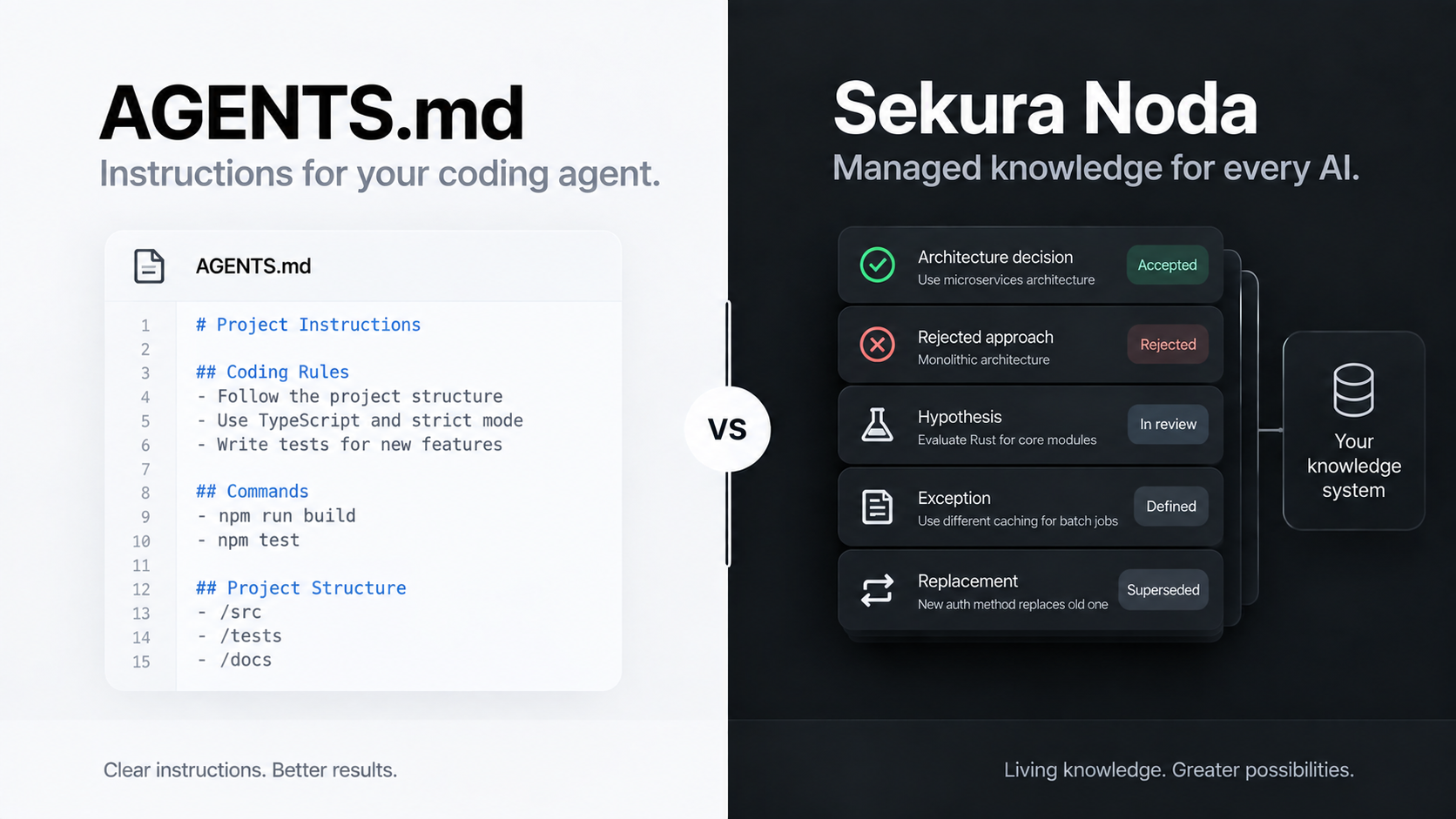
In AGENTS.md it is convenient to fix:
- coding rules;
- project structure;
- build and test teams;
- limitations;
- team agreements;
- important instructions for the agent.
It is almost an ideal tool for a local context.
The problem begins when they try to put all the professional knowledge of the project there.
Why did you choose this architecture?Which approach has already been tried and rejected?What is the rule for only one scenario?Which hypothesis has not yet been confirmed?Which solution replaced the previous one?
The big one AGENTS.md It gradually turns into a long text, where old and new knowledge live side by side.
And the agent has to figure out for himself which of these is still true.
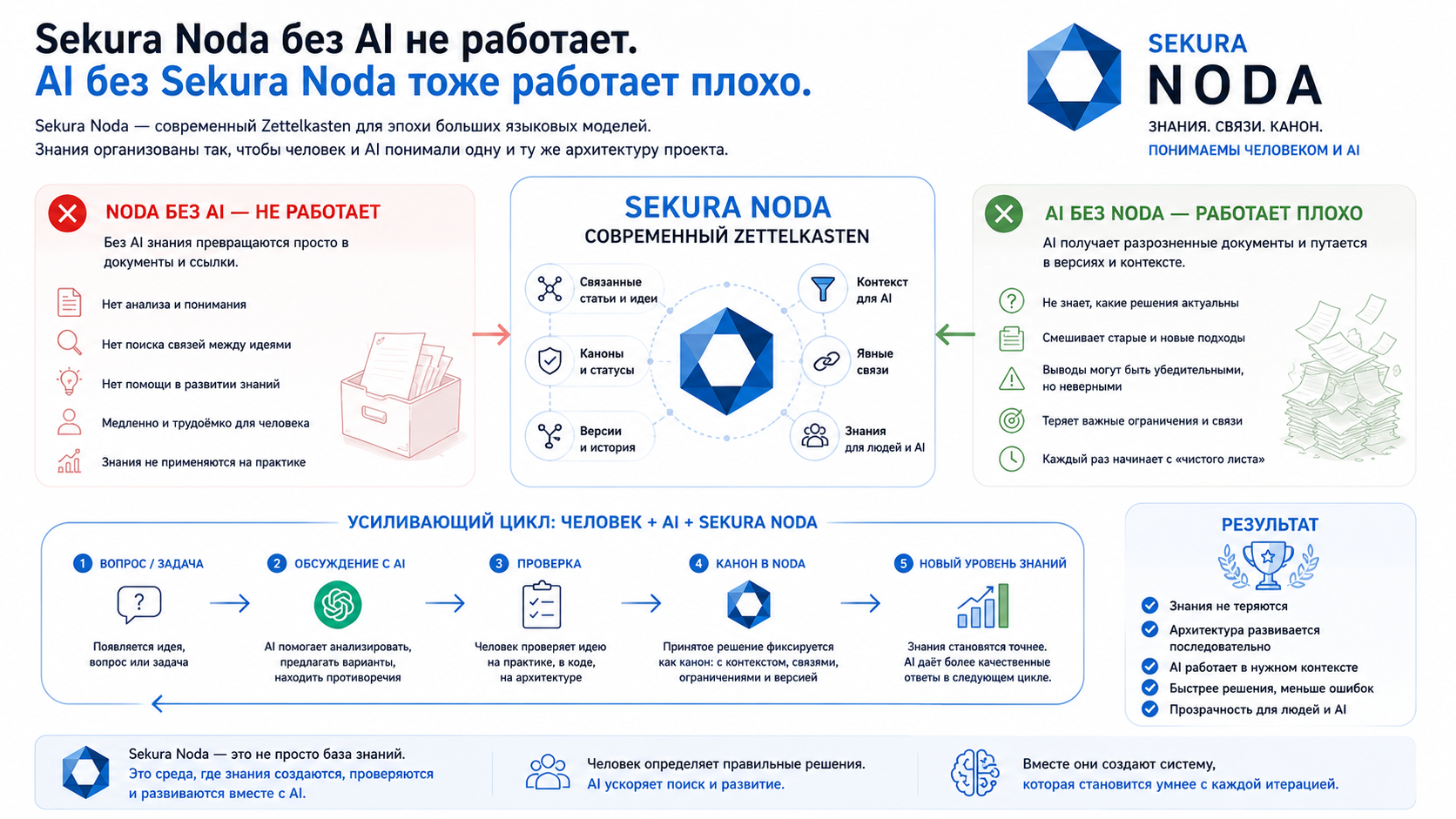
Sekura Noda solves a different problem
In Sekura Noda, each important knowledge can be stored separately.
The solution is separate.The exception is separate.The hypothesis is separate.The rejected approach is separate.
And each knowledge has its own state.
Therefore, AGENTS.md It can remain a short instruction for an agent, and professional knowledge can live in a system designed specifically to support him.
AGENTS.md answers the question:
How should the agent work in this repository?
Sekura Noda answers another one:
What decisions and rules does the team consider right now?
Where AGENTS.md Better
When you need to quickly give the coding agent specific instructions right next to the code.
It's hard to beat a simple file here.
Where is Sekura Noda better
When knowledge goes beyond the limits of a single repository, it is constantly changing or must be used by different ais.
And when it is important to preserve not only the correct solution, but also what has already been tested and rejected.
AGENTS.md gives the agent instructions. Sekura Noda gives him supported team knowledge.
AGENTS.md хорошо объясняет AI-агенту, как работать с репозиторием. Но превращать этот файл в энциклопедию проекта — плохая идея.
В AGENTS.md удобно зафиксировать:
- правила написания кода;
- структуру проекта;
- команды сборки и тестирования;
- ограничения;
- соглашения команды;
- важные указания для AI-агента.
Для локального контекста это очень удобный инструмент.
Проблема начинается, когда в один файл пытаются поместить всё профессиональное знание проекта.
Почему выбрали именно эту архитектуру?Какой подход уже проверили и отклонили?Какое правило действует только в одном сценарии?Какая гипотеза ещё не подтверждена?Какое решение заменило предыдущее?
По мере роста файла старые и новые знания начинают существовать рядом.
И AI приходится самостоятельно определять:
что из этого всё ещё считается правильным?
Sekura Noda решает другую задачу
В Sekura Noda каждое важное знание можно хранить отдельно.
Решение — отдельно.Исключение — отдельно.Гипотеза — отдельно.Отклонённый подход — отдельно.
У каждого знания может быть своё состояние.
Поэтому AGENTS.md остаётся короткой инструкцией для работы с репозиторием, а профессиональные решения и накопленный опыт хранятся в системе, предназначенной для их поддержки.
AGENTS.md отвечает на вопрос:
Как AI-агент должен работать с этим репозиторием?
Sekura Noda отвечает на другой:
Какие решения и правила команда считает правильными сейчас?
Где AGENTS.md лучше
Когда нужно быстро дать AI-агенту конкретные инструкции рядом с кодом.
Для этого простой файл удобен и эффективен.
Где Sekura Noda лучше
Когда знания выходят за пределы одного репозитория, постоянно меняются или должны использоваться разными AI-системами.
И особенно когда важно сохранить не только принятое решение, но и то, какие подходы уже были проверены и отклонены.
AGENTS.md задаёт правила работы с кодом. Sekura Noda сохраняет и поддерживает знания команды.

 Share