
The post has been translated automatically. Original language: Russian




Artificial intelligence is rapidly moving from the category of experimental technologies to a basic business tool. Many companies have already tested generative AI, launched pilots, and created the first corporate assistants. Now a more difficult question arises: how to turn these experiments into a real economic result?
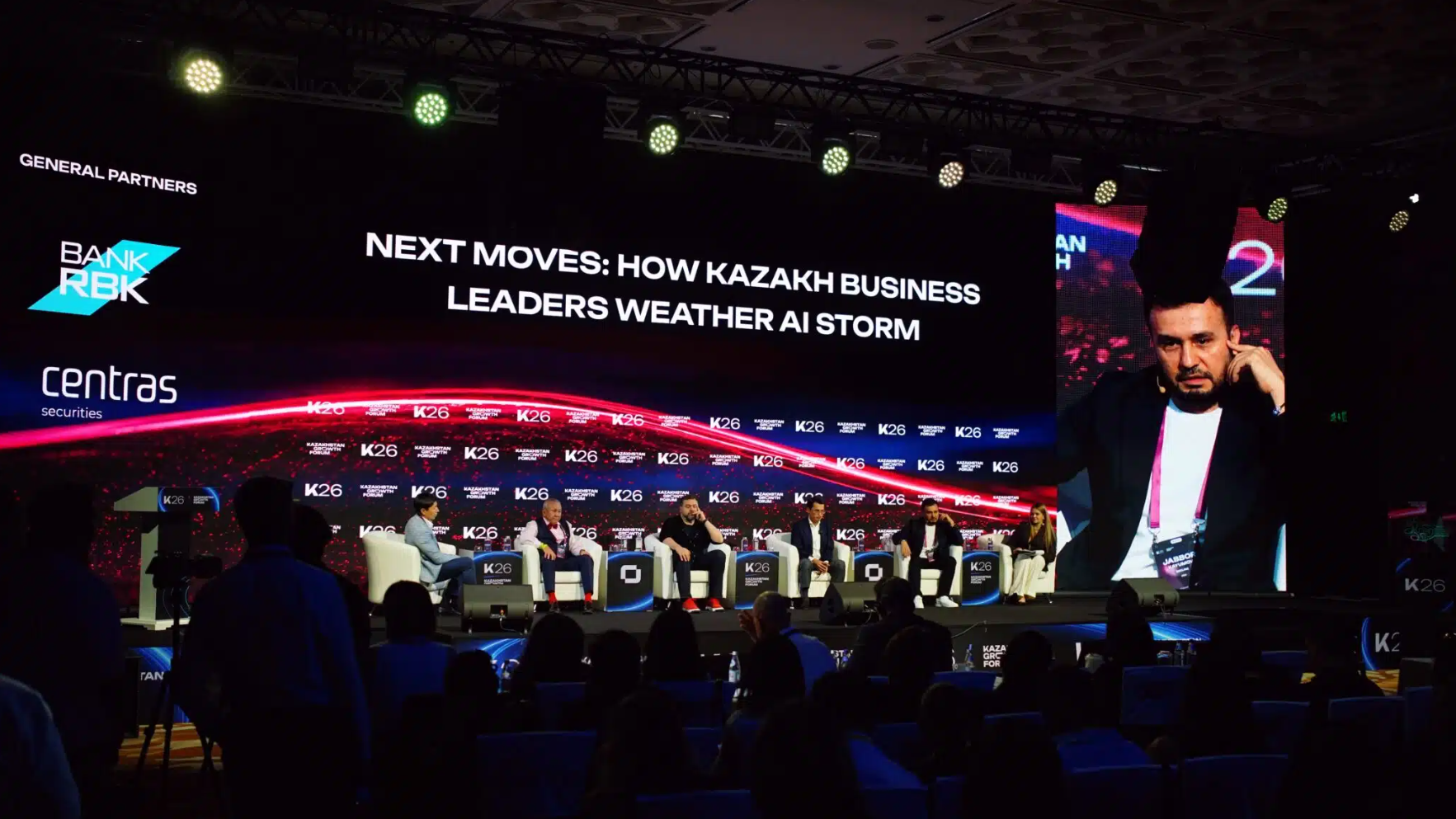
Jabbor Kayumov, CEO of Beeline Kazakhstan, spoke about this in his speech at the Kazakhstan Growth Forum 2026. He shared the experience of AI transformation of Beeline Kazakhstan and QazCode and explained why it is important for businesses today to move from individual technological experiments to solutions with measurable economic impact. The main theses of the speech are also presented in the Kursiv material "Energy of Change: how to turn the AI storm into a driver of economic growth."
The experience of Beeline Kazakhstan and QazCode shows that the next stage of AI transformation is not an increase in the number of models and pilots, but their integration into real business processes with clear performance metrics.
Starting not with AI, but with a business problem
One of the common pitfalls of AI transformation is to start by asking, "Where can we apply artificial intelligence?"
It is much more productive to first determine where the business is losing the most time, money, or customers. These can be lengthy internal processes, repetitive requests, manual work with documents, a high workload for support staff, or a difficult search for corporate information.
Only then does it make sense to look for a technological solution and determine which part of the problem AI can solve.
This approach allows you to move from demonstration projects to a limited portfolio of AI cases, for each of which the potential value is clear in advance: cost reduction, productivity growth, improved customer experience or improved quality of solutions.
From a telecom operator to a technology company
For Beeline, Kazakhstan AI has become part of a broader business transformation – the transition from a traditional infrastructure operator to a service technology company.
An important role in this process is played by QazCode, a technology company that grew out of the Beeline Kazakhstan IT division. Today, QazCode is engaged in software development, artificial intelligence solutions, and big data analysis, creating products for both the Beeline ecosystem and the external market.
The QazCode team has developed Aventa, an enterprise AI platform that allows you to create AI assistants and agents, connect corporate data and knowledge bases, and integrate solutions into existing processes. QazCode has also provided computing power for teaching the KazLLM national language model and is developing digital services of the Beeline ecosystem, including the Janymda application.
Today, QazCode has more than 70 proprietary models based on Machine Learning, Deep Learning, and Generative AI.
But the number of models is not the main indicator of maturity. What is much more important is which ones are able to scale and bring measurable results.
How AI transitions from an experiment to a working tool
One way to achieve this is not to create a universal AI assistant "for everything", but specialized agents embedded in specific processes.
Beeline and QazCode already use several such solutions.
Agent Support helps operators prepare responses to clients and suggests a course of action with a link to the source. The Quality Control Agent analyzes dialogs, verifies them according to specified criteria, and helps identify the causes of requests and errors.
The Onboarding Agent answers employees' questions about internal procedures, vacations, and references. The Procurement Agent advises on procurement, tenders, and supplier requirements, while the Legal Agent helps to find solutions in protocols and prepare statements and summaries.
In some AI cases, this approach has already reduced the number of questions on procurement processes by up to 50%, and accelerated the employee onboarding process by up to 70%.
This is the transition from AI as an interesting technology to AI as part of the company's operating model.
Technology alone does not create a competitive advantage.
As AI develops, access to powerful models is becoming more widespread. Therefore, the presence of the model itself is gradually ceasing to be a unique advantage.
It is much more difficult to copy other business assets.: own data, access to a large audience, understanding of the local market, customer trust, and the ability to quickly integrate solutions into existing processes.
It is the combination of these factors that determines whether a company can turn AI capabilities into sustainable business value.
For Beeline, for example, the scale of the telecom infrastructure and customer base remains such an asset - more than 11 million users. Combined with QazCode's technological expertise, this infrastructure makes it possible not only to create AI products, but also to bring them to millions of people.
A good example is the development of KazLLM. The creation of a national language model forms the technological basis. But economic and social value appears when solutions based on it become part of mass products – for example, AI Tutor inside Janymda.
Ultimately, the user does not evaluate the complexity of the model or the number of technologies used. He evaluates whether his task has been solved.
From local developments to the economics of applied AI
This transition is especially important for Kazakhstan.
The high level of digital consumption, local technological expertise and a growing community of specialists create conditions not only for the use of global AI tools, but also for the development of their own application solutions.
The next task is to learn how to scale them.
This means fewer demonstration projects and more solutions with clear economics. Create technologies within the country, test them against real-world local business challenges, scale them in the domestic market, and then bring competitive products to the regional and global levels.
AI is already becoming a permanent part of the business. "Therefore, "the question for companies is gradually changing: not "do we need to implement AI?", but "what problems can we solve with it better, faster and more efficiently?".
It is the ability to give a concrete answer to this question – and measure the result obtained – that can become one of the main indicators of the maturity of AI business transformation.
Искусственный интеллект стремительно переходит из категории экспериментальных технологий в базовый инструмент бизнеса. Многие компании уже протестировали генеративный AI, запустили пилоты и создали первых корпоративных ассистентов. Теперь возникает более сложный вопрос: как превратить эти эксперименты в реальный экономический результат?
Об этом говорил CEO Beeline Казахстан Джаббор Каюмов в своем выступлении на Kazakhstan Growth Forum 2026. Он поделился опытом AI-трансформации Beeline Казахстан и QazCode и рассказал, почему сегодня бизнесу важно переходить от отдельных технологических экспериментов к решениям с измеримым экономическим эффектом. Основные тезисы выступления также представлены в материале Kursiv «Энергия перемен: как превратить AI-шторм в драйвер экономического роста».
Опыт Beeline Казахстан и QazCode показывает, что следующий этап AI-трансформации – это не увеличение количества моделей и пилотов, а их интеграция в реальные бизнес-процессы с понятными метриками эффективности.
Начинать не с AI, а с бизнес-проблемы
Одна из распространенных ловушек AI-трансформации – начинать с вопроса: «Где мы можем применить искусственный интеллект?»
Гораздо продуктивнее сначала определить, где бизнес теряет больше всего времени, денег или клиентов. Это могут быть длительные внутренние процессы, повторяющиеся обращения, ручная работа с документами, высокая нагрузка на сотрудников поддержки или сложный поиск корпоративной информации.
Только после этого имеет смысл искать технологическое решение и определять, какую часть проблемы способен решить AI.
Такой подход позволяет перейти от демонстрационных проектов к ограниченному портфелю AI-кейсов, для каждого из которых заранее понятна потенциальная ценность: сокращение затрат, рост производительности, улучшение клиентского опыта или повышение качества решений.
От телеком-оператора к технологической компании
Для Beeline Казахстан AI стал частью более широкой трансформации бизнеса – перехода от традиционного инфраструктурного оператора к сервисной технологической компании.
Важную роль в этом процессе играет QazCode – технологическая компания, выросшая из IT-подразделения Beeline Казахстан. Сегодня QazCode занимается разработкой программного обеспечения, решениями в области искусственного интеллекта и анализом больших данных, создавая продукты как для экосистемы Beeline, так и для внешнего рынка.
Команда QazCode разработала Aventa – корпоративную AI-платформу, которая позволяет создавать AI-ассистентов и агентов, подключать корпоративные данные и базы знаний и интегрировать решения в существующие процессы. QazCode также предоставил вычислительные мощности для обучения национальной языковой модели KazLLM и развивает цифровые сервисы экосистемы Beeline, включая приложение Janymda.
Сегодня внутри QazCode работает более 70 собственных моделей на базе Machine Learning, Deep Learning и Generative AI.
Но количество моделей – не главный показатель зрелости. Гораздо важнее то, какие из них способны масштабироваться и приносить измеримый результат.
Как AI переходит из эксперимента в рабочий инструмент
Один из способов добиться этого – создавать не универсального AI-помощника «для всего», а специализированных агентов, встроенных в конкретные процессы.
В Beeline и QazCode уже используются несколько таких решений.
Agent Support помогает операторам готовить ответы клиентам и предлагает порядок действий со ссылкой на источник. Quality Control Agent анализирует диалоги, проверяет их по заданным критериям и помогает выявлять причины обращений и ошибки.
Onboarding Agent отвечает сотрудникам на вопросы о внутренних процедурах, отпусках и справках. Procurement Agent консультирует по закупкам, тендерам и требованиям к поставщикам, а Legal Agent помогает находить решения в протоколах и готовить выписки и сводки.
В отдельных AI-кейсах такой подход уже позволил сократить количество вопросов по procurement-процессам до 50%, а процесс онбординга сотрудников ускорить до 70%.
Это и есть переход от AI как интересной технологии к AI как части операционной модели компании.
Технология сама по себе не создает конкурентного преимущества
По мере развития AI доступ к сильным моделям становится все более массовым. Поэтому наличие самой модели постепенно перестает быть уникальным преимуществом.
Гораздо сложнее скопировать другие активы бизнеса: собственные данные, доступ к большой аудитории, понимание локального рынка, доверие клиентов и способность быстро внедрять решения в существующие процессы.
Именно сочетание этих факторов определяет, сможет ли компания превратить возможности AI в устойчивую бизнес-ценность.
Для Beeline, например, таким активом остается масштаб телеком-инфраструктуры и клиентской базы – более 11 млн пользователей. В сочетании с технологическими компетенциями QazCode эта инфраструктура дает возможность не только создавать AI-продукты, но и доводить их до миллионов людей.
Хороший пример – развитие KazLLM. Создание национальной языковой модели формирует технологическую основу. Но экономическая и социальная ценность появляется тогда, когда решения на ее основе становятся частью массовых продуктов – например, AI Tutor внутри Janymda.
В конечном счете пользователь оценивает не сложность модели и не количество использованных технологий. Он оценивает, была ли решена его задача.
От локальных разработок – к экономике прикладного AI
Для Казахстана этот переход особенно важен.
Высокий уровень цифрового потребления, локальная технологическая экспертиза и растущее сообщество специалистов создают условия не только для использования глобальных AI-инструментов, но и для развития собственных прикладных решений.
Следующая задача – научиться масштабировать их.
Это означает меньше демонстрационных проектов и больше решений с понятной экономикой. Создавать технологии внутри страны, проверять их на реальных задачах локального бизнеса, масштабировать на внутреннем рынке, а затем выводить конкурентоспособные продукты на региональный и глобальный уровень.
AI уже становится постоянной частью бизнеса. Поэтому вопрос для компаний постепенно меняется: не «нужно ли нам внедрять AI?», а «какие проблемы мы можем решить с его помощью лучше, быстрее и эффективнее?».
Именно способность дать на этот вопрос конкретный ответ – и измерить полученный результат – может стать одним из главных показателей зрелости AI-трансформации бизнеса.
 Share