
The post has been translated automatically. Original language: Russian




AI Skills are good at setting the way to complete a task. But the instruction is not professional knowledge.
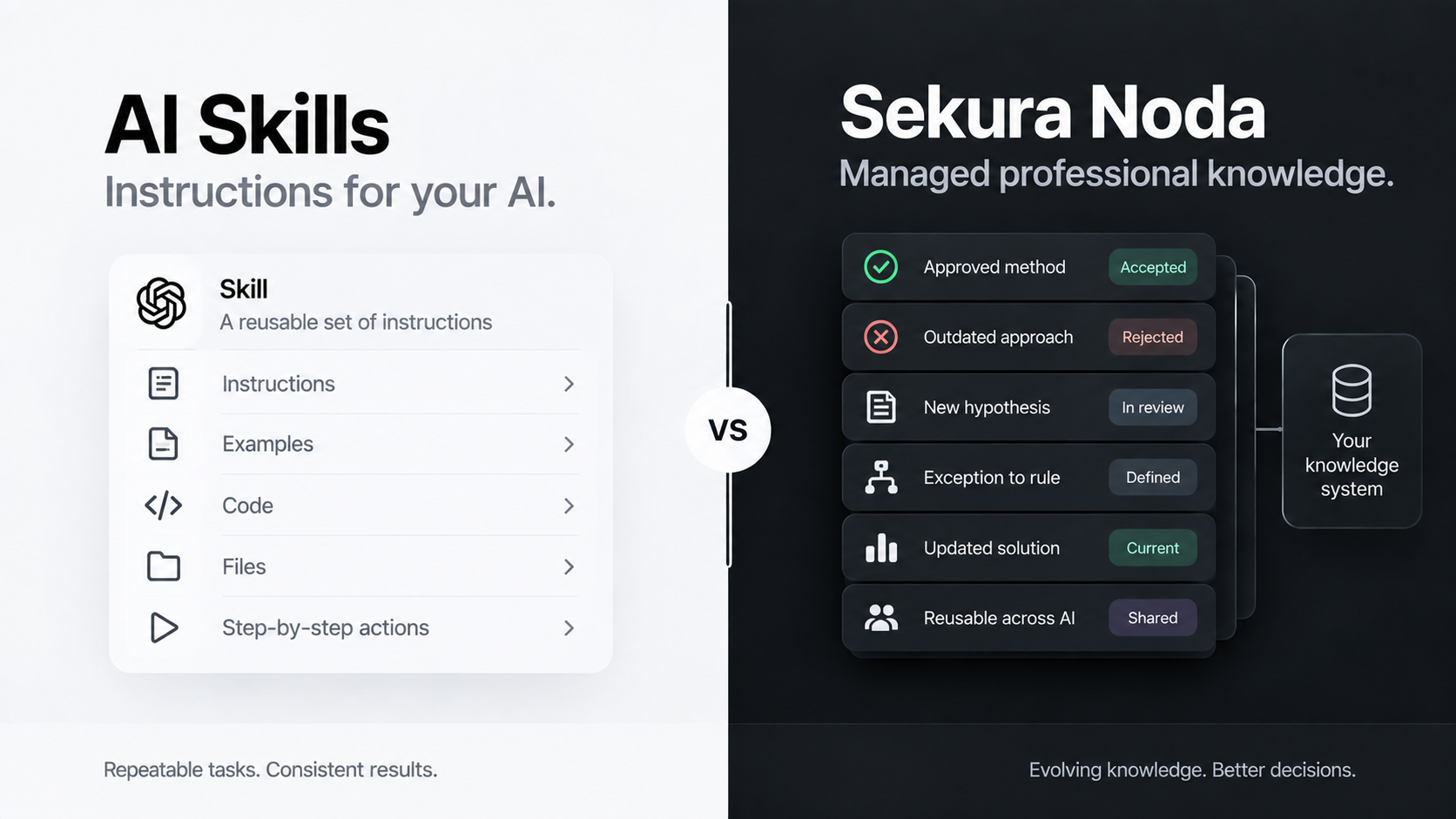
Using AI Skills, you can give the model a ready-made procedure: instructions, examples, files, code, and a sequence of actions.
This is convenient for repeatable work.
For example, AI can be taught to create a report according to a standard, check the code according to an established procedure, or perform a specific workflow step by step.
But professional work is rarely limited to just a procedure.
New conclusions are emerging in the process.:
- one approach proved successful;
- the other one led to an error;
- The rule had to be changed;
- an exception has been found;
- The hypothesis still needs to be verified;
- the old solution was replaced with a new one.
And here another question arises.:
where to store not the instructions, but what the team has learned in the course of work?
Sekura Noda solves this problem separately
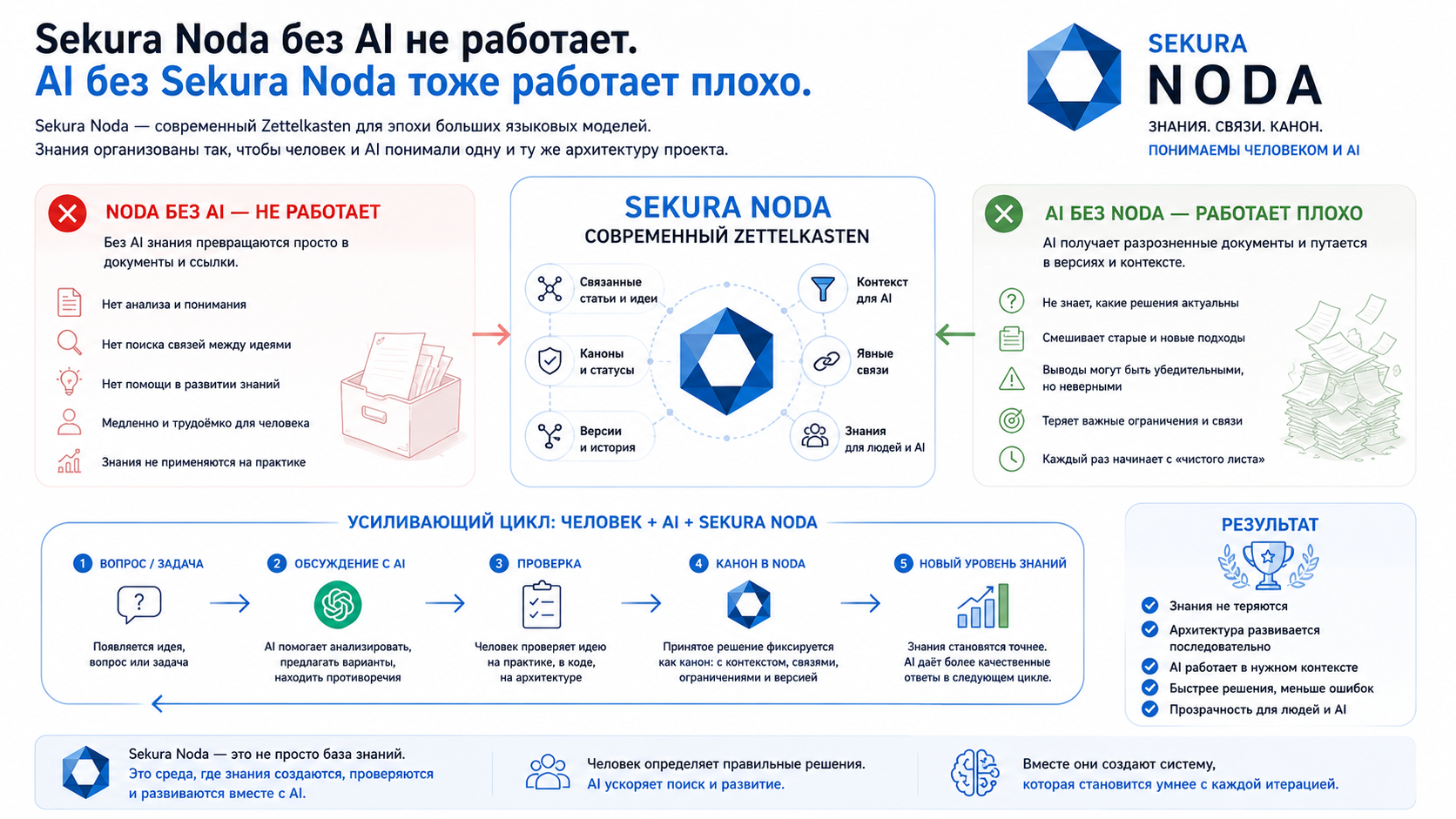
In Sekura Noda, professional methods, solutions, exceptions, and hypotheses exist as independent knowledge.
The method can be accepted.
The wrong approach is to reject.
The hypothesis should be left unconfirmed.
Replace the old solution with a new one.
AI gets not only the task execution procedure, but also the current state of professional knowledge.
AI Skills answer the question:
How do I do this job?
Sekura Noda answers another one:
What current methods, rules, and solutions should this work be based on?
Where AI Skills are Better
When the process is clear in advance and needs to be consistently repeated.
For a clear procedure, a separate skill is simpler and more direct.
Where is Sekura Noda better
When the professional practice itself develops.
When it is important to preserve solutions, errors, exceptions, hypotheses and changes in approaches, and then use the accumulated knowledge in the following tasks.
These technologies can work together.:
AI Skills define the process. Sekura Noda supports the knowledge on which this process is based.
One thing helps the AI to repeat the work. Another thing is not to repeat mistakes that have already been made.
AI Skills хорошо задают способ выполнения задачи. Но инструкция — ещё не профессиональное знание.
С помощью AI Skills можно дать модели готовую процедуру: инструкции, примеры, файлы, код и последовательность действий.
Это удобно для повторяемой работы.
Например, AI можно научить оформлять отчёт по стандарту, проверять код по установленной процедуре или выполнять определённый рабочий процесс шаг за шагом.
Но профессиональная работа редко сводится только к процедуре.
В процессе появляются новые выводы:
- один подход оказался успешным;
- другой привёл к ошибке;
- правило пришлось изменить;
- обнаружилось исключение;
- гипотеза ещё требует проверки;
- старое решение заменили новым.
И здесь возникает другой вопрос:
где хранить не инструкцию, а то, чему команда научилась в ходе работы?
Sekura Noda решает эту задачу отдельно
В Sekura Noda профессиональные методы, решения, исключения и гипотезы существуют как самостоятельные знания.
Метод можно принять.
Ошибочный подход — отклонить.
Гипотезу — оставить неподтверждённой.
Старое решение — заменить новым.
AI получает не только процедуру выполнения задачи, но и актуальное состояние профессионального знания.
AI Skills отвечают на вопрос:
Как выполнить эту работу?
Sekura Noda отвечает на другой:
На каких действующих методах, правилах и решениях должна строиться эта работа?
Где AI Skills лучше
Когда процесс заранее понятен и его нужно стабильно повторять.
Для чёткой процедуры отдельный навык проще и прямее.
Где Sekura Noda лучше
Когда сама профессиональная практика развивается.
Когда важно сохранять решения, ошибки, исключения, гипотезы и изменения подходов, а затем использовать накопленное знание в следующих задачах.
Эти технологии могут работать вместе:
AI Skills задают процесс. Sekura Noda поддерживает знания, на которых этот процесс основан.
Одно помогает AI повторять работу. Другое — не повторять уже пройденные ошибки.

 Share