
The post has been translated automatically. Original language: Russian




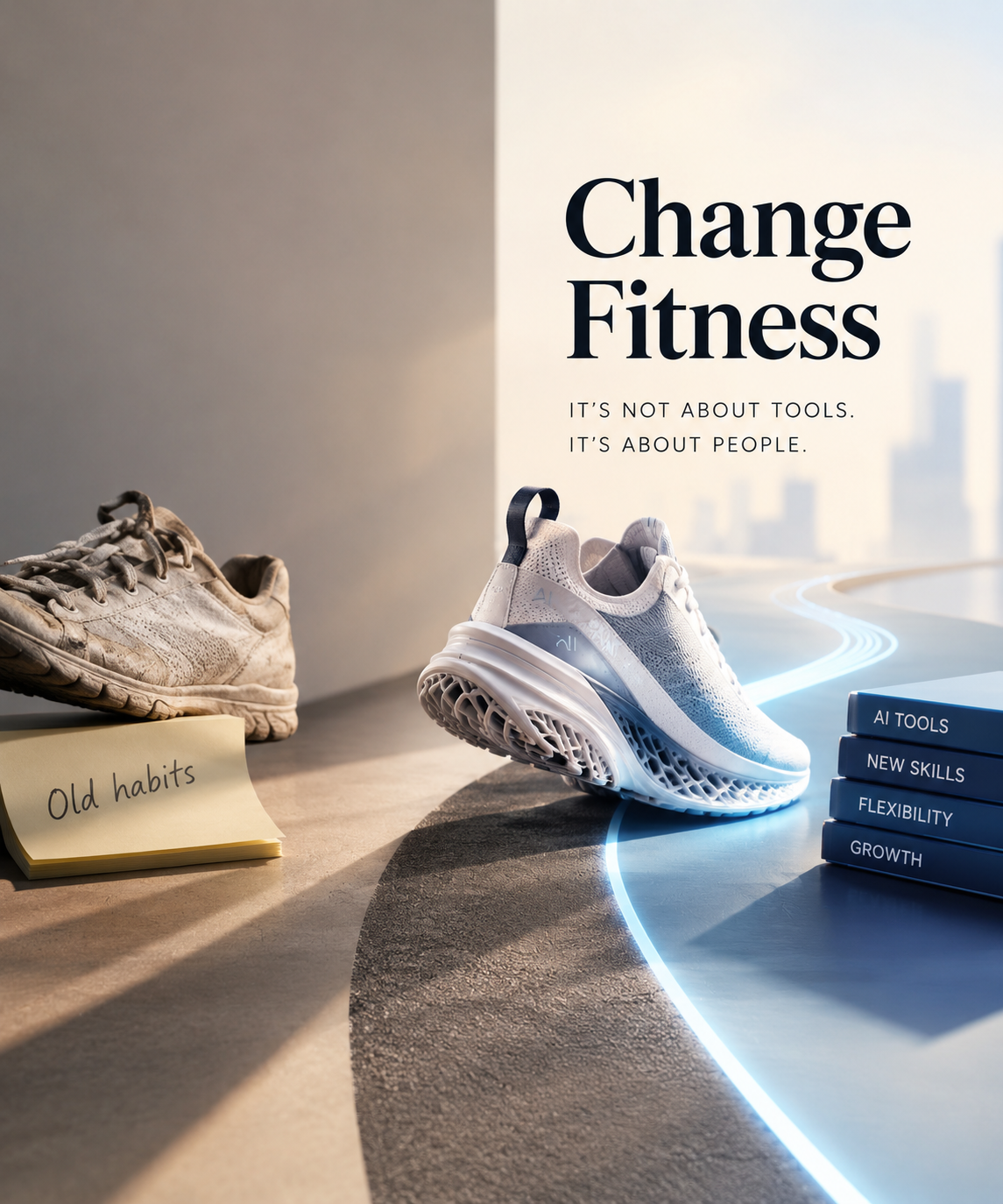
In a recent Harvard Business Review article, researchers drew attention to a cool term - "Change Fitness". This is not about the management's ability to issue a beautiful digitalization order. It's about the real "physical fitness" of the team, how quickly people are able to change their daily work habits without burnout, sabotage and panic.
Imagine that a person who has never run decided to immediately run a marathon in new super-high-tech sneakers for a thousand dollars. The sneakers are great, but if your feet aren't ready, you'll get hurt.
Exactly the same thing is happening with AI and new technologies in business.:
- Tools are ahead of adaptation. The company buys subscriptions, implements complex algorithms, and waits for a miracle. But employees continue to work the "old-fashioned way" because the old habit is clearer, but there is no resource to master the new one.
- Automation of chaos. If the processes are in a mess and the team is under stress, the introduction of AI simply accelerates this chaos. As a result, the company loses both money and people.
- The perfect execution syndrome. People are afraid to make mistakes with new tools, so they take a step back to the usual Excel spreadsheets and manual calls.
What is the essence of Change Fitness?
The winners in the coming years will not be those with the most powerful servers, but those with the highest "joint flexibility" in the organization. It's a skill:
- Quickly test imperfect hypotheses (MVPs) and not be afraid of minor mistakes.
- Quietly throw away processes that are obsolete (even if they have been working for the last five years).
- ""Rebuild the team's mindset from "I do this task manually" to "I manage the system that solves this problem."
Technology is developing at breakneck speed, but people's thinking is changing slowly. The real strength of the product and the team today is not the number of AI chips used, but the ability to quickly adjust their actions on the go.
What about your teams? Are you easily abandoning familiar chains for new tools, or is the good old Excel still winning?
В свежем материале Harvard Business Review исследователи обратили внимание на классный термин - Change Fitness («фитнес к изменениям»). Это не про способность руководства выпустить красивый приказ о цифровизации. Это про реальную «физическую форму» команды, насколько быстро люди умеют менять свои ежедневные рабочие привычки без выгорания, саботажа и паники.
Представьте, что человек, который никогда не бегал, решил сразу пробежать марафон в новых супер-технологичных кроссовках за тысячу долларов. Кроссовки отличные, но если ноги не готовы — будет травма.
С ИИ и новыми технологиями в бизнесе происходит ровно то же самое:
- Инструменты опережают адаптацию. Компания закупает подписки, внедряет сложные алгоритмы и ждет чуда. Но сотрудники продолжают работать «по-старинке», потому что старая привычка понятнее, а на освоение нового нет ресурса.
- Автоматизация хаоса. Если в процессах бардак, а команда находится в стрессе, внедрение ИИ просто ускоряет этот хаос. В итоге компания теряет и деньги, и людей.
- Синдром идеального исполнения. Люди боятся ошибиться в новых инструментах, поэтому делают шаг назад к привычным Excel-табличкам и ручным созвонам.
В чем суть Change Fitness?
Победителями в ближайшие годы станут не те, у кого самые мощные серверы, а те, у кого выше «гибкость суставов» в организации. Это умение:
- Быстро тестировать неидеальные гипотезы (MVP) и не бояться мелких ошибок.
- Спокойно выбрасывать процессы, которые морально устарели (даже если они работали последние пять лет).
- Перестраивать мышление команды с «я делаю эту задачу вручную» на «я управляю системой, которая решает эту задачу».
Технологии развиваются с бешеной скоростью, но мышление людей меняется медленно. Настоящая сила продукта и команды сегодня - это не количество используемых AI-фишек, а способность быстро перестраивать свои действия на ходу.
А как у вас в командах? Легко отказываетесь от привычных цепочек ради новых инструментов или старый добрый Excel пока побеждает?

 Share