
The post has been translated automatically. Original language: Russian





Modern universities have large portfolios of assets, often comprising more than 500 buildings.
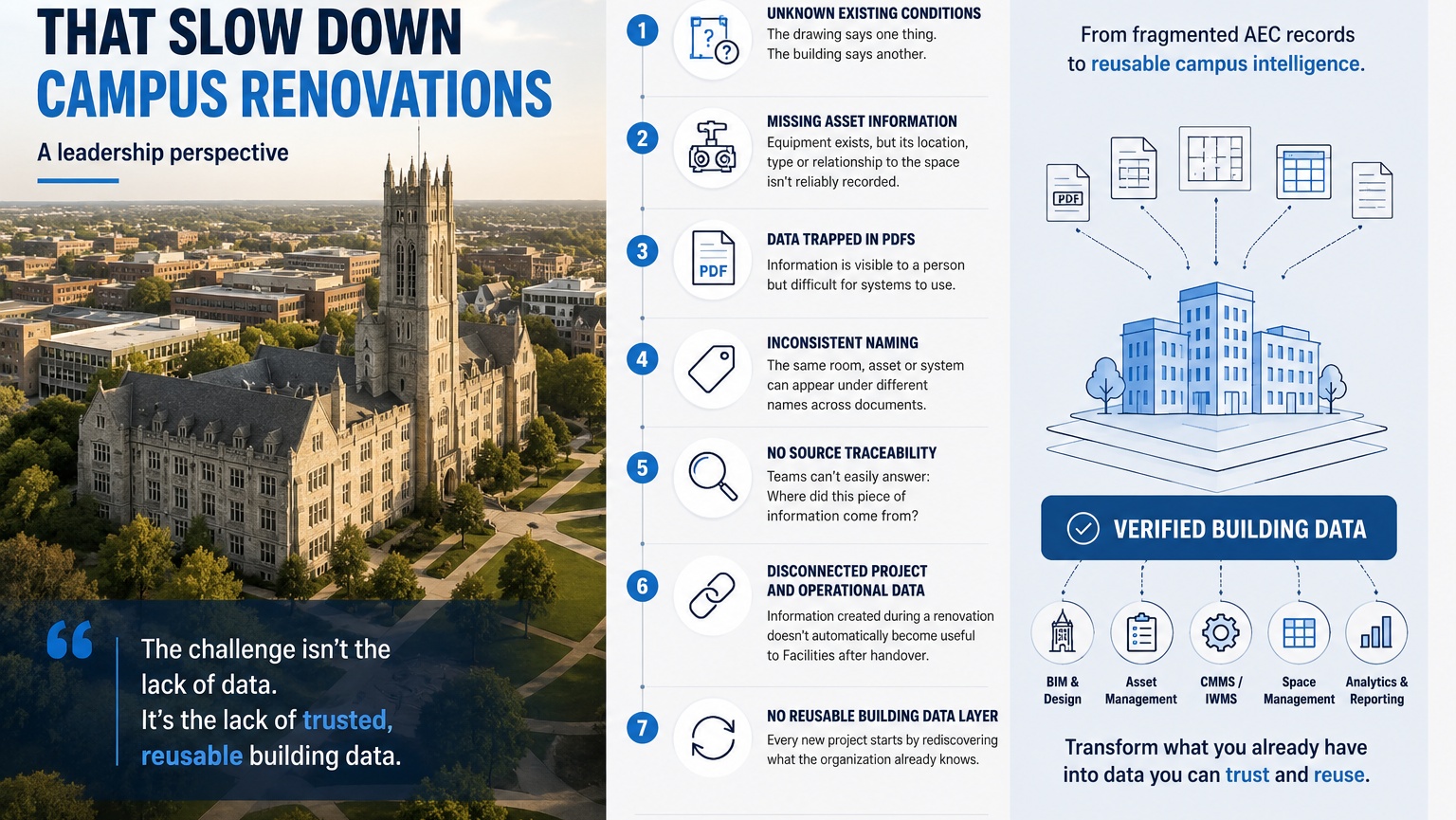
Strangely enough, the most common problem is understanding the area of assets in the portfolio - universities often do not know the real useful area of their facilities.
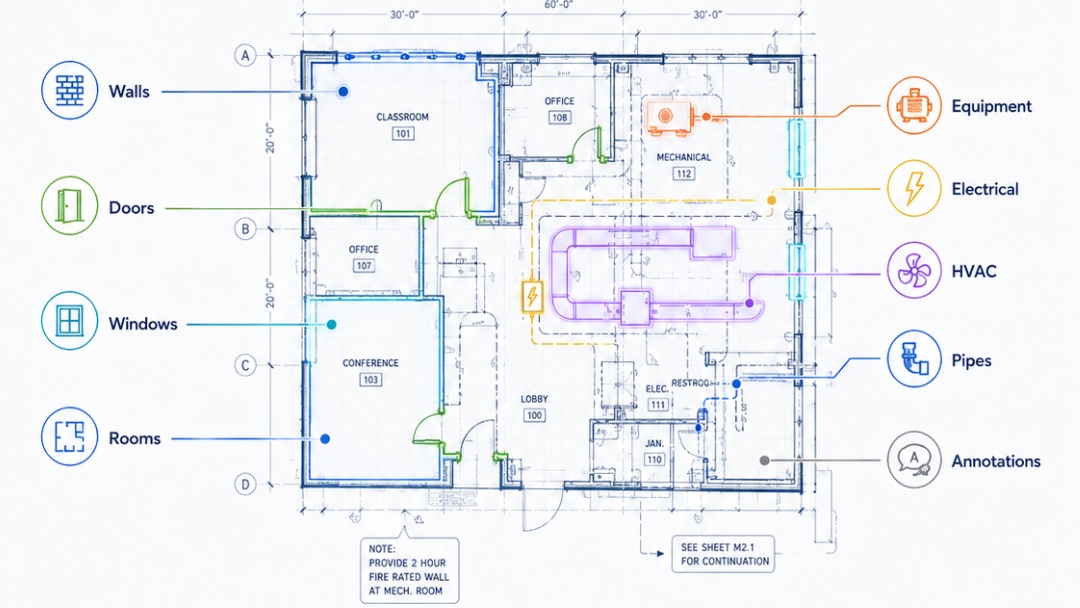
This information is contained in hundreds of paper documents and scanned archives, and sometimes it is lost or does not correspond to reality.
In turn, this hinders the preparation of capital and routine repairs, prioritization of facilities, and inventory of equipment located in them.
With each new repair, the project documentation is re-created, and management continues to operate with disparate and fragmented data.
In the modern world, the initiative to create intelligent campuses is designed to solve these and other problems.
Nevertheless, the teams of many enterprises still make important decisions using disparate information scattered over decades of architectural, engineering and operational documentation.
What is surprising?
Most universities already have everything they need to create a reliable digital base.
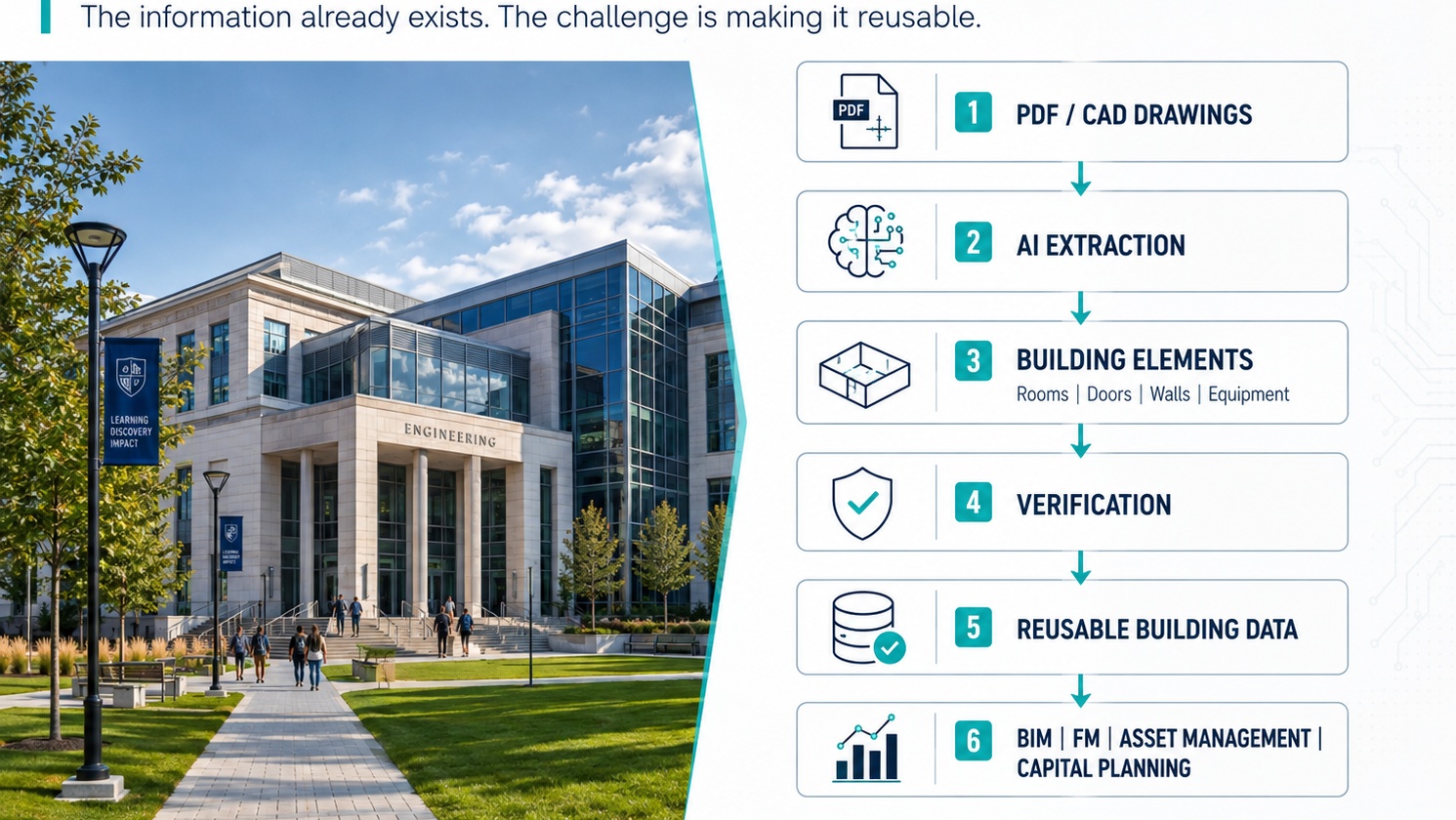
The information already exists.
It's just not in the right format.
Today, we understand that the future of digital transformation of campuses is not about creating another 3D model.
It's about harnessing the engineering knowledge your campus already possesses and turning it into verified building information that can help with facility operations, major renovation planning, and the creation of future Digital Counterparts.
To date, AI has made it possible to reduce the time needed to create a database on university real estate from several years to several months.
In the Modelizer.AI we have proven that it is possible to digitize 780 buildings in just 6 months using AI and proceed to the formation of an intelligent campus database.
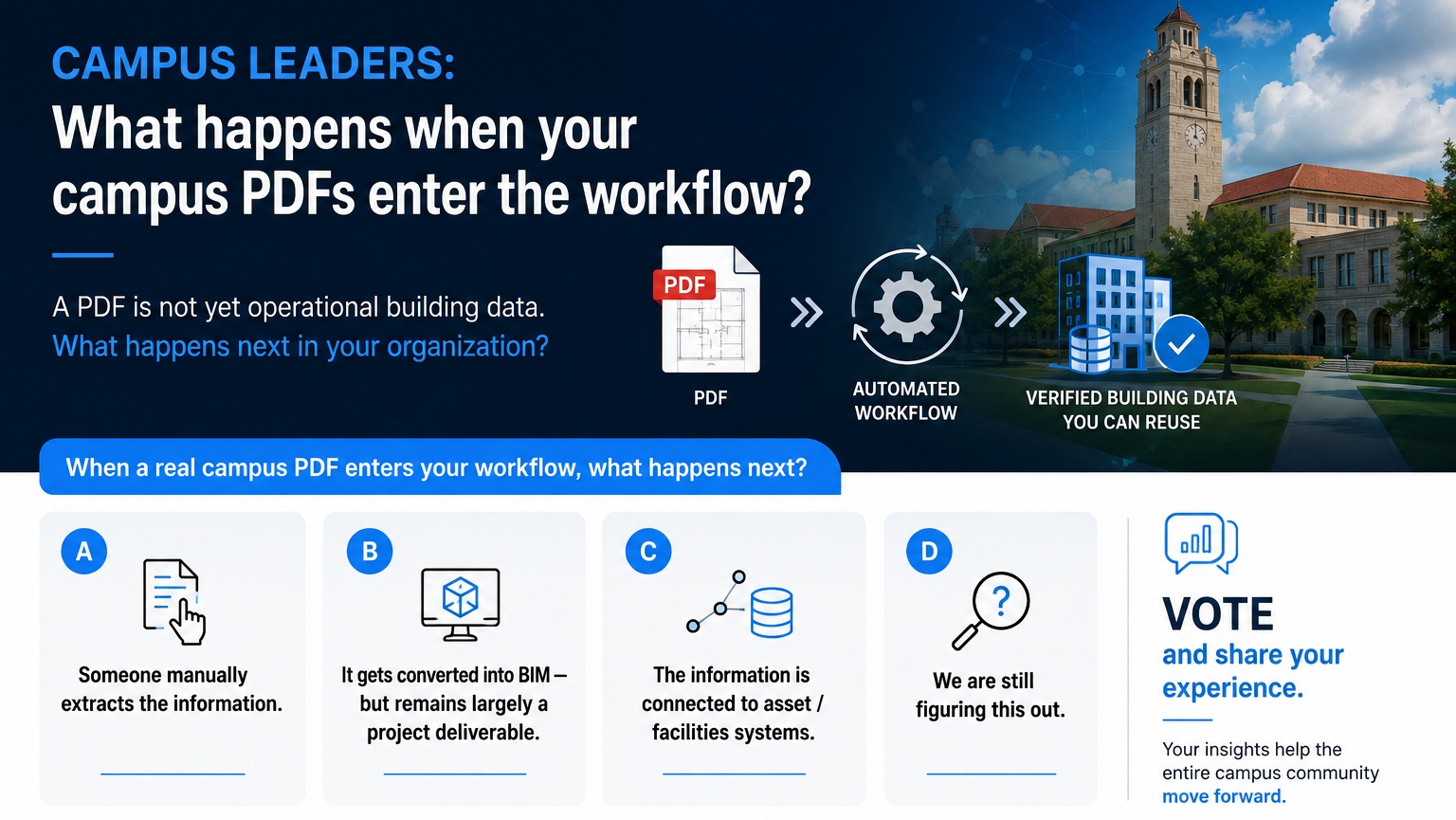
I would be interested to hear your point of view.
Which of these issues is currently the biggest obstacle to your campus?
Современные университеты это большие портфели активов, зачастую включающих более 500 зданий.
Как это ни странно, самой распространенной проблемой является понимание площади активов в портфеле - университеты часто не знают реальную полезную площадь своих объектов.
Эти сведения заключены в сотнях бумажных документов и сканированных архивах, а порой утрачены или не соответствуют реальности.
В свою очередь это мешает подготовке капитального и текущего ремонтов, приоритизации объектов, инвентаризации размещенного в них оборудования.
При каждом новом ремонте заново создается проектная документация, а управление продолжает оперировать разрозненными и фрагментированными данными.
В современном мире эти и другие проблемы призвана решить инициатива по созданию интеллектуальных кампусов.
Тем не менее, команды многих предприятий по-прежнему принимают важные решения, используя разрозненную информацию, разбросанную по десятилетиям архитектурной, инженерной и эксплуатационной документации.
Что удивительно?
Большинство университетов уже обладают всем необходимым для создания надежной цифровой базы.
Информация уже существует.
Она просто не в том формате.
Сегодня мы понимаем, что будущее цифровой трансформации кампусов заключается не в создании еще одной 3D-модели.
Речь идет о том, чтобы использовать инженерные знания, которыми уже владеет ваш кампус, и превратить их в проверенную информацию о зданиях, которая может помочь в эксплуатации объектов, планировании капитального ремонта и создании будущих Цифровых Двойников.
На сегодняшний день ИИ позволил сократить время создания базы данных об университетской недвижимости от нескольких лет, до нескольких месяцев.
В Modelizer.AI мы доказали, что можно оцифровать 780 зданий всего за 6 месяцев с использованием ИИ и перейти к формированию базы данных интеллектуального кампуса.
Мне было бы интересно услышать вашу точку зрения.
Какая из этих проблем в настоящее время является самым большим препятствием для вашего кампуса?
 Share