
The post has been translated automatically. Original language: Russian





Confluence is able to collect the company's knowledge. But a document that exists does not necessarily contain a valid solution.
It is convenient to store in Confluence:
- regulations;
- project documentation;
- technical solutions;
- Instructions;
- minutes of meetings;
- internal knowledge bases.
Modern AI functions allow you to search through these materials, ask questions, and use the corporate context in your work.
This solves the problem of access to information.
But it does not always solve the problem of its reliability in time.
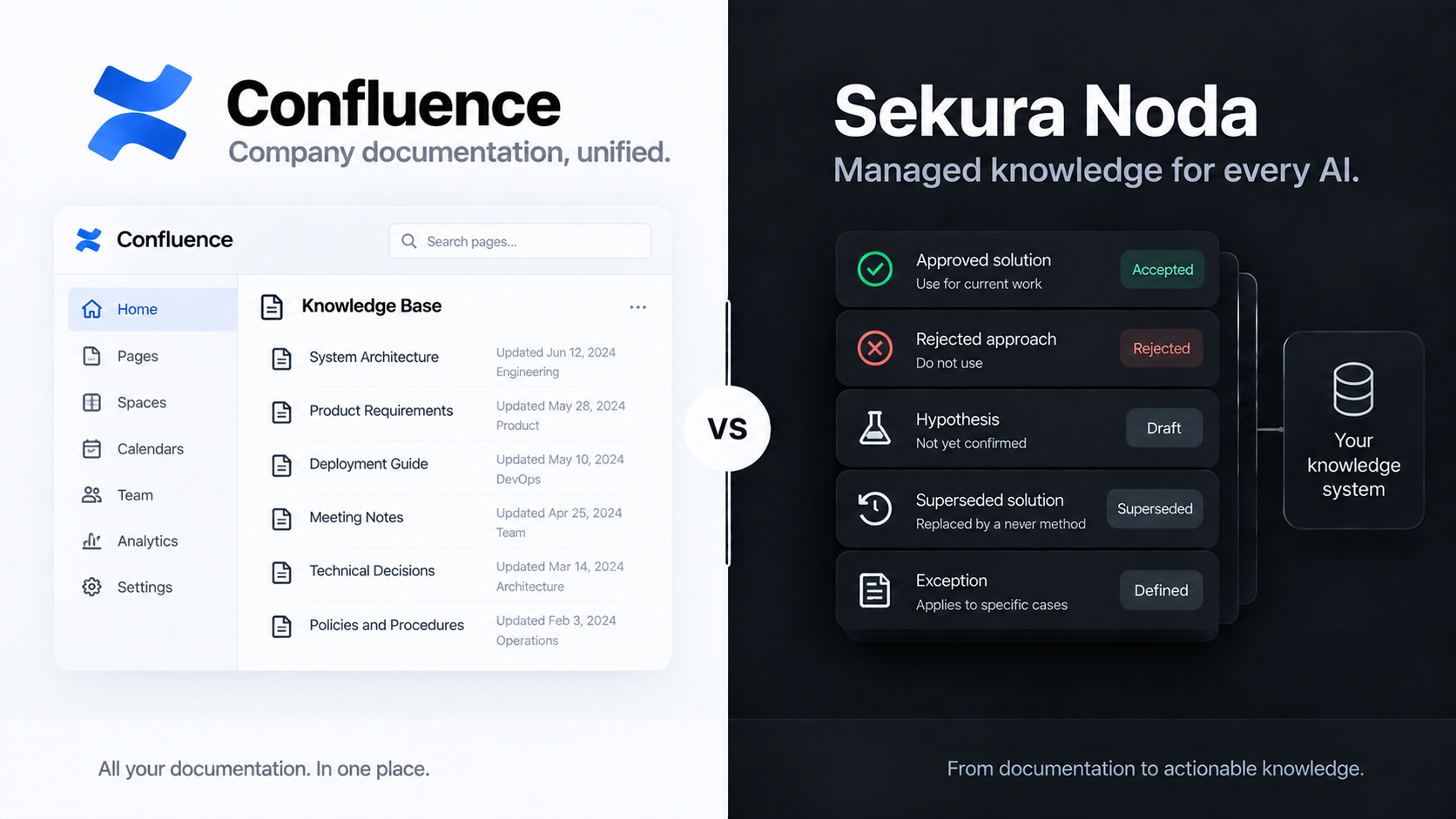
Let's imagine that Confluence has:
- an architectural solution from two years ago;
- the new document that replaced it;
- protocol for discussing alternatives;
- an exception to the general rule;
- a hypothesis that the team never accepted.
All the pages are real.
Everything is available to AI.
But they cannot be applied in the same way.
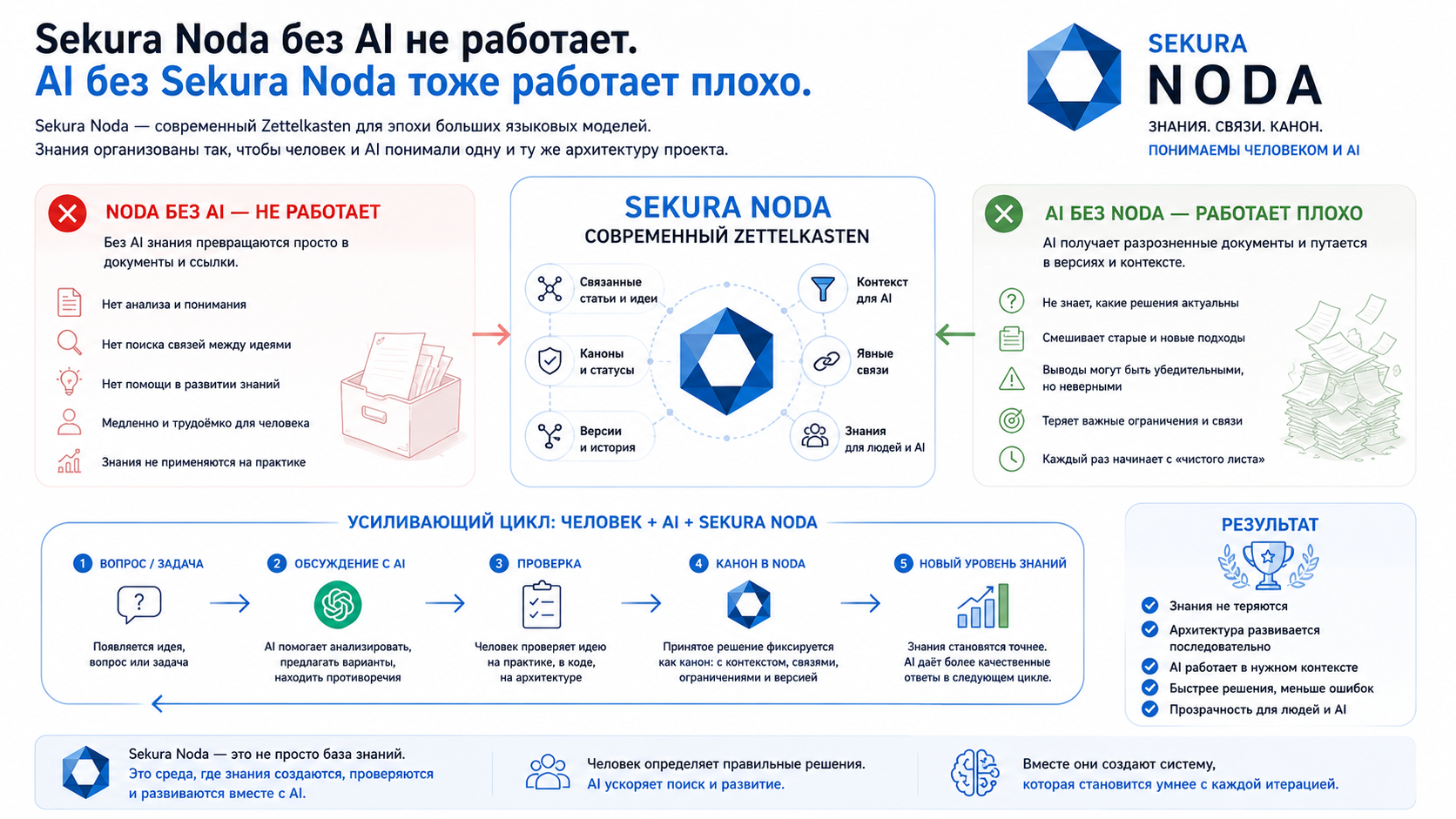
Sekura Noda records not a document, but a decision.
In Sekura Noda, an important conclusion can be drawn from discussions and documents into a separate knowledge.
For example:
we are using this approach; this option has been rejected; it is still a hypothesis; this rule has an exception; the previous solution is no longer valid.
As a result, AI doesn't have to reconstruct the team's position every time from several pages and a discussion history.
Confluence helps to answer:
What has the company ever recorded on this topic?
Sekura Noda answers another question:
What decision do we follow now?
Where is Confluence better
When people need complete corporate documentation: large pages, collaborative editing, section structure, and project history.
To do this, Sekura Noda should not replace Confluence.
Where is Sekura Noda better
When it is necessary to allocate a small amount of knowledge from a large array of corporate information, which AI should really be guided by.
The documents explain the story.
Sekura Noda captures the conclusion of this story.
Confluence умеет собирать знания компании. Но документ, который существует, не обязательно содержит решение, которое действует.
В Confluence удобно хранить:
- регламенты;
- проектную документацию;
- технические решения;
- инструкции;
- протоколы встреч;
- внутренние базы знаний.
Современные AI-функции позволяют искать по этим материалам, задавать вопросы и использовать корпоративный контекст в работе.
Это решает проблему доступа к информации.
Но не всегда решает проблему её достоверности во времени.
Представим, что в Confluence есть:
- архитектурное решение двухлетней давности;
- новый документ, который его заменил;
- протокол обсуждения альтернативы;
- исключение из общего правила;
- гипотеза, которую команда так и не приняла.
Все страницы настоящие.
Все доступны AI.
Но применять их одинаково нельзя.
Sekura Noda фиксирует не документ, а решение
В Sekura Noda важный вывод можно вынести из обсуждений и документов в отдельное знание.
Например:
используем этот подход;этот вариант отклонён;это пока гипотеза;это правило имеет исключение;предыдущее решение больше не действует.
В результате AI не нужно каждый раз реконструировать позицию команды из нескольких страниц и истории обсуждений.
Confluence помогает ответить:
Что компания когда-либо зафиксировала по этой теме?
Sekura Noda отвечает на другой вопрос:
Какого решения мы придерживаемся сейчас?
Где Confluence лучше
Когда людям нужна полноценная корпоративная документация: большие страницы, совместное редактирование, структура разделов и история проекта.
Для этого Sekura Noda не должна заменять Confluence.
Где Sekura Noda лучше
Когда из большого массива корпоративной информации нужно выделить небольшое количество знаний, которыми AI должен реально руководствоваться.
Документы объясняют историю.
Sekura Noda фиксирует вывод из этой истории.

 Share