
The post has been translated automatically. Original language: Russian





You have opened an online store, selected the Russian language, added the product to the cart and closed the tab. We returned a day later - the language remained the same, the product is still in the cart, and sometimes you don't even need to log in to your account again. One of the mechanisms that helps websites do this is cookies.
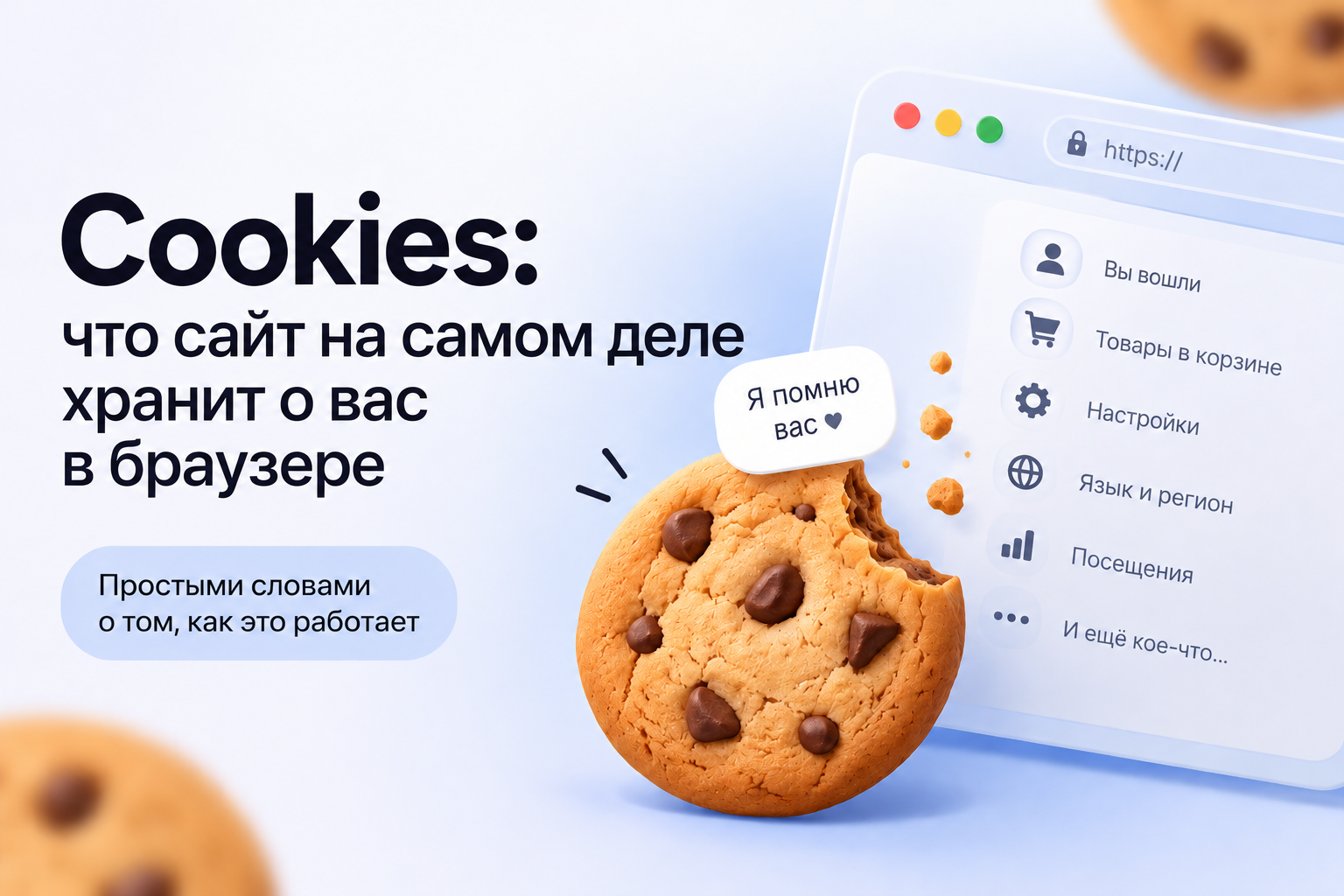
Cookies are small data that a website stores in the browser. Thanks to them, he can remember, for example:
- that you are already logged in to your account;
- Which language or region have you chosen?;
- what was put in the basket;
- which pages were visited;
- that you have already seen a certain notification.
But there is an important caveat: a cookie does not necessarily contain all this information inside. Sometimes the browser only stores a unique identifier. And the details are already on the server and linked to it. Conventionally, the browser tells the site: "I am user No. 8472," and the site already knows which bucket or session belongs to this number.
Then why are we constantly being asked about cookies?
Because they are not only used for convenience.There are necessary cookies. Authorization, shopping cart, and other site functions may not work without them. And there are analytical and advertising ones. They can be used, for example, to understand which pages a person visited, where they came from, whether they returned again, and what actions they performed. Therefore, the "Accept all" and "Only necessary" buttons are not just a formality. You can actually allow different categories of cookies.
And if you delete them?
Nothing terrible will happen to the account. However, the site may stop recognizing your browser: it will ask you to log in again, forget the shopping cart or the selected settings. Therefore, cookies themselves are not a huge file with all the information about a person.Rather, it is a small memory of the site in your browser, thanks to which the Internet does not begin to get to know you anew every time you open a page.
Вы открыли интернет-магазин, выбрали русский язык, добавили товар в корзину и закрыли вкладку. Через день вернулись - язык остался прежним, товар всё ещё в корзине, а иногда даже входить в аккаунт заново не нужно. Один из механизмов, который помогает сайтам это делать - cookies.
Cookies - это небольшие данные, которые сайт сохраняет в браузере. Благодаря им он может запомнить, например:
- что вы уже вошли в аккаунт;
- какой язык или регион выбрали;
- что положили в корзину;
- какие страницы посещали;
- что уже видели определённое уведомление.
Но есть важный нюанс: cookie не обязательно содержит всю эту информацию внутри. Иногда браузер хранит только уникальный идентификатор. А подробности уже находятся на сервере и привязаны к нему. Условно, браузер сообщает сайту: «Я пользователь №8472», а сайт уже знает, какая корзина или сессия относится к этому номеру.
Тогда почему нас постоянно спрашивают про cookies?
Потому что они используются не только для удобства.Есть необходимые cookies - без них могут не работать авторизация, корзина и другие функции сайта. А есть аналитические и рекламные. С их помощью можно, например, понять, какие страницы человек посещал, откуда пришёл на сайт, возвращался ли снова и какие действия совершал. Поэтому кнопки «Принять все» и «Только необходимые» - это не просто формальность. Вы действительно можете разрешать разные категории cookies.
А если удалить их?
Ничего страшного с аккаунтом не произойдёт. Но сайт может перестать узнавать ваш браузер: попросит снова войти, забудет корзину или выбранные настройки. Поэтому cookies сами по себе - не огромный файл со всей информацией о человеке. Это скорее маленькая память сайта в вашем браузере, благодаря которой интернет не начинает знакомство с вами заново при каждом открытии страницы.

 Share