


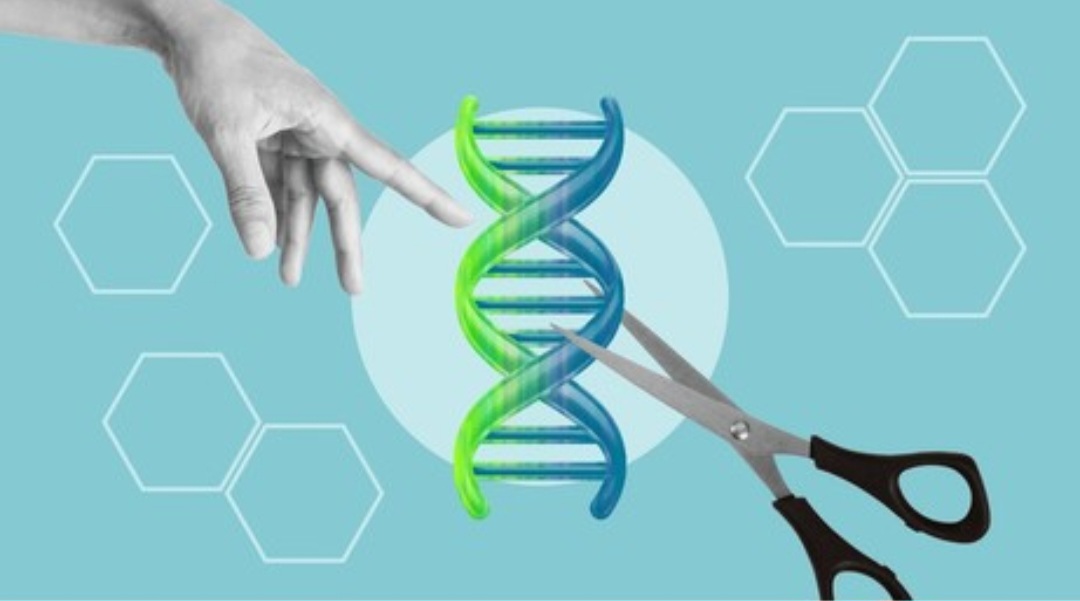

The post has been translated automatically. Original language: Russian




In the modern scientific world, there are studies that change the perception of the possible. One of them is the work on editing the genome using CRISPR–Cas9. Scientists have learned how to make precise edits to DNA, which opens up a chance to treat hereditary diseases and create new therapeutic approaches. This is impressive, not only technically, but also in terms of the scale of the consequences: medicine, bioethics, and laws must now catch up with science. You can admire the courage and intelligence of the researchers, but you need to remember about responsibility and caution.
The essence of the discovery: CRISPR–Cas9 is a molecular system that allows you to accurately find the right section of DNA and make changes to it (cut, replace, add).Why this is important: it opens up real ways to treat hereditary diseases (for example, certain diseases of the blood, vision, and immune system) and accelerates the development of new therapies.Where it is already used: in research on cells and animals, in clinical trials for individual diseases; scientists are testing approaches that used to be science fiction.The main "innovation": We have moved from observing genes to actively editing them — DNA has become something that can be purposefully "edited".Ethics and risks: embryo editing, possible unpredictable effects, issues of "designer babies" and inequality — all this requires strict rules and international control.""What this means for us: in the coming decades, CRISPR may change medicine, agriculture, and even our understanding of what is "normal" and "healthy."
CRISPR is not just a tool. It is a mirror in which we see both our genius and our responsibility.
В современном научном мире есть исследования, которые меняют представление о возможном. Одно из них — работы по редактированию генома с помощью CRISPR–Cas9. Учёные научились точно вносить правки в ДНК, что открывает шанс лечить наследственные болезни и создавать новые терапевтические подходы. Это впечатляет — не только технически, но и по масштабу последствий: медицина, биоэтика и законы теперь должны догонять науку. Восхищаться можно смелостью и интеллектом исследователей, но помнить нужно про ответственность и осторожность.
Суть открытия: CRISPR–Cas9 — это молекулярная система, которая позволяет с высокой точностью находить нужный участок ДНК и вносить в него изменения (вырезать, заменять, добавлять).Почему это важно: открывает реальные пути для лечения наследственных заболеваний (например, некоторых болезней крови, зрения, иммунитета) и ускоряет разработку новых терапий.Где уже применяется: в исследованиях на клетках и животных, в клинических испытаниях для отдельных болезней; учёные тестируют подходы, которые раньше были научной фантастикой.Главная «новация»: мы перешли от наблюдения за генами к их активному редактированию — ДНК стала чем‑то, что можно целенаправленно «править».Этика и риски: редактирование эмбрионов, возможные непредсказуемые эффекты, вопросы «дизайнерских детей» и неравенства — всё это требует строгих правил и международного контроля.Что это значит для нас: в ближайшие десятилетия CRISPR может изменить медицину, сельское хозяйство и даже наше представление о том, что такое «норма» и «здоровье».
CRISPR — это не просто инструмент. Это зеркало, в котором мы видим и свой гений, и свою ответственность.




