
The post has been translated automatically. Original language: Russian




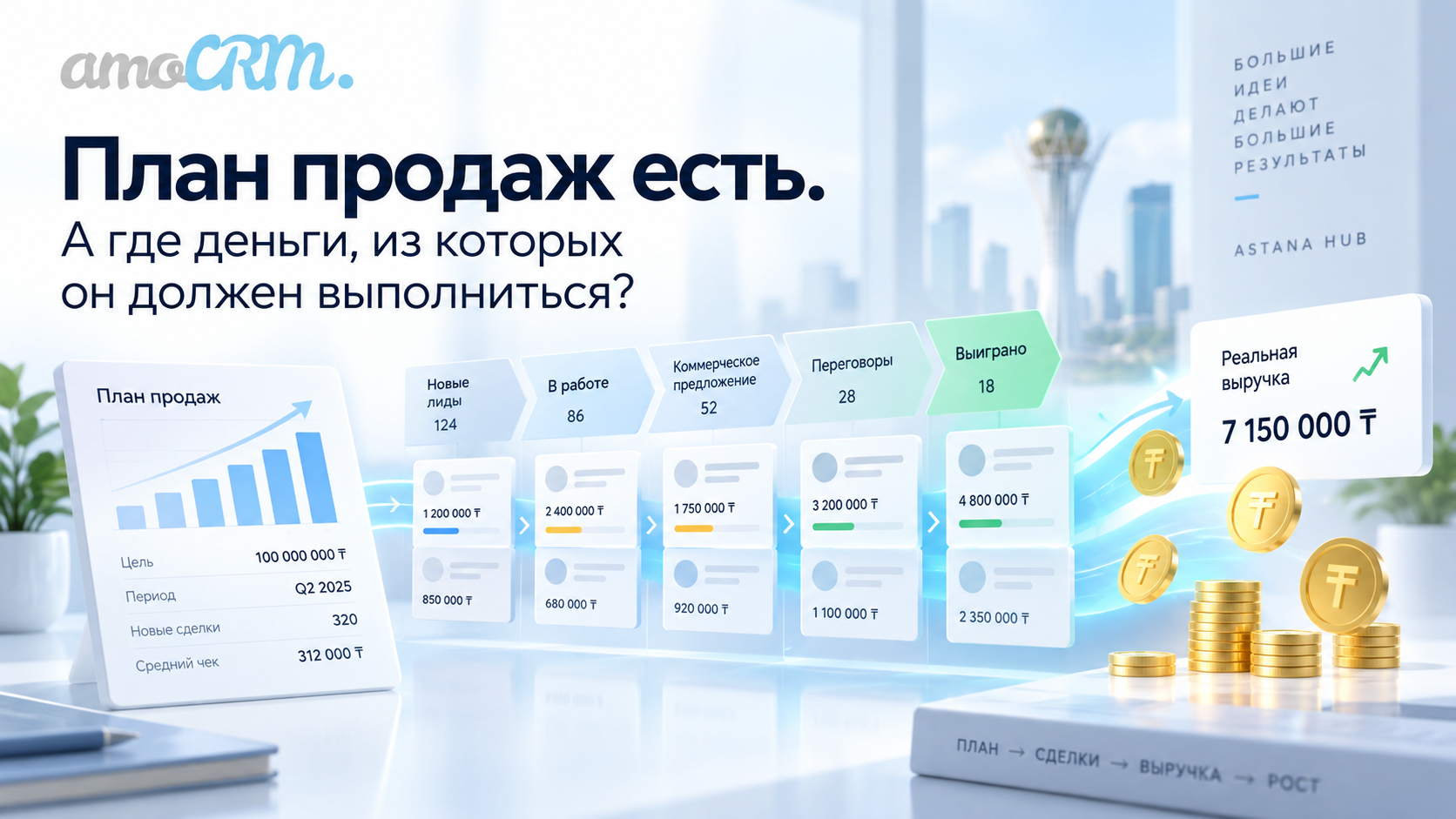
CRM is often implemented with a fairly direct expectation: there will be order in transactions, managers will stop forgetting customers, the head will receive normal analytics, and after that sales should grow.
After a few months, the system is already working. All requests are recorded, transactions are distributed through the funnel, tasks are set, integrations and automatic scenarios are enabled. At the same time, revenue may remain approximately at the same level.
The simplest conclusion in this situation is that CRM did not help. But the system itself does not create demand and does not change the product. Her influence begins elsewhere.: it shows how sales actually work and where the company is losing existing opportunities.
At first, the losses become visible
Before normal accounting, many problems have existed for years and are perceived as a normal part of the job. The manager did not respond to one request, they forgot to call someone back, several transactions have been standing still for a long time, the client promised to return by a certain date, but no one contacted him further.
Individually, each such case looks insignificant. On a department scale, they can account for a significant portion of lost sales.
After the introduction of CRM, these places become more visible. You can see the speed of incoming transactions, transactions without the next step, overdue agreements, and customers who have stopped moving through the funnel. It becomes possible to go from the general indicator to a specific transaction and understand exactly what happened.
Sometimes, already at this stage, it turns out that the company does not need more leads. First, you need to properly process those who are already arriving.
It's easy to underestimate this result. CRM has not yet brought a new sale, but it has shown a section of the process through which the company regularly loses money. The further effect depends on what they do with this information.
Not all the reasons are inside the CRM
Let's say that no more requests are lost. Managers respond quickly, tasks are completed on time, and funnel stages are clearly configured. Sales may not grow anyway.
The reason may be the quality of incoming traffic. Advertising leads people to whom the product is not initially suitable. Customers are interested, find out the price and leave. One source creates a large number of applications, but almost does not provide payments.
CRM shows this picture well, especially if the company records the reasons for failures and links sales to sources. But marketing, the offer, or the product itself will have to be corrected further.
The same applies to the work of sellers. The reminder will help the manager to call on time, but it will not teach him how to conduct difficult negotiations. A correctly filled out card does not mean that the employee understood the customer's need. A deal can look perfect from the point of view of CRM discipline and still end in rejection.
Therefore, after implementation, it is important to separate the quality of the process and the quality of the sale itself. The system helps to eliminate accidental losses and human forgetfulness, but part of the result still depends on people, the product and the market.
Sales should gradually become a process.
The strength of CRM appears where the result ceases to depend entirely on the memory of a particular employee.
A new appeal should receive a response regardless of who is working today. After the conversation, the agreement and the next step should be preserved. If an employee is absent, the client should not disappear with them. Repetitive actions can be gradually transferred to automatic scripts.
Due to this, sales become more stable. Even if one manager is weaker than the other, the company can still provide a basic level of processing: do not lose an appeal, remind yourself in time, return the client at the right moment, and save the communication history.
But for this, the process itself must be clear. If managers define the stages of a transaction differently, important agreements remain only in correspondence or in their heads, and no one understands the causes of losses, transferring such work to CRM does not change much.
As a result, the company gets a neat funnel, inside which the old chaos continues to live.
Therefore, the beneficial effect usually does not come from the number of configured robots or required fields. It appears when the work with the client itself becomes clearer and more repeatable.
The manager should start seeing the future result earlier.
Before CRM, the manager often finds out about problems too late. We didn't fulfill the plan, revenue decreased, and a major deal fell through. After that, the search for the reasons begins.
With normal analytics, you can watch a little earlier. How much money is currently in the works, whether there are enough new deals, whether they are moving through the funnel, whether there are fresh agreements for clients and where deviations have already appeared.
This is more useful than simply monitoring the number of calls or closed tasks. Any formal indicator quickly turns into a goal for employees: if they ask for more calls, there will be more calls, and if they ask to close tasks faster, tasks will start closing faster. The relationship with sales may not change at all.
Therefore, it is better to look at what happens to the client after the manager's action. Has the next step appeared, has the deal progressed, is there a clear agreement, has the payment forecast changed.
A good CRM allows you to find a place in a few minutes where the manager really needs to step in. Instead of viewing hundreds of transactions in a row, you can see the deviation and go to the specific clients that make up it.
Over time, this may be the main effect of the implementation. The problem becomes noticeable even before it has turned into a bad month in terms of revenue.
It is better to look for growth not only in new customers.
After implementation, companies often continue to look primarily at the number of new leads and the conversion rate to the first purchase. At the same time, most of the CRM data relates to people with whom the company has already communicated.
There are sales there too.
The customer could have bought earlier and not returned for a long time. It may have a deadline for the next purchase or extension. Someone was interested in the product, but postponed the decision. As for the clients, there just hasn't been any next action for a long time.
Without a system, this database quickly turns into an archive. Managers remember the biggest or most convenient clients, while the rest gradually disappear from attention.
CRM allows you to work with them consistently. The story is not lost, you can see previous purchases and agreements, return to the client on time and not start each new conversation from scratch.
Sometimes this is where faster growth is found than in increasing the advertising budget. The company is starting to make better use of its already accumulated customer base.
How to understand that the implementation has produced a result at all
It is inconvenient to look only at the total revenue. It is simultaneously influenced by the market, seasonality, advertising, prices, product, and many other factors.
After implementation, it is worth checking out changes closer to the process. Have incoming requests become less frequent? Has the number of transactions decreased without the following action? Has it become clearer what the forecast consists of? Is it possible to quickly understand the reasons for the poor indicator? Has the company started working systematically with the existing database?
If none of this has happened, perhaps CRM has really remained just a new interface for the old way of working.
If there are changes, then you need to look at which of them give the business the greatest effect, and develop these areas. In some cases, the result will be an increase in conversions, in others repeat sales, in others a reduction in losses or a more accurate forecast.
The implementation itself does not end when employees have learned how to create deals and tasks. It starts to benefit when CRM data changes a company's decisions.
CRM does not create a good sales department. She makes his work visible. And growth begins with what the company does with what it sees.
CRM нередко внедряют с довольно прямым ожиданием: появится порядок в сделках, менеджеры перестанут забывать клиентов, руководитель получит нормальную аналитику, а вслед за этим должны вырасти продажи.
Через несколько месяцев система уже работает. Все обращения фиксируются, сделки распределяются по воронке, стоят задачи, подключены интеграции и автоматические сценарии. При этом выручка может остаться примерно на прежнем уровне.
Самый простой вывод в такой ситуации - CRM не помогла. Но сама система не создаёт спрос и не меняет продукт. Её влияние начинается в другом месте: она показывает, как на самом деле устроены продажи и где компания теряет уже существующие возможности.
Сначала становятся видны потери
До нормального учёта многие проблемы существуют годами и воспринимаются как обычная часть работы. Менеджер не ответил на одно обращение, кому-то забыли перезвонить, несколько сделок давно стоят без движения, клиент обещал вернуться к определённой дате, но дальше с ним никто не связался.
По отдельности каждый такой случай выглядит незначительным. В масштабе отдела из них может складываться существенная часть потерянных продаж.
После внедрения CRM эти места становятся заметнее. Можно увидеть скорость обработки входящих, сделки без следующего шага, просроченные договорённости, клиентов, которые перестали двигаться по воронке. Появляется возможность дойти от общего показателя до конкретной сделки и понять, что именно произошло.
Иногда уже на этом этапе выясняется, что компании не требуется больше лидов. Сначала нужно нормально обработать тех, которые уже приходят.
Такой результат легко недооценить. CRM пока не принесла новую продажу, зато показала участок процесса, через который компания регулярно теряет деньги. Дальнейший эффект зависит уже от того, что с этой информацией сделают.
Не все причины находятся внутри CRM
Допустим, ни одно обращение больше не теряется. Менеджеры быстро отвечают, задачи выполняются вовремя, этапы воронки настроены понятно. Продажи всё равно могут не расти.
Причина может находиться в качестве входящего трафика. Реклама приводит людей, которым продукт изначально не подходит. Клиенты интересуются, узнают цену и уходят. Один источник создаёт большое количество заявок, но почти не даёт оплат.
CRM хорошо показывает такую картину, особенно если компания фиксирует причины отказов и связывает продажи с источниками. Но исправлять дальше придётся уже маркетинг, предложение или сам продукт.
То же самое касается работы продавцов. Напоминание поможет менеджеру вовремя позвонить, но не научит его вести сложные переговоры. Правильно заполненная карточка не означает, что сотрудник понял потребность клиента. Сделка может выглядеть идеально с точки зрения дисциплины CRM и при этом закончиться отказом.
Поэтому после внедрения важно разделять качество процесса и качество самой продажи. Система помогает убрать случайные потери и человеческую забывчивость, но часть результата по-прежнему зависит от людей, продукта и рынка.
Продажи постепенно должны становиться процессом
Сильная сторона CRM появляется там, где результат перестаёт полностью зависеть от памяти конкретного сотрудника.
Новое обращение должно получить ответ независимо от того, кто сегодня работает. После разговора должна сохраниться договорённость и следующий шаг. Если сотрудник отсутствует, клиент не должен исчезнуть вместе с ним. Повторяющиеся действия можно постепенно передавать автоматическим сценариям.
За счёт этого продажи становятся устойчивее. Даже если один менеджер работает слабее другого, компания всё равно может обеспечить базовый уровень обработки: не потерять обращение, вовремя напомнить о себе, вернуть клиента в нужный момент, сохранить историю общения.
Но для этого сам процесс должен быть понятен. Если менеджеры по-разному определяют этапы сделки, важные договорённости остаются только в переписке или голове, а причины потерь никто не разбирает, перенос такой работы в CRM мало что меняет.
В результате компания получает аккуратную воронку, внутри которой продолжает жить прежний хаос.
Поэтому полезный эффект обычно приходит не от количества настроенных роботов или обязательных полей. Он появляется тогда, когда сама работа с клиентом становится понятнее и повторяемее.
Руководитель должен начать раньше видеть будущий результат
До CRM руководитель часто узнаёт о проблемах слишком поздно. Не выполнили план, снизилась выручка, крупная сделка сорвалась. После этого начинается поиск причин.
При нормальной аналитике можно смотреть немного раньше. Сколько денег сейчас находится в работе, достаточно ли новых сделок, двигаются ли они по воронке, есть ли по клиентам свежие договорённости и где уже появились отклонения.
Это полезнее простого контроля количества звонков или закрытых задач. Любой формальный показатель довольно быстро превращается для сотрудников в цель: попросили больше звонить - звонков станет больше, попросили быстрее закрывать задачи - задачи начнут закрываться быстрее. Связь с продажами при этом может вообще не измениться.
Поэтому смотреть лучше на то, что происходит с клиентом после действия менеджера. Появился ли следующий шаг, продвинулась ли сделка, есть ли понятная договорённость, изменился ли прогноз оплаты.
Хорошая CRM позволяет за несколько минут найти место, где руководителю действительно нужно вмешаться. Не просматривать сотни сделок подряд, а увидеть отклонение и перейти к конкретным клиентам, из которых оно складывается.
Со временем именно это может оказаться главным эффектом внедрения. Проблема становится заметна ещё до того, как превратилась в плохой месяц по выручке.
Рост лучше искать не только в новых клиентах
После внедрения компании часто продолжают смотреть в первую очередь на количество новых лидов и конверсию в первую покупку. При этом большая часть данных CRM относится к людям, с которыми компания уже когда-то общалась.
Там тоже есть продажи.
Клиент мог покупать раньше и давно не возвращаться. У него может подходить срок следующей покупки или продления. Кто-то интересовался продуктом, но отложил решение. По части клиентов просто давно не было никакого следующего действия.
Без системы эта база быстро превращается в архив. Менеджеры помнят самых крупных или самых удобных клиентов, остальные постепенно исчезают из внимания.
CRM позволяет работать с ними последовательно. История не теряется, можно увидеть предыдущие покупки и договорённости, вовремя вернуться к клиенту и не начинать каждый новый разговор с нуля.
Иногда именно здесь находится более быстрый рост, чем в увеличении рекламного бюджета. Компания начинает лучше использовать уже накопленную клиентскую базу.
Как понять, что внедрение вообще дало результат
Смотреть только на общую выручку неудобно. На неё одновременно влияет рынок, сезонность, реклама, цены, продукт и множество других факторов.
После внедрения стоит проверить более близкие к процессу изменения. Стали ли реже теряться входящие обращения? Снизилось ли количество сделок без следующего действия? Понятнее ли стало, из чего складывается прогноз? Можно ли быстро разобраться в причинах плохого показателя? Начала ли компания системно работать с существующей базой?
Если ничего из этого не произошло, возможно, CRM действительно осталась просто новым интерфейсом для старого способа работы.
Если изменения появились, дальше нужно смотреть, какие из них дают бизнесу наибольший эффект, и развивать именно эти участки. Где-то результатом станет рост конверсии, где-то повторные продажи, где-то сокращение потерь или более точный прогноз.
Само внедрение заканчивается не тогда, когда сотрудники научились создавать сделки и задачи. Оно начинает приносить пользу, когда данные из CRM меняют решения компании.
CRM не создаёт хороший отдел продаж. Она делает его работу видимой. А рост начинается уже с того, что компания делает с увиденным.

 Share