
The post has been translated automatically. Original language: Russian





If a supervisor has 10-15 people and he works with them every day, it seems a little strange to me to connect AI so that he tells who and what skills are missing.
The leader knows his people better. He sees them at work, understands their weaknesses, and knows what tasks will be next. Sometimes it's easier to talk to him for 20 minutes and get a lot more useful information.
But let's imagine a company with 1000+ employees.
Each leader gathered the needs of his team. And then all this information comes to HR. One wrote "project management", another wrote "project management", and the third wrote "project planning and control". Somewhere five employees need training, somewhere twenty, and somewhere a similar request came from several departments at once.
It's getting more fun here manually :)
And the task of AI in this case is not to determine for managers what needs to be taught to people. They've already determined that.
His task is to process a large amount of information and help HR see the big picture of the company.
For example, you can give the AI all the collected queries and use such promt:
"Below I will give you the requests of the heads of departments for employee training. Analyze only the data provided and don't add skills or needs that they don't have.
Group identical and similar queries, even if the managers formulated them in different words.
For each group, show us which skill or development area is being requested, which departments have indicated it, how many employees it affects in total, and exactly how managers formulated the need.
Separately, identify the needs that are repeated in several departments, and arrange them by the number of employees — from the most widespread to the most isolated. Separately, show the queries that occur only in one department.
If two requests are similar, but you're not sure if they're the same need, don't combine them automatically. Mark it as a possible match for HR verification.
Don't offer courses, providers, or training programs. Now the task is only to structure the needs and show the overall picture of the company.
Present the result in the table: skill/ need — departments — number of employees — initial formulations of managers — which requires additional HR verification."
And here you can already see things that the head of a separate department simply does not see.
For example, five different teams actually requested the same training. Or a need that seemed local is actually affecting a hundred employees already.
Then HR can decide where it makes sense to do a general program, and where an individual approach is really needed.
In other words, AI does not replace the head here. The manager knows his team better.
It is needed at the next stage — when there are a lot of people, a lot of data, and you need to see one big picture from hundreds of individual requests.
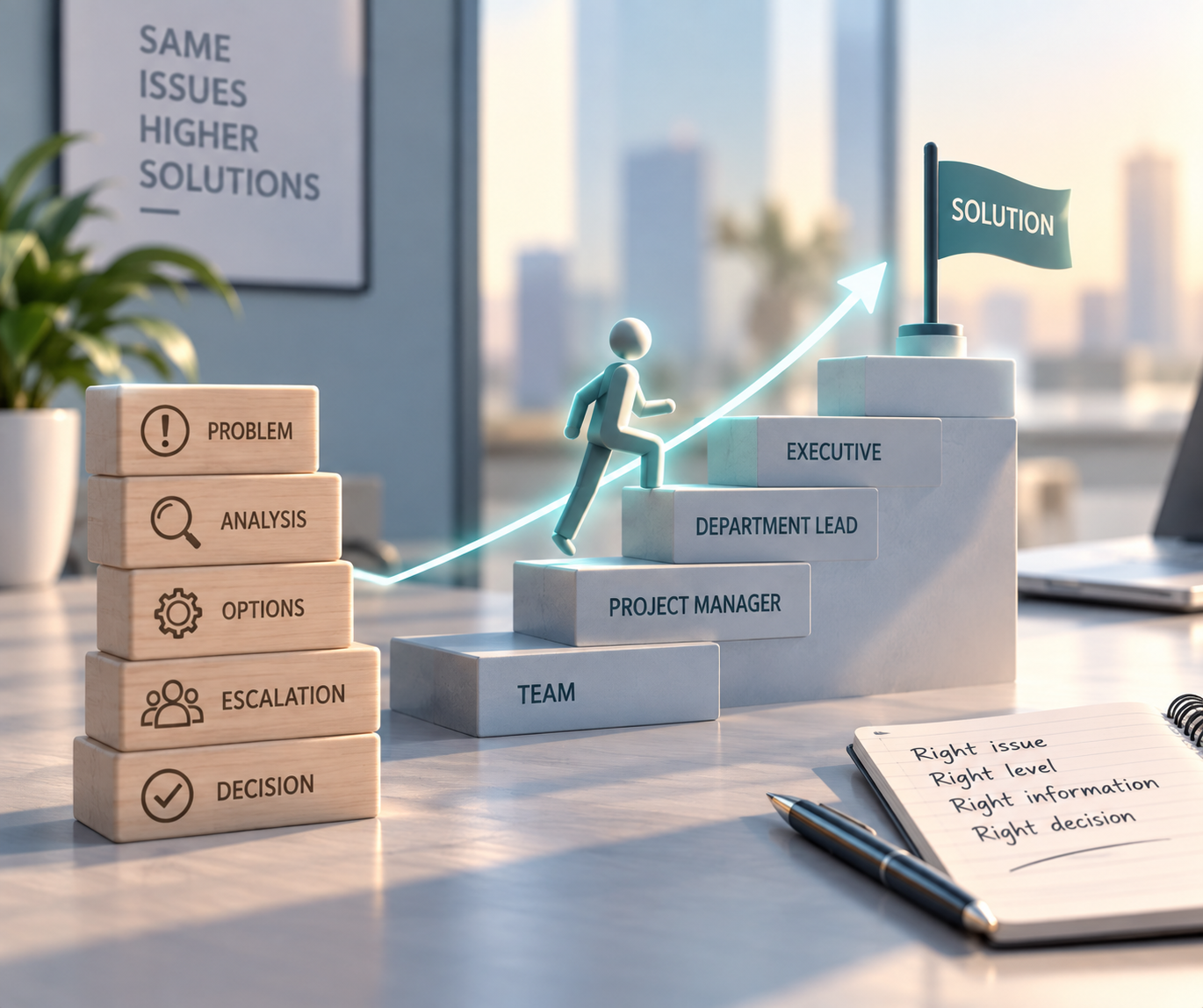
Мне кажется, начинающему PM иногда психологически сложно эскалировать проблему.
Кажется: я же менеджер проекта, значит должна сама разобраться. Пойти к руководителю — вроде как признать, что не справилась.
Но представим ситуацию.
Для запуска нужно решение двух руководителей. Они между собой не договорились. Команда ждет уже четвертый день. PM пишет, напоминает, организует встречи — а решения все равно нет.
Что еще он должен сделать? :)
Мне кажется, здесь важно понимать границу между проблемой, которую PM может решить, и решением, на которое у него просто нет полномочий.
И хорошая эскалация — это не сообщение:
«У нас проблема, помогите».
Я бы приносила руководителю уже собранную картину:
Что произошло? На что это влияет? Когда решение становится критичным? Что уже сделали сами? Какие есть варианты? Какое конкретно решение нужно от руководителя?
Например:
«Команды А и Б не согласовали вариант интеграции. Если решение не будет принято до среды, тестирование сдвигается минимум на четыре дня. Есть два варианта: первый сохраняет срок, но требует дополнительного ресурса; второй не требует ресурса, но переносит запуск. Нужно решение, какой вариант принимаем».
Это уже совсем другая эскалация.
PM не перекладывает проблему наверх.
Он делает свою часть работы и поднимает решение на тот уровень, где его действительно могут принять.
Наверное, навык здесь не в том, чтобы никогда не эскалировать.
А в том, чтобы понимать, что, когда и в каком виде нужно эскалировать.

 Share