
The post has been translated automatically. Original language: Russian




If a supervisor has 10-15 people and he works with them every day, it seems a little strange to me to connect AI so that he tells who and what skills are missing.
The leader knows his people better. He sees them at work, understands their weaknesses, and knows what tasks will be next. Sometimes it's easier to talk to him for 20 minutes and get a lot more useful information.
But let's imagine a company with 1000+ employees.
Each leader gathered the needs of his team. And then all this information comes to HR. One wrote "project management", another wrote "project management", and the third wrote "project planning and control". Somewhere five employees need training, somewhere twenty, and somewhere a similar request came from several departments at once.
It's getting more fun here manually :)
And the task of AI in this case is not to determine for managers what needs to be taught to people. They've already determined that.
His task is to process a large amount of information and help HR see the big picture of the company.
For example, you can give the AI all the collected queries and use such promt:
"Below I will give you the requests of the heads of departments for employee training. Analyze only the data provided and don't add skills or needs that they don't have.
Group identical and similar queries, even if the managers formulated them in different words.
For each group, show us which skill or development area is being requested, which departments have indicated it, how many employees it affects in total, and exactly how managers formulated the need.
Separately, identify the needs that are repeated in several departments, and arrange them by the number of employees — from the most widespread to the most isolated. Separately, show the queries that occur only in one department.
If two requests are similar, but you're not sure if they're the same need, don't combine them automatically. Mark it as a possible match for HR verification.
Don't offer courses, providers, or training programs. Now the task is only to structure the needs and show the overall picture of the company.
Present the result in the table: skill/ need — departments — number of employees — initial formulations of managers — which requires additional HR verification."
And here you can already see things that the head of a separate department simply does not see.
For example, five different teams actually requested the same training. Or a need that seemed local is actually affecting a hundred employees already.
Then HR can decide where it makes sense to do a general program, and where an individual approach is really needed.
In other words, AI does not replace the head here. The manager knows his team better.
It is needed at the next stage — when there are a lot of people, a lot of data, and you need to see one big picture from hundreds of individual requests.
Ежедневная встреча в гибком управлении проектами — это короткая встреча команды. Но короткая еще не значит полезная.
Если десять человек по очереди рассказывают руководителю, что сделали вчера и что собираются делать сегодня, руководитель действительно получает информацию о текущем статусе. А вот команда может за эти 15 минут не решить вообще ничего.
Для себя я бы разделила две вещи.
Отчет о статусе нужен руководителю. Ежедневная встреча нужна команде для координации работы.
Что можно проверить прямо на следующей встрече:
1. Есть ли блокировки? Кто-то не может продолжить работу, потому что ждет доступ, решение, данные или результат коллеги.
2. Есть ли зависимости между задачами? Если сегодня один участник задержит свою часть, повлияет ли это на работу другого?
3. Нужна ли кому-то помощь? Не просто «у меня проблема», а кто конкретно может помочь ее решить.
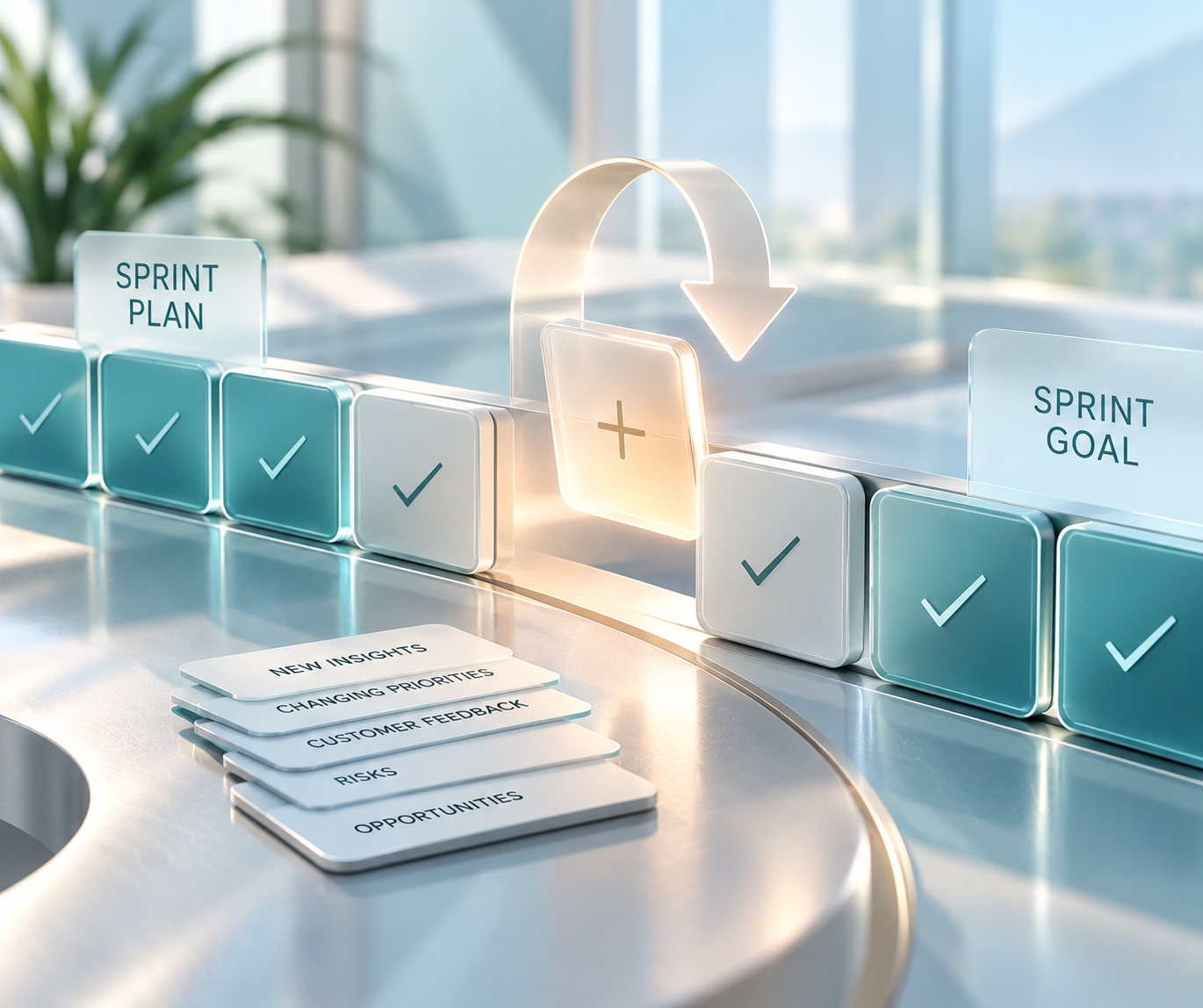
4. Изменилось ли что-то со вчерашнего дня? Новая информация, техническая проблема, изменение приоритета или другой фактор, который влияет на текущий план.
5. Приближаемся ли мы к цели текущего этапа работы? Можно закрыть много отдельных задач и при этом не приблизиться к результату, ради которого команда вообще начала этот цикл.
После такой встречи у команды должно появиться хотя бы одно из трех: понятный план на день, решение по возникшей проблеме или понимание, кому и с кем нужно отдельно ее разобрать.
Если ничего из этого не произошло, а каждый просто рассказал руководителю о своей работе, возможно, это нормальная статусная встреча.
Просто тогда это уже совсем другая встреча :)

 Share