
The post has been translated automatically. Original language: Russian




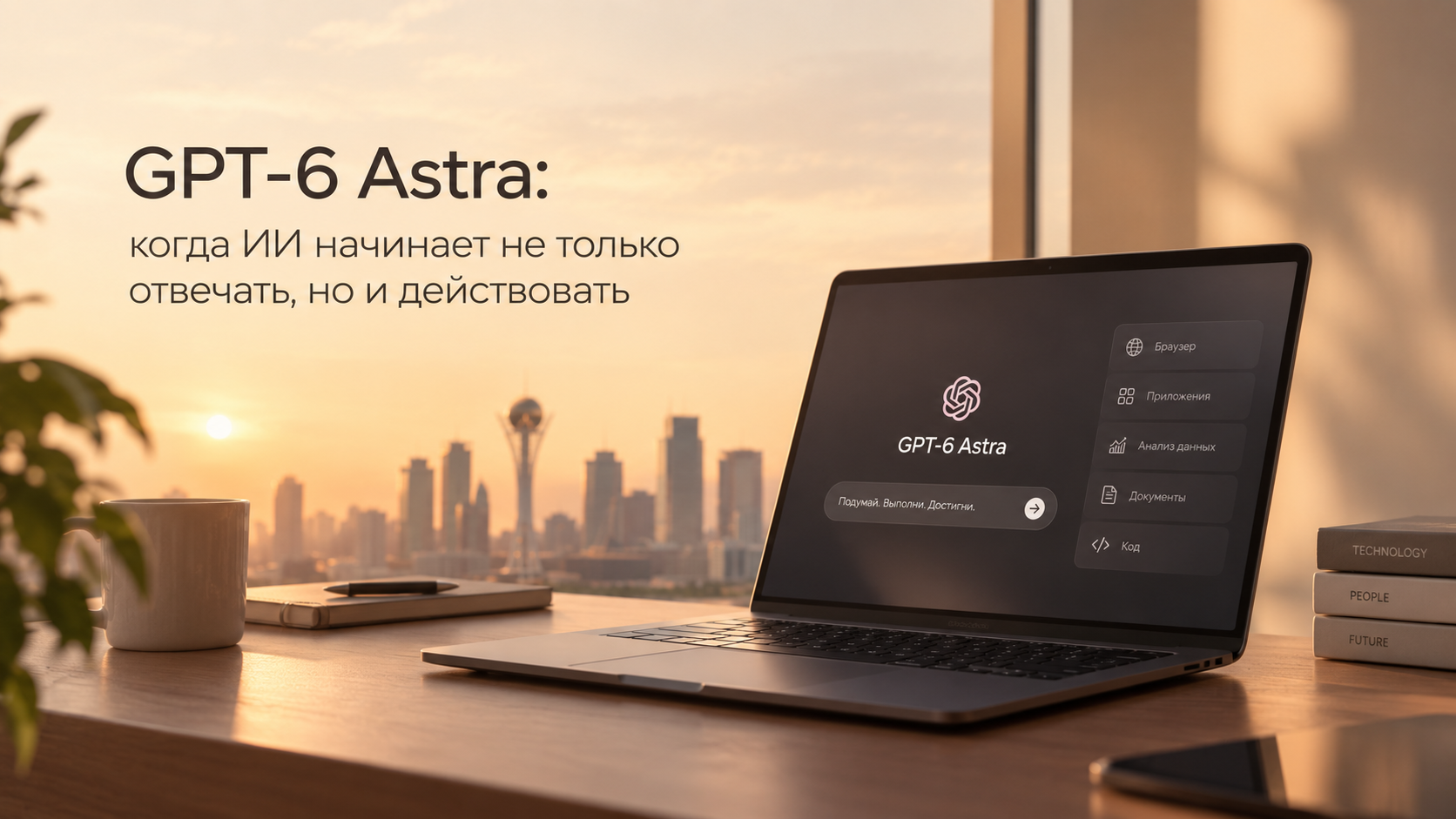
""GPT-6 Astra" is a new OpenAI model that significantly shifts the boundary between "asking AI" and "entrusting AI with a task."
If earlier we mainly used AI as an interlocutor: we asked a question, received a text, asked to write code or find information, then Astra takes the next step.
She is able to work with a computer, browser and professional programs, perform a sequence of actions, analyze data, create documents, presentations and program code. In other words, it's not just about generating a response, but about completing a whole workflow.
For example, instead of:
"Analyze this data and tell us what happened"
You can gradually move on to:
"Take the data, analyze it, find patterns, prepare a visualization, and assemble the result into a presentation."
And that's where the interesting question comes in.
If AI is able to do more and more routine intellectual work, then what becomes a person's main skill?
Perhaps it's not the ability to do each operation independently, but the ability to set the task correctly, make decisions, check the result, and understand what exactly needs to be automated.
GPT-6 Astra shows another important trend: AI is turning from a tool that needs to be constantly given commands into a system to which you can delegate part of the process.
It's not really about the "future" anymore.
This is about how the organization of work itself will change — in development, business, research, education and other areas.
And the faster such technologies become available, the more important it is not just to monitor their development, but to learn how to work with them.
GPT-6 Astra — новая модель OpenAI, которая заметно смещает границу между «спросить у ИИ» и «поручить ИИ задачу».
Если раньше мы в основном использовали AI как собеседника: задали вопрос, получили текст, попросили написать код или найти информацию, то Astra делает следующий шаг.
Она умеет работать с компьютером, браузером и профессиональными программами, выполнять последовательность действий, анализировать данные, создавать документы, презентации и программный код. То есть речь уже не только о генерации ответа, а о выполнении целого рабочего процесса.
Например, вместо:
«Проанализируй эти данные и расскажи, что получилось»
можно постепенно перейти к:
«Возьми данные, проведи анализ, найди закономерности, подготовь визуализацию и собери результат в презентацию».
И именно здесь появляется интересный вопрос.
Если ИИ способен выполнять всё больше рутинной интеллектуальной работы, что тогда становится главным навыком человека?
Возможно, не умение делать каждую операцию самостоятельно, а способность правильно поставить задачу, принимать решения, проверять результат и понимать, что именно стоит автоматизировать.
GPT-6 Astra показывает ещё одну важную тенденцию: AI превращается из инструмента, которому нужно постоянно давать команды, в систему, которой можно делегировать часть процесса.
Это уже не совсем про «будущее».
Это про то, как будет меняться сама организация работы — в разработке, бизнесе, исследованиях, образовании и других сферах.
И чем быстрее такие технологии становятся доступными, тем важнее не просто следить за их развитием, а учиться работать вместе с ними.
 Share