
The post has been translated automatically. Original language: Russian





Modern universities have large portfolios of assets, often comprising more than 500 buildings.
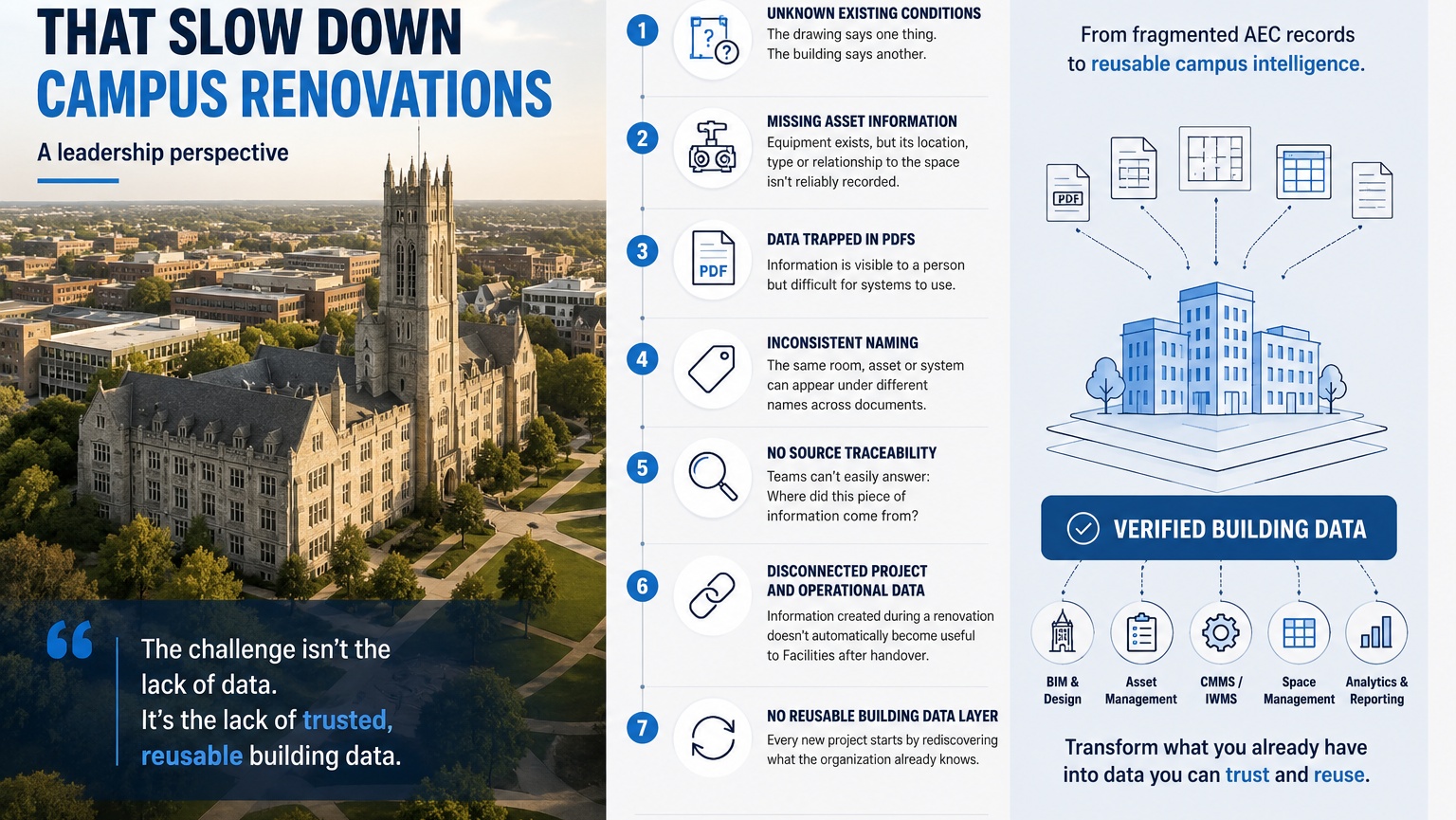
Strangely enough, the most common problem is understanding the area of assets in the portfolio - universities often do not know the real useful area of their facilities.
This information is contained in hundreds of paper documents and scanned archives, and sometimes it is lost or does not correspond to reality.
In turn, this hinders the preparation of capital and routine repairs, prioritization of facilities, and inventory of equipment located in them.
With each new repair, the project documentation is re-created, and management continues to operate with disparate and fragmented data.
In the modern world, the initiative to create intelligent campuses is designed to solve these and other problems.
Nevertheless, the teams of many enterprises still make important decisions using disparate information scattered over decades of architectural, engineering and operational documentation.
What is surprising?
Most universities already have everything they need to create a reliable digital base.
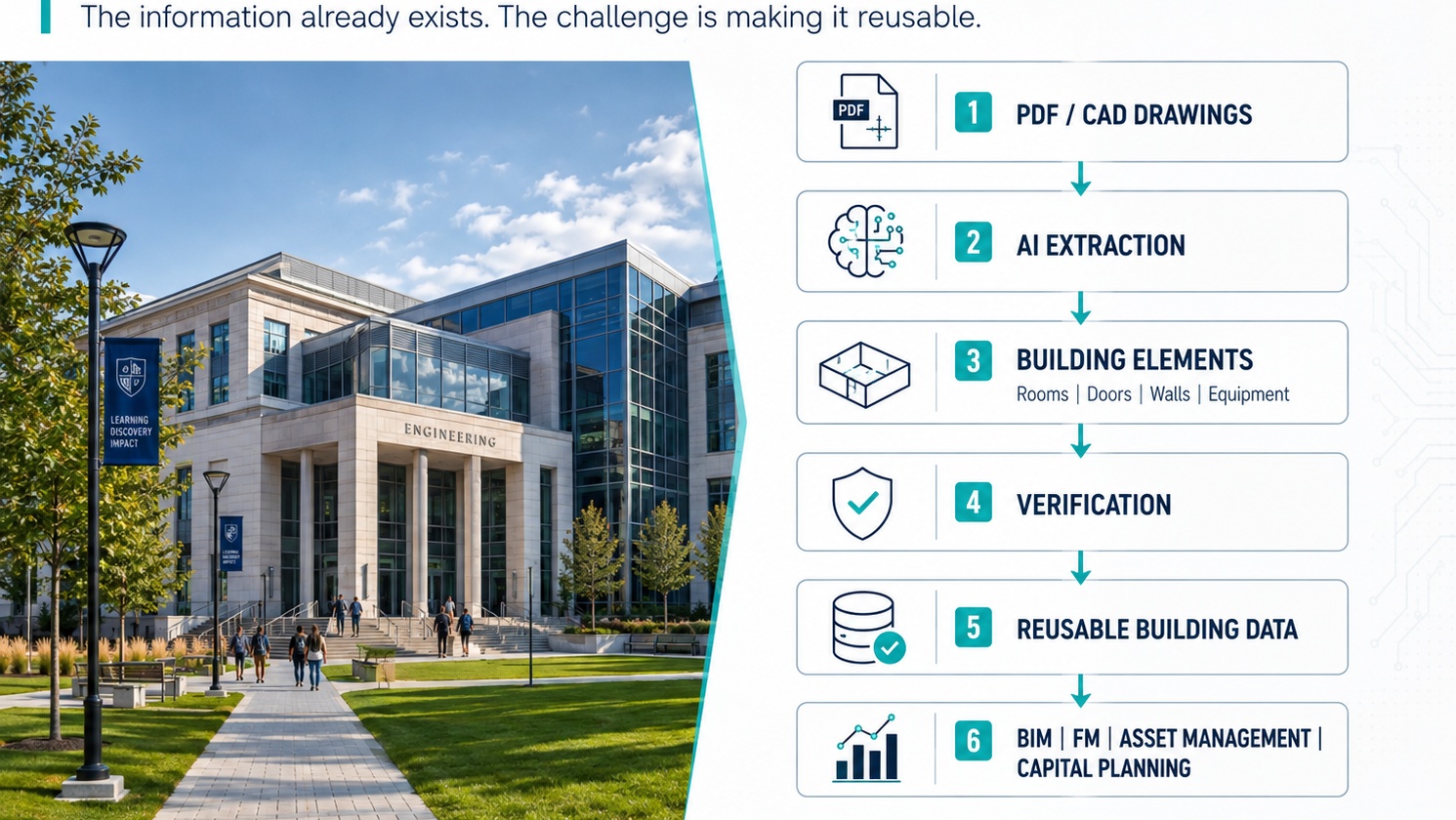
The information already exists.
It's just not in the right format.
Today, we understand that the future of digital transformation of campuses is not about creating another 3D model.
It's about harnessing the engineering knowledge your campus already possesses and turning it into verified building information that can help with facility operations, major renovation planning, and the creation of future Digital Counterparts.
To date, AI has made it possible to reduce the time needed to create a database on university real estate from several years to several months.
In the Modelizer.AI we have proven that it is possible to digitize 780 buildings in just 6 months using AI and proceed to the formation of an intelligent campus database.
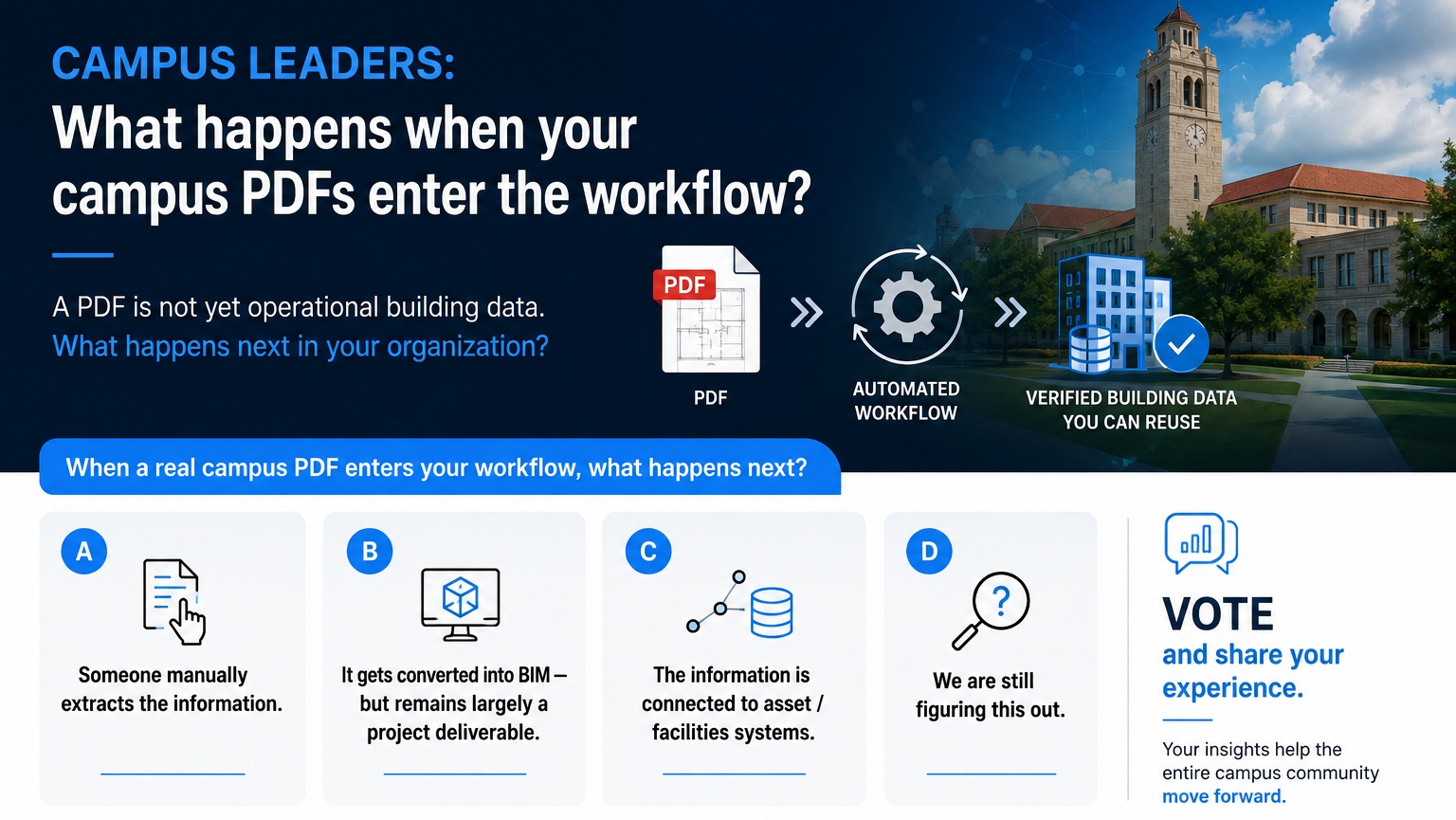
I would be interested to hear your point of view.
Which of these issues is currently the biggest obstacle to your campus?
3D модель не является Цифровым Двойником, если за ней не стоит база данных, содержащая всю необходимую информацию о здании.
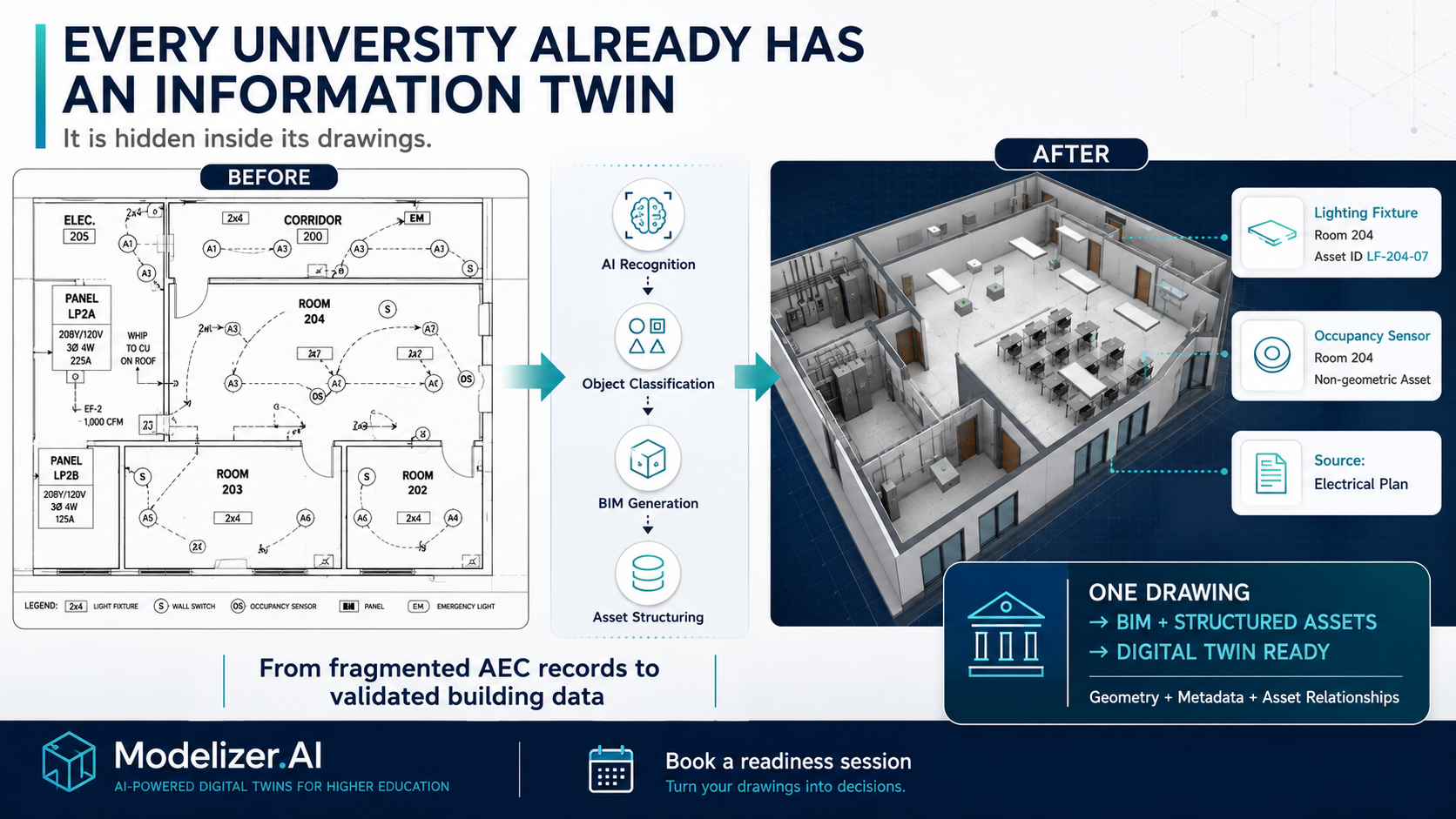
Возьмем типичный план электрооборудования университета.
Он может содержать:
→ Осветительные приборы
→ Электрические панели
→ Устройства
→ Датчики присутствия
→ Информацию о помещении
→ Обозначения оборудования
→ Примечания и аннотации
Традиционно большая часть этой информации остается внутри 2D-чертежей.
Платформа Modelizer.AI преобразует этот документ в структурированную информацию о здании.
2D-чертеж → BIM → Реестр активов → Цифровой двойник
В нашем рабочем процессе ИИ может:
✓ Распознавать инженерные символы
✓ Создавать объекты BIM
✓ Сохранять метаданные активов
✓ Создавать негеометрические объекты
✓ Ассоциировать объекты с помещениями
✓ Добавлять структурированную информацию в такие платформы для Цифровых Двойников как Autodesk Tandem и Siemens Building X Lifecycle Twin.
Этот последний шаг важен.
Цель не в том, чтобы создать еще одну впечатляющую 3D-визуализацию.
Цель состоит в том, чтобы создать информацию о здании, которую можно повторно использовать при текущем и капитальном ремонте, техническом обслуживании и закупках запчастей.
В этом разница между 3D моделью, на которую вы можете смотреть, и данными о здании, с которыми вы можете работать.
Именно поэтому мы считаем, что программы создания Интеллектуального Кампуса для университетов не всегда должны начинаться с моделирования целого кампуса.
Лучше начать такой проект с наиболее важного и сложного в обслуживании здания. Главным принципов в приоритезации зданий кампуса мы бы назвали стоимость технического обслуживания в год и неликвидные закупки, неизбежно возникающие в случае недостоверных данных об установленном оборудовании.
 Share