



The post has been translated automatically. Original language: English




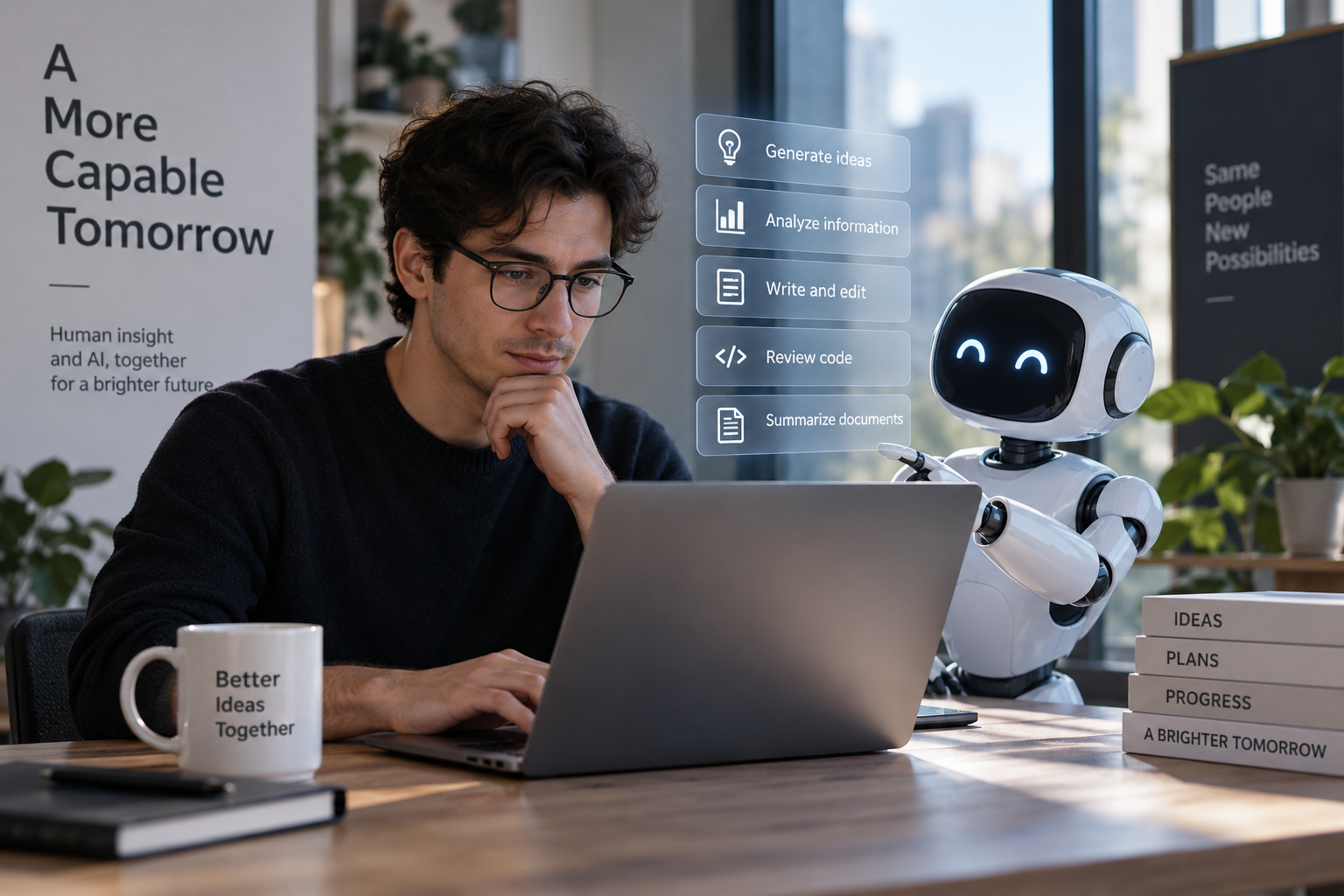
Artificial intelligence is no longer something that exists only in research laboratories or science fiction. It has become a practical technology used by millions of people every day.
From writing emails and analyzing documents to generating software code and processing large datasets, AI is changing how people approach everyday tasks. The important shift is not simply that AI has become more powerful. It has also become much easier to access.
From Specialized Technology to Everyday Tool
For many years, working with artificial intelligence required knowledge of machine learning, mathematics, and programming. Building even a relatively simple AI system could require a team of engineers and significant computing resources.
Today, the situation is different.
Modern AI assistants allow users to interact with complex models through ordinary language. Instead of writing algorithms, a person can describe a problem, provide context, and ask the system to produce or analyze information.
This has made AI useful far beyond the technology industry.
Developers can use it to review code and explain unfamiliar systems. Students can use it to explore difficult concepts. Businesses can summarize documents, analyze information, prepare reports, and automate repetitive processes.
AI Is Changing Software Development
Software development is one area where this transformation is particularly visible.
AI tools can already generate code, find potential bugs, write tests, explain existing projects, and suggest different approaches to solving technical problems.
This does not mean that software engineers are becoming unnecessary. Generated code still needs to be understood, verified, tested, and integrated into real systems.
Instead, the role of the developer is gradually changing.
Writing every line manually becomes less important when some routine implementation can be automated. Understanding architecture, requirements, security, performance, and business logic becomes more valuable.
A developer can spend less time producing repetitive code and more time deciding what should be built and how different parts of a system should work together.
The Limitations Still Matter
Despite rapid progress, AI systems are not always reliable.
A model can generate information that sounds convincing but is incorrect. It can misunderstand requirements, produce insecure code, or miss important context.
For this reason, AI works best as an assistant rather than an unquestioned source of truth.
Human verification remains essential, especially when AI is used in areas such as healthcare, finance, education, cybersecurity, or large production systems.
Knowing when not to trust an AI-generated answer is becoming an important skill of its own.
A New Type of Digital Literacy
The next stage of AI adoption will probably be less about simply having access to AI and more about knowing how to use it effectively.
People will need to understand how to provide useful context, evaluate generated results, identify mistakes, and combine AI capabilities with their own professional knowledge.
AI is unlikely to remove the need for expertise. In many cases, it makes expertise more important because experienced users are better able to recognize whether a generated result is actually useful.
The technology will continue to evolve, but one change is already clear: interacting with artificial intelligence is becoming a normal part of working with computers.
The question is increasingly shifting from whether people will use AI to how effectively they will use it.
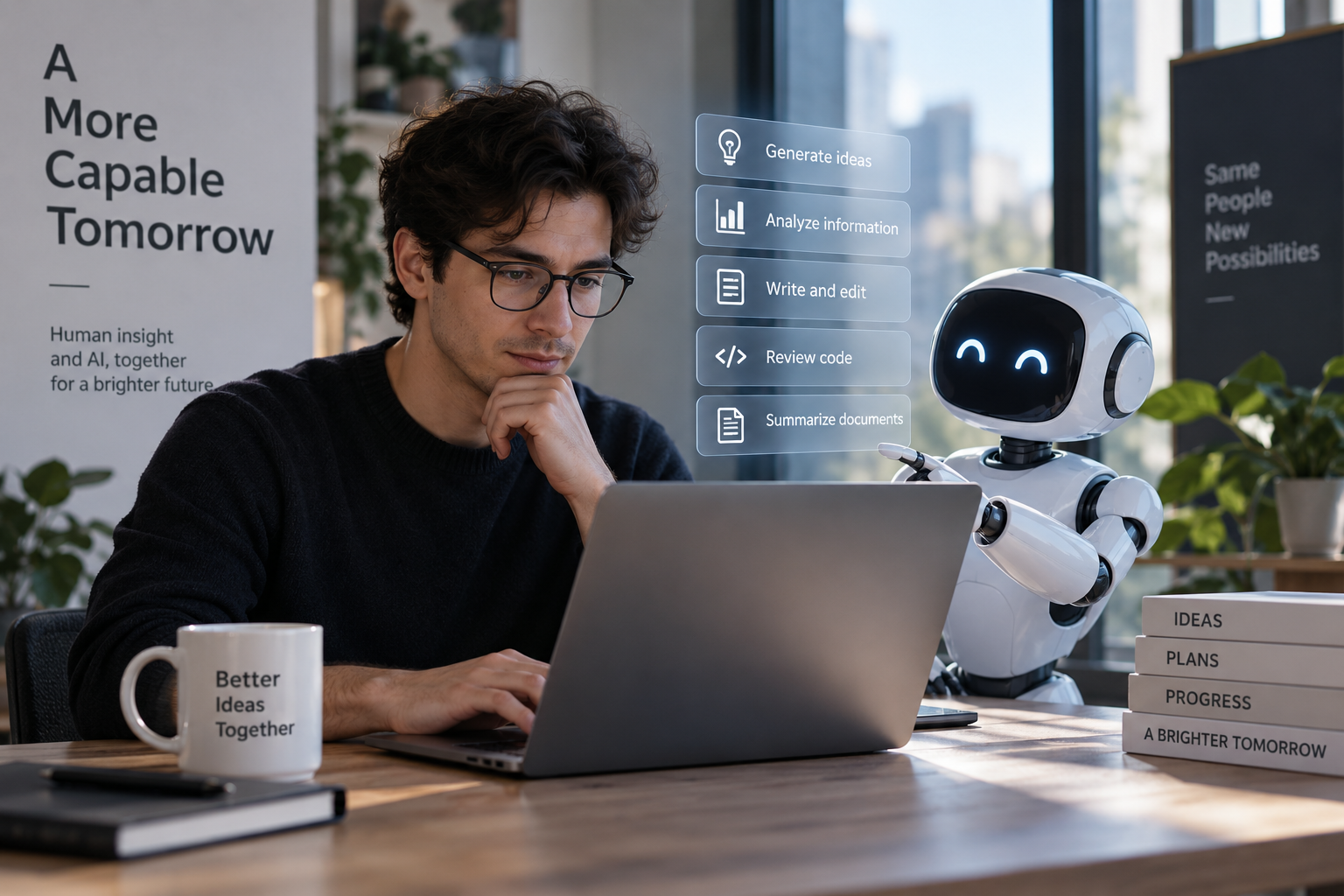
Artificial intelligence is no longer something that exists only in research laboratories or science fiction. It has become a practical technology used by millions of people every day.
From writing emails and analyzing documents to generating software code and processing large datasets, AI is changing how people approach everyday tasks. The important shift is not simply that AI has become more powerful. It has also become much easier to access.
From Specialized Technology to Everyday Tool
For many years, working with artificial intelligence required knowledge of machine learning, mathematics, and programming. Building even a relatively simple AI system could require a team of engineers and significant computing resources.
Today, the situation is different.
Modern AI assistants allow users to interact with complex models through ordinary language. Instead of writing algorithms, a person can describe a problem, provide context, and ask the system to produce or analyze information.
This has made AI useful far beyond the technology industry.
Developers can use it to review code and explain unfamiliar systems. Students can use it to explore difficult concepts. Businesses can summarize documents, analyze information, prepare reports, and automate repetitive processes.
AI Is Changing Software Development
Software development is one area where this transformation is particularly visible.
AI tools can already generate code, find potential bugs, write tests, explain existing projects, and suggest different approaches to solving technical problems.
This does not mean that software engineers are becoming unnecessary. Generated code still needs to be understood, verified, tested, and integrated into real systems.
Instead, the role of the developer is gradually changing.
Writing every line manually becomes less important when some routine implementation can be automated. Understanding architecture, requirements, security, performance, and business logic becomes more valuable.
A developer can spend less time producing repetitive code and more time deciding what should be built and how different parts of a system should work together.
The Limitations Still Matter
Despite rapid progress, AI systems are not always reliable.
A model can generate information that sounds convincing but is incorrect. It can misunderstand requirements, produce insecure code, or miss important context.
For this reason, AI works best as an assistant rather than an unquestioned source of truth.
Human verification remains essential, especially when AI is used in areas such as healthcare, finance, education, cybersecurity, or large production systems.
Knowing when not to trust an AI-generated answer is becoming an important skill of its own.
A New Type of Digital Literacy
The next stage of AI adoption will probably be less about simply having access to AI and more about knowing how to use it effectively.
People will need to understand how to provide useful context, evaluate generated results, identify mistakes, and combine AI capabilities with their own professional knowledge.
AI is unlikely to remove the need for expertise. In many cases, it makes expertise more important because experienced users are better able to recognize whether a generated result is actually useful.
The technology will continue to evolve, but one change is already clear: interacting with artificial intelligence is becoming a normal part of working with computers.
The question is increasingly shifting from whether people will use AI to how effectively they will use it.




