
The post has been translated automatically. Original language: Russian





The cost of a business is formed not only at the time of purchase. It changes every day: through receipts, sales, write-offs, transfers, refunds, and the consumption of materials.
If the movement of goods is not accurately recorded, the entrepreneur may see the revenue, but not understand the real margin. There is money in the cash register, sales are underway, but the main question remains open: how much did the business really earn after the purchase, write-offs, consumables and operating costs?
This is especially important for small and medium-sized businesses. Even small errors in accounting for goods or materials can gradually reduce profits, although outwardly the business will look stable.
Why does the movement of goods affect the financial result
In trade, the movement of goods begins with delivery. The product was accepted, logged into the system, placed in a warehouse, sold, written off, returned, or moved between locations. Each transaction affects the balances and the final profit.
If the receipt is entered with an error, the cost may be calculated incorrectly. If the write-off is not fixed, the profit looks higher than it actually is. If the product has been moved but not accounted for, the warehouse begins to diverge from the fact.
In such a situation, the owner makes decisions based on inaccurate data: he buys too much, does not see the illiquid, incorrectly evaluates the profitability of the assortment and notices losses late.
In catering, the connection is even more direct. Products arrive at the warehouse, are used in recipes, are written off when selling dishes, may deteriorate, overspend, or be replaced. If these operations are not related, the cost of the dish becomes approximate.
And the approximate cost almost always leads to an approximate margin.
Example: a cafe where a burger was a big seller
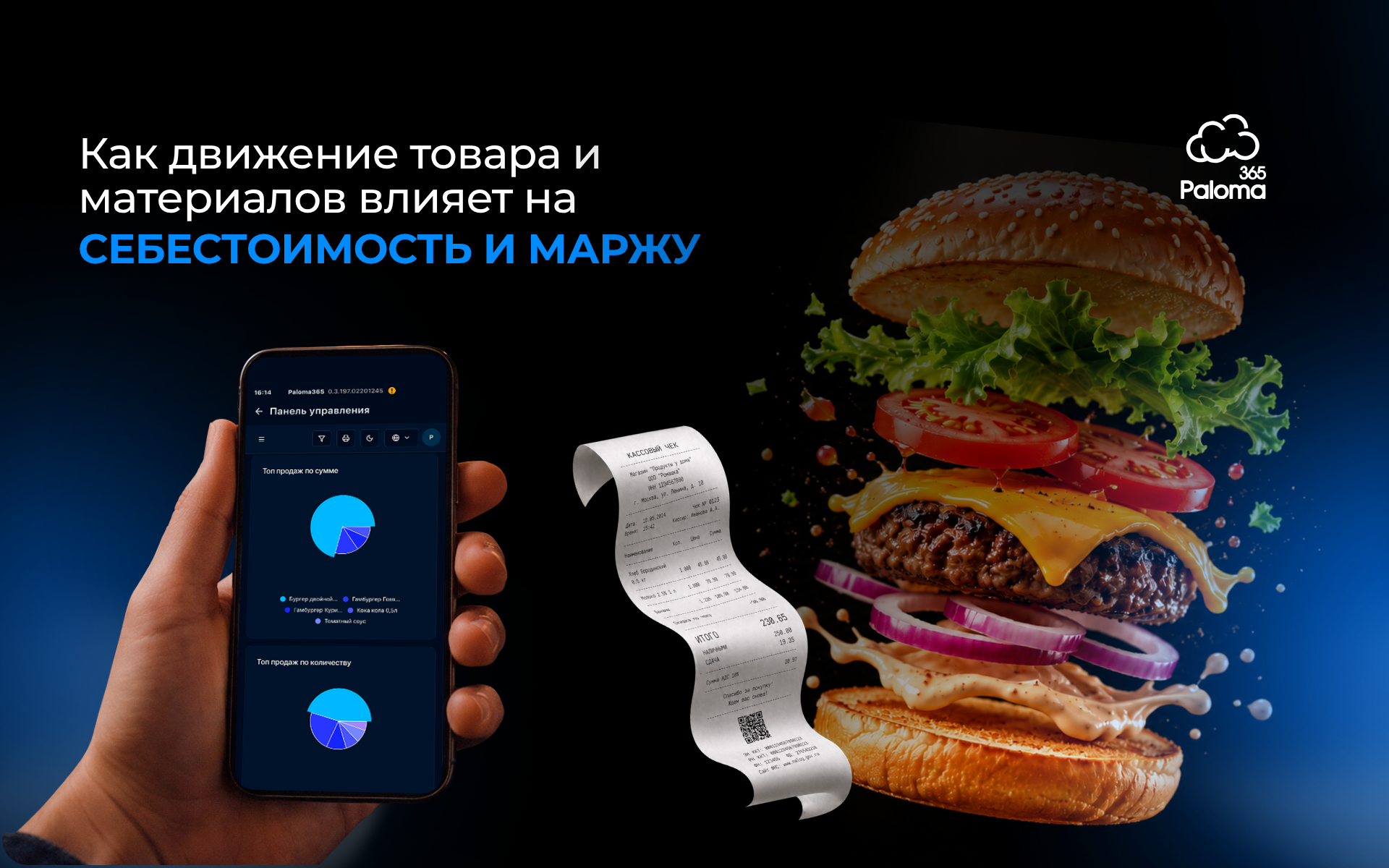
Let's imagine a small cafe. There's a burger on the menu that sells well. The owner sees stable demand and considers the position profitable: guests order, the receipt grows, the cashier shows good revenue.
But after a while it becomes noticeable that the final profit is lower than expected.
The reason wasn't sales. The problem was the movement of the products. The price of beef has increased, but the cost of the dish has not been recalculated. They started putting cheese a little more than the norm. Some of the sauce was written off manually and was not always accounted for. Buns were sometimes bought more expensively from another supplier, but this was not reflected in the cost.
At the level of one sale, the difference seemed small. But every day the burger was sold dozens of times. As a result, the popular dish continued to generate revenue, but its real margin was declining.
When the cafe linked the warehouse, calculations, receipts and sales in one system, the picture became clearer. The owner saw how the change in the purchase price affects the cost, which ingredients are consumed above the norm, and where the price or recipe needs to be reviewed.
The problem wasn't that the dish wasn't selling well. The problem was that the movement of the materials was not completely visible.
System accounting helps to see the margin more accurately
When goods and materials are recorded in a single digital system, the owner sees not only the fact of the sale, but also what is behind this sale.
You can understand:
- which products provide a real margin;
- which positions sell, but earn less than expected;
- where write-offs grow;
- which materials are consumed above the norm;
- how does a change in the purchase price affect the cost;
- which dishes or products require a price revision;
- where the money is frozen in the balances.
This helps you make decisions faster. Do not wait for the end of the month, but see the changes in the work process.
Where is the role of Paloma365 here
Paloma365 helps businesses link sales, warehouse, receipts, write-offs, movements, inventory, and reports in one system.
For trading, this is the control of the movement of goods from delivery to sale.
For catering — accounting of ingredients, calculations, cost of meals and write-offs.
For the owner, it is an understanding of where the business really earns and where it loses margin.
Paloma365 does not replace an entrepreneur, accountant, or manager. The system helps to remove manual chaos, reduce errors, and work with data that reflects the real state of the business.
Conclusion
Cost and margin depend not only on the purchase and sale prices. They depend on how goods and materials move within the business every day.
If this movement is opaque, the entrepreneur can see the revenue, but not see the real profit. If accounting is systematic, the business quickly notices an increase in cost, overspending, unnecessary write-offs, illiquid and reduced margins.
Therefore, the movement of goods should not be a separate warehouse operation, but a part of digital accounting and management decisions.
Себестоимость в бизнесе формируется не только в момент закупа. Она меняется каждый день: через поступления, продажи, списания, перемещения, возвраты и расход материалов.
Если движение товара не фиксируется точно, предприниматель может видеть выручку, но не понимать реальную маржу. Деньги в кассе есть, продажи идут, но главный вопрос остается открытым: сколько бизнес действительно заработал после закупа, списаний, расходников и операционных затрат?
Для малого и среднего бизнеса это особенно важно. Даже небольшие ошибки в учете товара или материалов могут постепенно снижать прибыль, хотя внешне бизнес будет выглядеть стабильным.
Почему движение товара влияет на финансовый результат
В торговле движение товара начинается с поставки. Товар приняли, завели в систему, разместили на складе, продали, списали, вернули или переместили между точками. Каждая операция влияет на остатки и итоговую прибыль.
Если поступление внесено с ошибкой, себестоимость может быть рассчитана неправильно. Если списание не зафиксировано, прибыль выглядит выше, чем есть на самом деле. Если товар переместили, но не отразили в учете, склад начинает расходиться с фактом.
Владелец в такой ситуации принимает решения по неточным данным: закупает лишнее, не видит неликвид, неправильно оценивает прибыльность ассортимента и поздно замечает потери.
В общепите связь еще прямее. Продукты поступают на склад, используются в рецептах, списываются при продаже блюд, могут портиться, перерасходоваться или заменяться. Если эти операции не связаны между собой, себестоимость блюда становится приблизительной.
А приблизительная себестоимость почти всегда приводит к приблизительной марже.
Пример: кафе, где бургер был хитом продаж
Представим небольшое кафе. В меню есть бургер, который хорошо продается. Владелец видит стабильный спрос и считает позицию прибыльной: гости заказывают, чек растет, касса показывает хорошую выручку.
Но через время становится заметно, что итоговая прибыль ниже ожиданий.
Причина оказалась не в продажах. Проблема была в движении продуктов. Цена говядины выросла, но калькуляцию блюда не пересчитали. Сыр начали класть чуть больше нормы. Часть соуса списывалась вручную и не всегда попадала в учет. Булочки иногда закупали дороже у другого поставщика, но это не отражалось в себестоимости.
На уровне одной продажи разница казалась небольшой. Но каждый день бургер продавался десятки раз. В итоге популярное блюдо продолжало давать выручку, но его реальная маржа снижалась.
Когда кафе связало склад, калькуляции, поступления и продажи в одной системе, картина стала понятнее. Владелец увидел, как изменение закупочной цены влияет на себестоимость, какие ингредиенты расходуются выше нормы и где нужно пересмотреть цену или рецептуру.
Проблема была не в том, что блюдо плохо продавалось. Проблема была в том, что движение материалов не было видно полностью.
Системный учет помогает видеть маржу точнее
Когда товар и материалы фиксируются в единой цифровой системе, владелец видит не только факт продажи, но и то, что стоит за этой продажей.
Можно понять:
- какие товары дают реальную маржу;
- какие позиции продаются, но зарабатывают меньше ожидаемого;
- где растут списания;
- какие материалы расходуются выше нормы;
- как изменение закупочной цены влияет на себестоимость;
- какие блюда или товары требуют пересмотра цены;
- где деньги заморожены в остатках.
Это помогает принимать решения быстрее. Не ждать конца месяца, а видеть изменения в процессе работы.
Где здесь роль Paloma365
Paloma365 помогает бизнесу связать продажи, склад, поступления, списания, перемещения, инвентаризацию и отчеты в одной системе.
Для торговли это контроль движения товара от поставки до продажи.
Для общепита — учет ингредиентов, калькуляций, себестоимости блюд и списаний.
Для владельца — понимание, где бизнес действительно зарабатывает, а где теряет маржу.
Paloma365 не заменяет предпринимателя, бухгалтера или управляющего. Система помогает убрать ручной хаос, снизить количество ошибок и работать с данными, которые отражают реальное состояние бизнеса.
Вывод
Себестоимость и маржа зависят не только от цены закупа и продажи. Они зависят от того, как товар и материалы движутся внутри бизнеса каждый день.
Если это движение непрозрачно, предприниматель может видеть выручку, но не видеть реальную прибыль. Если учет системный, бизнес быстрее замечает рост себестоимости, перерасход, лишние списания, неликвид и снижение маржи.
Поэтому движение товара должно быть не отдельной складской операцией, а частью цифрового учета и управленческих решений.
 Share