
The post has been translated automatically. Original language: Russian





Part 1 of 3
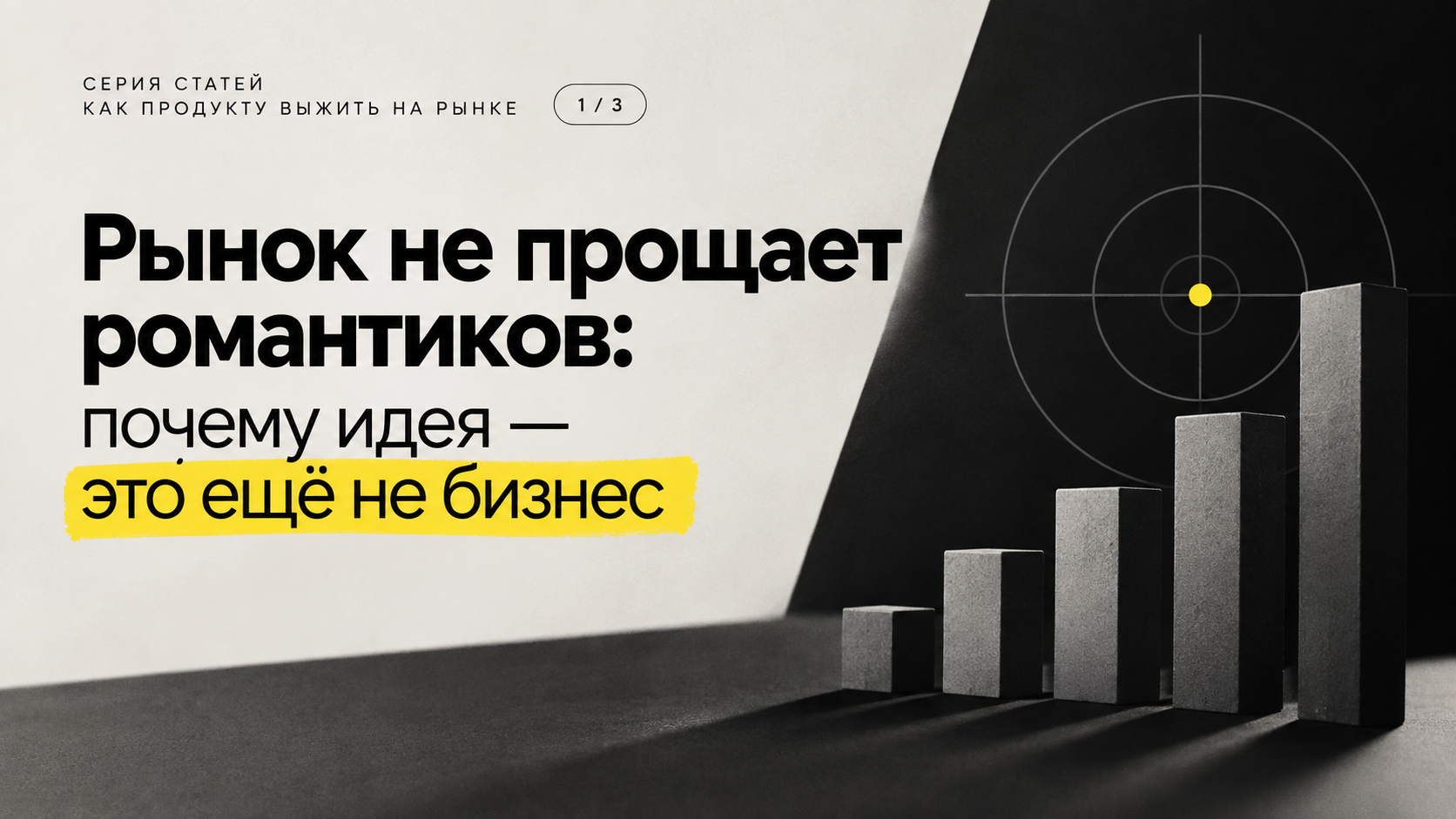
Article 1. The market does not forgive romantics: why is an idea not a business?
Every second startup starts the same way: the founder gets an idea, sees it as a solution to his personal problem, and sincerely believes that the whole world thinks the same way. Then, without looking around, he rushes into development. Six months later, an unpleasant thing turns out: the market is either too small, or there simply is no money ready to come for your product.
Estimating the market volume is not a formality for an investor presentation. This is the first filter that any idea must pass through before at least an hour of development is invested in it.
Where to start. The classic TAM-SAM-SOM model divides the market into three layers: the total theoretical volume (TAM), the realistically achievable segment (SAM), and the share that you are able to occupy in the early years (SOM). It is not necessary to order an expensive study for the calculation - Statista reports, data from national banks and statistical agencies, public reports from competitors and assessments of related markets that have already passed this way are enough.
The second, less obvious signal is the presence of other players with money in the market. Aspiring entrepreneurs are often happy to find an "empty niche": there are no competitors, so the field is free. In practice, this is a wake-up call more often than luck. The market is either not mature yet, or has already been tested and rejected by more experienced teams. An empty niche requires a separate, honest question: why hasn't anyone entered there yet?
The market's growth rate is more important than its current size. A small segment that is growing by 40% per year is more interesting than a giant but stagnating market. In the first case, you are going with the flow, in the second, you are fighting for every fraction of a percent against established players.
Market assessment does not guarantee success. But it cuts out the most expensive kind of mistake - spending months on a product for which there is no physical buyer. This is the first and obligatory step. The second one is much more complicated and requires conversations with real people rather than tables. More on this in the next article.
Часть 1 из 3
Статья 1. Рынок не прощает романтиков: почему идея - это ещё не бизнес
Каждый второй стартап начинается одинаково: у основателя загорается идея, он видит в ней решение своей личной проблемы и искренне верит, что весь мир думает так же. Дальше - не глядя по сторонам - он бросается в разработку. Через полгода выясняется неприятная вещь: рынок либо слишком мал, либо на нём просто нет денег, готовых прийти за твоим продуктом.
Оценка объёма рынка - это не формальность для инвесторской презентации. Это первый фильтр, который должен пройти любой замысел, прежде чем в него будет вложен хотя бы час разработки.
С чего начать. Классическая модель TAM-SAM-SOM разбивает рынок на три слоя: общий теоретический объём (TAM), реалистично достижимый сегмент (SAM) и та доля, которую вы способны занять в первые годы (SOM). Для расчёта не обязательно заказывать дорогое исследование - достаточно отчётов Statista, данных национальных банков и статведомств, публичных отчётов конкурентов и оценки смежных рынков, которые уже прошли этот путь.
Второй, менее очевидный сигнал - наличие на рынке других игроков с деньгами. Начинающие предприниматели часто радуются, обнаружив «пустую нишу»: конкурентов нет, значит, поле свободно. На практике это тревожный звонок чаще, чем удача. Рынок либо ещё не созрел, либо уже проверен и отвергнут более опытными командами. Пустая ниша требует отдельного, честного вопроса: а почему туда до сих пор никто не зашёл?
Скорость роста рынка важнее его текущего размера. Небольшой, но растущий на 40% в год сегмент интереснее гигантского, но стагнирующего рынка — в первом случае вы плывёте по течению, во втором боретесь за каждую долю процента против устоявшихся игроков.
Оценка рынка не даёт гарантий успеха. Но она отсекает самый дорогой вид ошибки - потраченные месяцы на продукт, для которого физически не существует покупателя. Это первый и обязательный шаг. Второй - куда сложнее и требует не таблиц, а разговоров с живыми людьми. Об этом - в следующей статье.
 Share