
The post has been translated automatically. Original language: Russian




We are used to attaching a bank card or smartphone to a terminal and receiving payment confirmation almost instantly. It seems that at this point the device should contact the bank via the Internet, check the balance and only then allow the purchase. But it's a little more complicated.
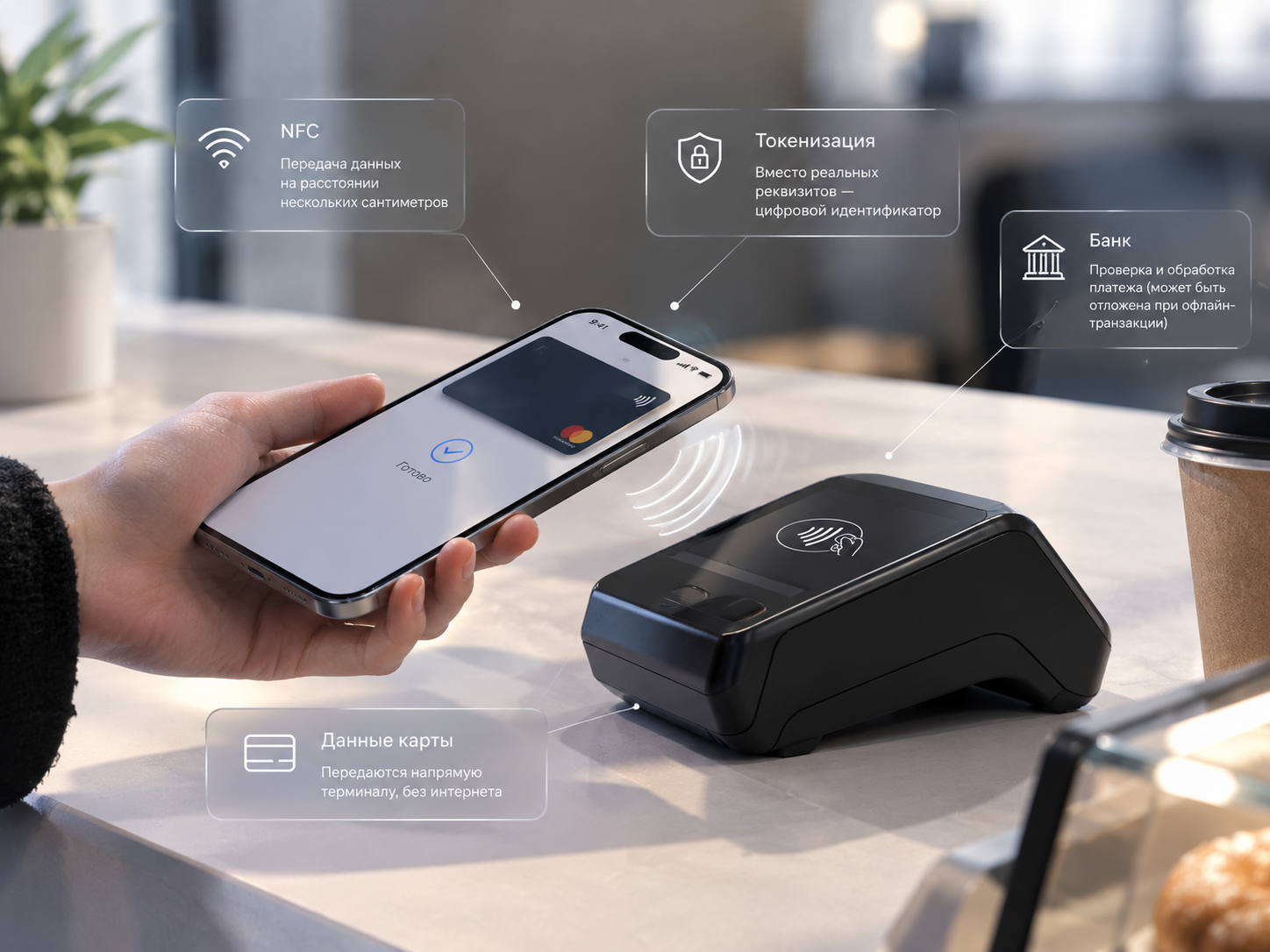
Contactless payments use NFC technology - Near Field Communication. It allows two devices to exchange data over a very short distance, literally a few centimeters.
Interesting fact: the very moment of attaching the card to the terminal does not require the card to be connected to the Internet. The card transmits the necessary data to the terminal via a radio channel. In the case of some offline transactions, the terminal may temporarily accept the payment, and the final processing will take place later, when there is a connection with the banking system.
But security here is not based on a simple exchange of a card number. Modern contactless payments use dynamic data for each transaction. Therefore, even if information about a specific transaction is intercepted, it cannot simply be reused as a universal "key" for the next payment.
In smartphones, the mechanism is even more interesting. Services like Apple Pay and Google Pay use tokenization: instead of a real bank card number, a special digital identifier is transmitted during payment. This allows you to hide the real payment details from the seller.
It turns out that the usual "attach phone" is the result of several technologies working at once: NFC is responsible for device communication, tokenization is responsible for protecting banking details, and the payment infrastructure is responsible for processing the operation itself.
This is exactly one of the features of FinTech: complex financial technology becomes almost invisible to the user. One touch is enough for us, although there is a whole chain of processes behind it.
Мы привыкли прикладывать банковскую карту или смартфон к терминалу и практически мгновенно получать подтверждение платежа. Кажется, что в этот момент устройство должно связаться с банком через интернет, проверить баланс и только после этого разрешить покупку. Но всё немного сложнее.
Бесконтактные платежи используют технологию NFC - Near Field Communication. Она позволяет двум устройствам обмениваться данными на очень небольшом расстоянии, буквально в несколько сантиметров.
Интересный факт: сам момент прикладывания карты к терминалу не требует подключения карты к интернету. Карта передает терминалу необходимые данные по радиоканалу. В случае некоторых офлайн-транзакций терминал может временно принять платеж, а окончательная обработка произойдет позже, когда появится связь с банковской системой.
Но безопасность здесь не строится на простом обмене номером карты. Современные бесконтактные платежи используют динамические данные для каждой операции. Поэтому даже если информация о конкретной транзакции будет перехвачена, ее нельзя просто использовать повторно как универсальный «ключ» для следующего платежа.
В смартфонах механизм еще интереснее. Сервисы вроде Apple Pay и Google Pay используют токенизацию: вместо реального номера банковской карты при оплате передается специальный цифровой идентификатор. Это позволяет скрывать настоящие платежные реквизиты от продавца.
Получается, привычное «приложить телефон» - это результат работы сразу нескольких технологий: NFC отвечает за связь устройств, токенизация - за защиту реквизитов, а платежная инфраструктура - за обработку самой операции.
Именно в этом заключается одна из особенностей FinTech: сложная финансовая технология становится практически незаметной для пользователя. Нам достаточно одного касания, хотя за ним стоит целая цепочка процессов.
 Share