


The post has been translated automatically. Original language: Russian





Many companies will find out about budget overruns at the very end, when the project is completed and the accounting department summarizes the results. The money has already been spent, and it remains only to figure out where it went. However, the first signs of a problem are usually visible in the middle of the project, if you look at them.
The basis of control is the budget, divided by stages and cost items: equipment, materials, team work, contractors, business trips. Each month, the actual costs are compared with the planned ones for the same date. It is important to look not only at the amount, but also at how much work has been done for this money. Spending half the budget and doing half the work is fine. Spending half and making a third is an alarming signal.
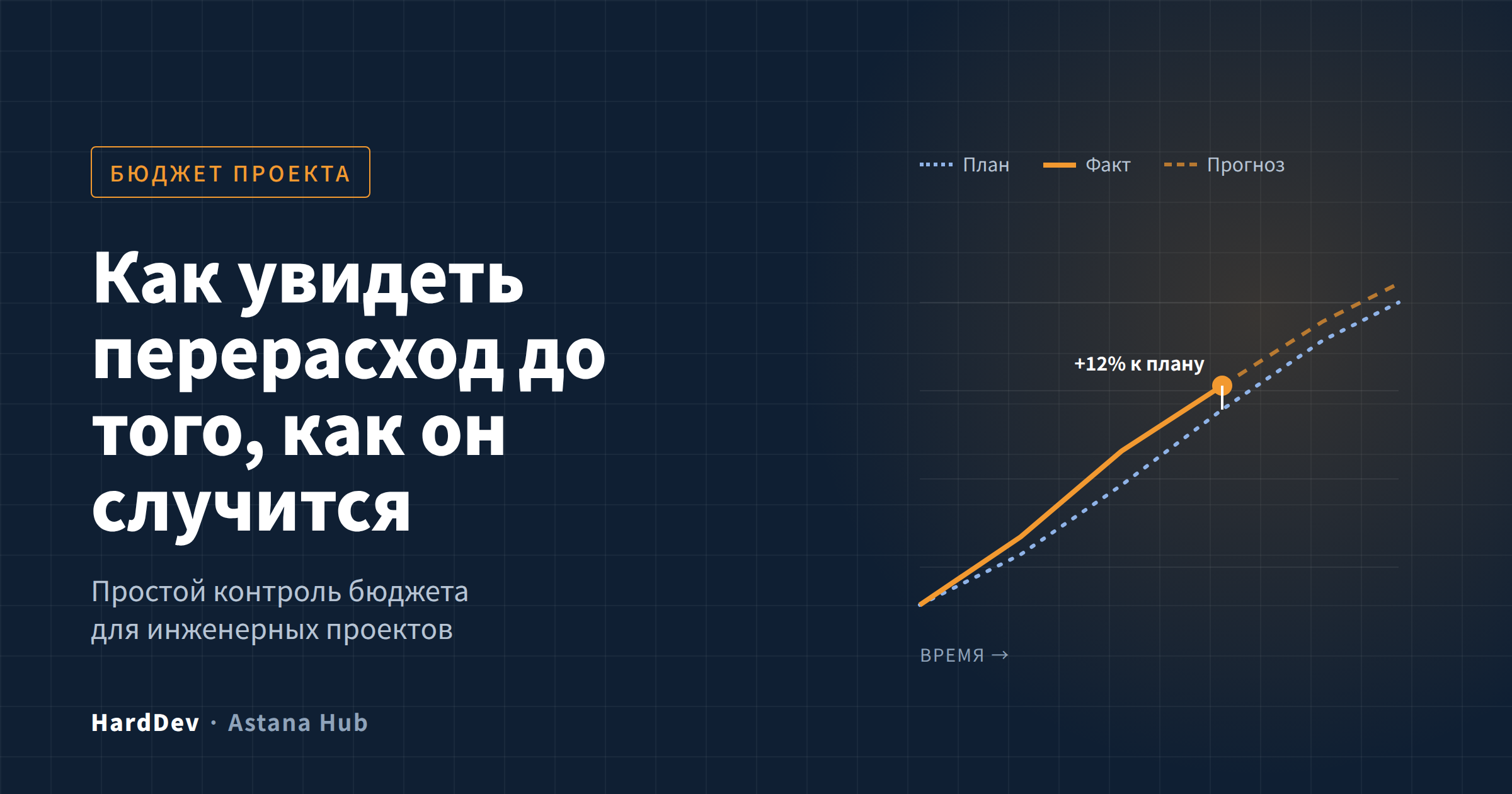
If the costs are already 10-15% higher than planned in the middle of the project, the gap will almost certainly be no smaller by the end. Such a forecast should be made immediately and honestly discussed with the management, and if necessary, with the customer. While the project is underway, something else can be changed: review purchases, optimize site visits, arrange additional work through a change request.
Budget control does not require complex systems. For most projects, a spreadsheet is sufficient, which the project manager updates once a month, and a short conversation about the results. The main thing is regularity. When the numbers are visible on time, decisions are made calmly, and not in a fire mode.
О перерасходе бюджета многие компании узнают в самом конце, когда проект сдан и бухгалтерия сводит итоги. Деньги уже потрачены, и остаётся только разбираться, куда они ушли. При этом первые признаки проблемы обычно видны ещё в середине проекта, если на них смотреть.
Основа контроля — бюджет, разбитый по этапам и статьям затрат: оборудование, материалы, работа команды, подрядчики, командировки. Каждый месяц фактические затраты сравнивают с плановыми на эту же дату. Важно смотреть не только на сумму, но и на то, сколько работы за эти деньги выполнено. Потратить половину бюджета и сделать половину работы — нормально. Потратить половину и сделать треть — тревожный сигнал.
Если на середине проекта затраты уже на 10–15% выше плана, почти наверняка к концу разрыв будет не меньше. Такой прогноз стоит сделать сразу и честно обсудить с руководством, а при необходимости и с заказчиком. Пока проект идёт, ещё можно что-то изменить: пересмотреть закупки, оптимизировать выезды на объект, оформить дополнительные работы через запрос на изменение.
Контроль бюджета не требует сложных систем. Для большинства проектов достаточно таблицы, которую руководитель проекта обновляет раз в месяц, и короткого разговора по итогам. Главное — регулярность. Когда цифры видны вовремя, решения принимаются спокойно, а не в режиме пожара.

 Share





