
The post has been translated automatically. Original language: Kazakh





Vadim Manchenko, head of the Kolesa Group frontend department, spoke about working with AI, based on data from pilots and control groups.
According to the KPMG Global tech report 2026 study, which involved
2,500 technology executives from 27 countries, 74% said that AI is already benefiting their companies. But only 24% of company executives get a specific result from it: time savings and development speed.
When a company gives developers access to AI tools, the expectations are usually the same: the work will speed up significantly. The Kolesa Group decided to test this on data, not on feelings.
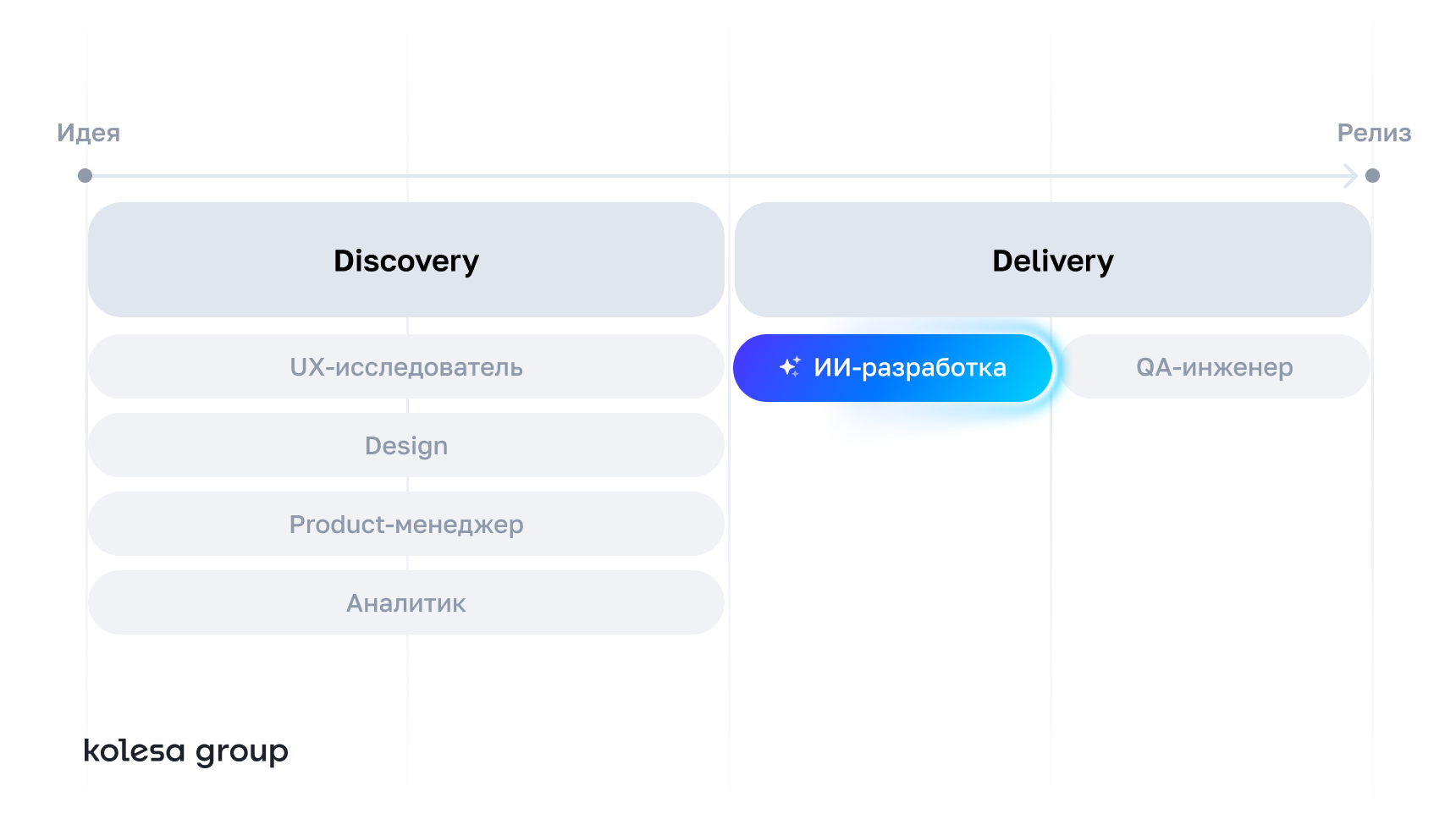
The calculation was based on the company's usual process structure — two large stages, Discovery and Delivery.
At the Discovery stage, gaps and opportunities are identified. Then there are two tracks — UXR and analytics: the first describes how users behave and why), the second describes the number of users. Based on the data obtained, a solution is being searched and validated, followed by prioritization and preparation of requirements. Only after that, the task is considered ready for implementation.
Delivery is another nine steps: design, UXR layout verification, development planning, development itself, code review, testing, and release. After development, the task goes to a design review and returns to testing, and after release, mobile features undergo a Store Review and reach the user.
There are fifteen stages in total, and writing the code takes only one of them. That is why speeding up development is not speeding up the whole process.
The company launched a pilot group of 50 people, including mobile and web developers, and spent two weeks collecting metrics. The first data obtained showed a large increase, but there was not enough data on the actual use of tools.
When using AI tools in the Kolesa Group team, we noticed that some of the employees did not use them actively enough to immerse themselves and get an effect. And active employees who used tools and consumed more tokens got results in their work faster.
Therefore, we considered implementing a KPI for tokens, but deliberately abandoned it. Such a metric does not give the necessary result: people start spending tokens just for the sake of meeting KPIs, regardless of whether there is a benefit in this or not. As a result, you can get a large consumption of tokens without a real increase in efficiency.
This approach is part of the Kolesa Group's overall culture: the company makes decisions based on data and does not scale changes until the effect is confirmed by metrics and specific results.
Before scaling up the pilot, Kolesa Group talked to other companies, from small product teams to major players (Amazon, Booking) who are embedding AI in their own products. We discussed tools, metrics, security constraints, and approaches to team training.
The conclusion turned out to be unexpectedly unifying: the targeted implementation of AI at one or two stages does not give anyone an effect. Only a systematic approach works — at all stages of development at the same time.
The pilot showed that the effect can be calculated only along the entire path of the task, and not on one part of it. Therefore, now in the Kolesa Group, AI is connected not only to writing code, but also to analytics, design, testing and review — the whole path from problem statement to release is laid out in steps. The effect is measured in one digit: how many tasks reached the release in a week. And they immediately look at the quality so that the speed does not increase due to bugs and technical debt.
An information security audit was conducted in a separate stage: the team determined which data and repositories can be opened to AI tools and who is responsible for the result of their work.
- Onboarding of new developers has accelerated — it takes a month and a half to reach productivity instead of several years.
- Working with legacy code and refactoring has become easier: you don't need a developer with many years of experience to figure out the old architecture.
- Unit tests and test cases - their preparation takes almost no time.
- Documentation: The team is testing the automatic reconciliation of code and documentation, a task that has not been able to be systematically closed for years.
Some of the developers, having gained access to AI tools, used them by 5-10% at most - and were confident that they were working with them to their full potential. Access to the tool by itself does not produce results without training.
Therefore, the Kolesa Group training department made a video course of 17 videos — how to use AI in daily tasks, based on real internal cases. The course is designed for developers and QA engineers: basic AI videos, working with Claude Code, and analyzing user cases.
The course speakers are the staff themselves. Everyone analyzes their case: what has been simplified or automated and how much time it has saved. The course is updated as new cases appear in the teams.
Kolesa Group frontend-бағытының басшысы Вадим Манченко пилоттар және бақылау топтарымен деректерге сүйене отырып, ЖИ-мен жұмыс туралы айтып берді.
KPMG Global Tech report 2026 зерттеуіне сәйкес, оған қатысқан
27 елден 2500 технологиялық басшы, 74% AI олардың компанияларына қазірдің өзінде пайда әкелетінін атап өтті. Бірақ компания басшыларының тек 24% - ы одан нақты нәтиже алады: жұмыс уақытын үнемдеу және даму жылдамдығы.
Компания әзірлеушілерге AI құралдарына қол жеткізуге мүмкіндік бергенде, күту әдетте жалғыз болады: жұмыс бірнеше есе жылдамдайды. The Kolesa Group мұны сенсацияларға емес, деректерге тексеруге шешім қабылдады.
Есептеу компания үшін таныс процестің құрылымына негізделген-екі үлкен кезең, Discovery және Delivery.
Discovery кезеңінде олар проблемалар мен мүмкіндіктерді анықтайды. Әрі қарай екі трек бар — UXR және аналитика: біріншісі пайдаланушылардың өзін қалай ұстайтынын және неге екенін сипаттайды), екіншісі — пайдаланушылар саны. Алынған мәліметтер негізінде шешімді іздеу және тексеру, содан кейін талаптарға басымдық беру және дайындау жүзеге асырылады. Осыдан кейін ғана тапсырма іске асыруға дайын болып саналады.
Жеткізу-бұл тағы тоғыз қадам: дизайн, uxr-орналасуды тексеру, дамуды жоспарлау, дамудың өзі, кодты қарау, тестілеу және шығару. Әзірленгеннен кейін тапсырма дизайнды қайта қарауға кетеді және тестілеуге оралады, ал шығарылғаннан кейін мобильді фичи Store Review-тен өтіп, пайдаланушыға жетеді.
Барлығы-он бес кезең, ал кодты жазу олардың біреуін ғана алады. Сондықтан дамуды жеделдету бүкіл процесті жеделдету емес.
Компания мобильді және веб-әзірлеушілерді қамтитын 50 адамнан тұратын пилоттық топты іске қосты және екі апта бойы көрсеткіштерді жинады. Алғашқы нәтижелер үлкен өсуді көрсетті, бірақ құралдарды нақты пайдалану туралы мәліметтер жетіспеді.
Kolesa Group командасында AI құралдарын пайдаланған кезде, біз қызметкерлердің бір бөлігі оларды суға түсу және әсер ету үшін жеткілікті белсенді пайдаланбайтынын байқадық. Құралдарды пайдаланған және көбірек таңбалауыштарды тұтынған белсенді қызметкерлер өз жұмысында тезірек нәтиже алды.
Сондықтан біз таңбалауыштар бойынша KPI енгізуді қарастырдық, бірақ саналы түрде одан бас тарттық. Мұндай көрсеткіш қажетті нәтиже бермейді: адамдар KPI-ді орындау үшін токендерді жұмсай бастайды, оның пайдасы бар ма, жоқ па. Нәтижесінде тиімділіктің нақты өсуінсіз токендердің үлкен шығынын алуға болады.
Бұл тәсіл Kolesa Group-тың жалпы мәдениетінің бөлігі болып табылады: компания деректерде шешім қабылдайды және әсер көрсеткіштермен және нақты нәтижелермен расталмайынша өзгерістерді масштабтамайды.
Ұшқышты масштабтамас бұрын, Kolesa Group басқа компаниялармен сөйлесті — шағын азық-түлік командаларынан бастап өз өнімдеріне AI енгізетін ірі ойыншыларға (Amazon, Booking) дейін. Команданың құралдары, көрсеткіштері, қауіпсіздік шектеулері және оқыту тәсілдері талқыланды.
Қорытынды күтпеген жерден біріктірілді: AI-ны бір немесе екі кезеңде нүктелік енгізу ешкімге әсер етпейді. Тек жүйелік тәсіл жұмыс істейді — дамудың барлық кезеңдерінде бір уақытта.
Ұшқыш көрсетті: әсерді оның бір учаскесінде емес, бүкіл тапсырма жолында ғана қарастыруға болады. Сондықтан, қазір Kolesa Group-та AI тек код жазуға ғана емес, сонымен қатар аналитикаға, дизайнға, тестілеуге және қайта қарауға да қосылған — мәселені шешуден бастап шығарылымға дейінгі барлық жол қадамдармен боялған. Эффект бір санмен өлшенеді: бір аптада қанша тапсырма шығарылды. Олар бірден сапаға қарайды — жылдамдық қателіктер мен техникалық қарыздар есебінен өспеуі үшін.
Ақпараттық қауіпсіздік аудиті жеке кезеңнен өтті: топ AI құралдарына қандай деректер мен репозиторийлерді ашуға болатындығын және олардың жұмысының нәтижесіне кім жауапты екенін анықтады.
- Жаңа әзірлеушілердің келісімі жеделдеді-өнімділікке жету бірнеше жылдың орнына бір жарым айға созылады.
- Легаси кодымен жұмыс істеу және қайта өңдеу оңайырақ болды: ескі архитектураны түсіну үшін көп жылдық тәжірибесі бар әзірлеуші қажет емес.
- Бірлік сынақтары мен сынақ жағдайлары - оларды дайындау уақытты қажет етпейді.
- Құжаттама: команда код пен құжаттаманы автоматты түрде салыстыруды тексереді-бұл тапсырма жылдар бойы жүйелі түрде жабылмады.
Әзірлеушілердің бір бөлігі AI құралдарына қол жеткізе отырып, оларды 5-10% күшпен пайдаланды және олармен толық жұмыс істейтініне сенімді болды. Құралға қол жетімділіктің өзі оқытусыз нәтиже бермейді.
Сондықтан, Kolesa Group оқыту бөлімі 17 бейнероликтен тұратын бейне курсын жасады-күнделікті тапсырмаларда, нақты ішкі істерде жасанды интеллектті қалай пайдалануға болады. Курс әзірлеушілер мен QA инженерлеріне арналған: AI туралы негізгі бейнелер, Claude Code-мен жұмыс және юзкейстерді талдау.
Курс спикерлері-қызметкерлердің өздері. Әркім өз ісін талдайды: не жеңілдетуге немесе автоматтандыруға қол жеткізді және бұл қанша уақытты үнемдеді. Командаларда жаңа жағдайлар пайда болған кезде Курс толықтырылады.

 Share