
The post has been translated automatically. Original language: Russian




Business loves action.
To run.
To call.
To change.
Speed up.
If nothing happens, it seems that the company is wasting time.
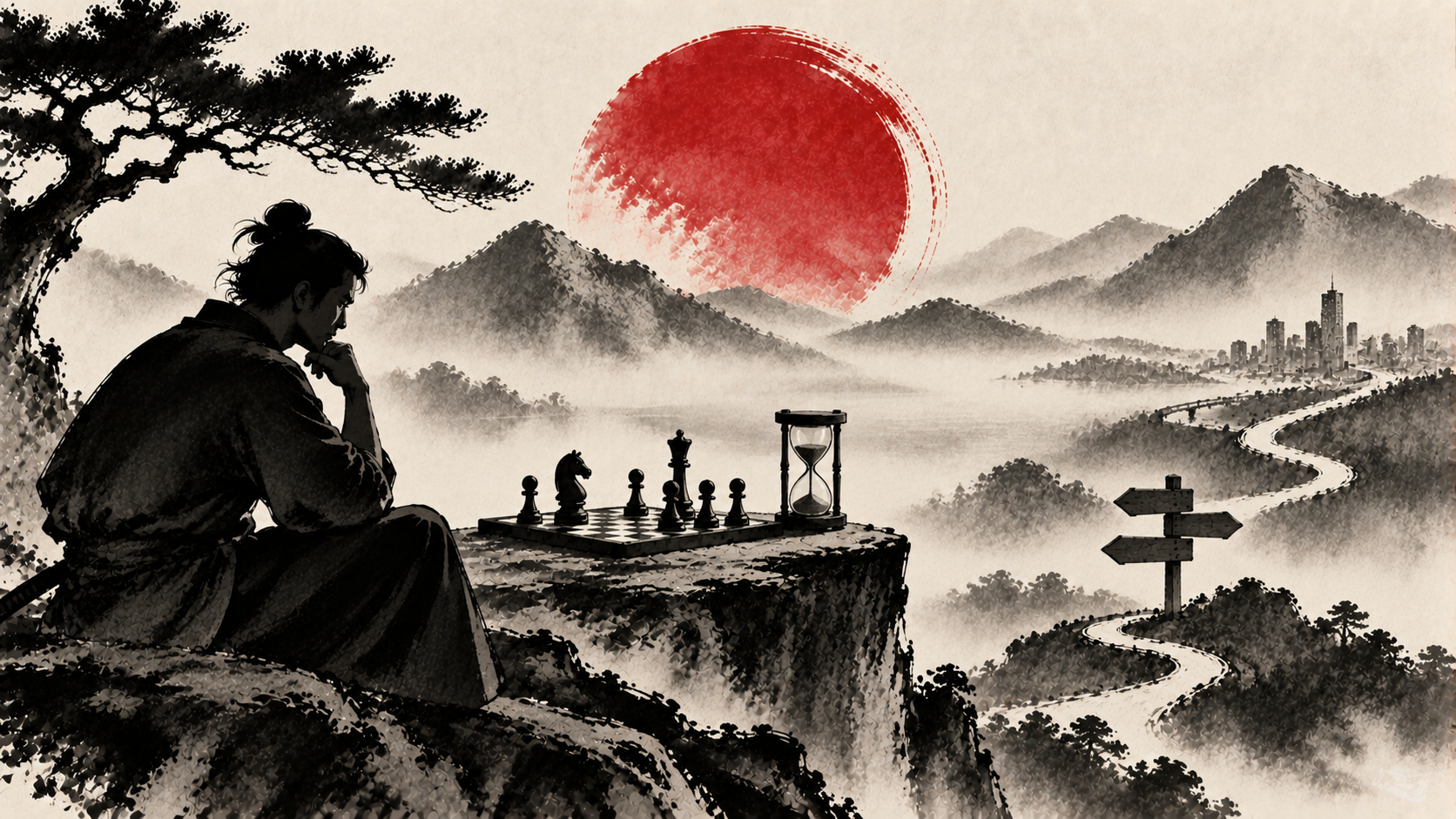
But Miyamoto Musashi has an important thought: not every movement is useful, and not every pause means weakness.
Sometimes the best move is not to make the next move too early.
The action creates a sense of control
It's hard for an entrepreneur to just wait.
Sales are slow — I want to change the price.
The client is not responding — write again.
The new product is growing weaker than expected — add features.
A competitor has launched something, we need to respond urgently.
Every action reduces anxiety.
There is a feeling:
At least we're doing something.
But strategy is not measured by the number of actions.
The result they create is important.
In chess, an extra move can also worsen the position.
A chess player doesn't move a piece just because he hasn't done anything with it for a long time.
Any move changes the position.
Sometimes for the better.
Sometimes for the worse.
In business, this is not so obvious, because the action usually looks positive.
A new advertising campaign.
A new feature.
A new meeting.
New discount.
But every change also has a price.
It consumes money, the team's attention, and the client's time.
And most importantly, it can destroy the effect of the previous decision before it has time to manifest itself.
Sometimes the system has not responded yet
You have launched a new sales channel.
After a week, there is almost no result.
You can immediately decide that the channel is not working.
But if the transaction cycle lasts two months, a week shows nothing.
It's the same with content, positioning, partnerships, and a new product.
There is often a delay between the action and the result.
If you interfere too often, it becomes impossible to figure out exactly what worked.
Sometimes waiting is not necessary because of passivity.
You need it to get information.
Waiting is especially important in negotiations.
The client received the offer and said:
I need to discuss this with the team.
The seller has a desire to speed up the process.
A day later, a letter.
Two more days later, a message.
Then the bell rang.
Sometimes it's justified.
But sometimes the seller just prevents the client from making the next internal move.
In negotiations, a pause may not mean a loss of interest, but the work of the other side.
If the seller does not understand this rhythm, he begins to fill the silence with his own actions.
And thus worsens the position.
Not every competitor's reaction requires a response.
The competitor lowered the price.
Launched a new feature.
He made a loud statement.
A natural reaction:
We need to respond.
But why ?
It may not affect your customers at all.
Perhaps he himself is mistaken.
Perhaps the best answer is to see what happens.
Companies often copy each other not because it is strategically right, but because they are afraid to look inactive.
This is how the market starts moving to the rhythm of the most nervous player.
Musashi and moment control
The point of waiting is not to be slow.
The point is not to give the moment of action to chance or anxiety.
If the opponent is waiting for your reaction, sometimes it is useful not to react.
If a client needs time, sometimes it is useful to give it.
If the experiment has not been completed yet, sometimes it is useful not to change the conditions.
A strong pause differs from inaction in that you understand what you are waiting for.
A good expectation has a condition
Phrase:
Let's wait a little longer
It's dangerous in itself.
This is how you can justify a bad result for years.
It's more useful to say:
We are waiting for such a signal by the end of the month. If it doesn't happen, we'll change our approach.
Then waiting becomes part of the strategy.
There is a deadline.
There is an expected result.
There is a next move.
This is no longer passivity.
This is a controlled pause.
Sometimes the best way to speed up is to stop fidgeting with the system.
The team changes ads every week.
Sales remind the customer of themselves every day.
The product is constantly receiving new features.
The manager changes priorities on a monthly basis.
Everything is moving very fast.
But the company itself is barely moving forward.
The reason may be simple: no process has time to complete.
Sometimes an organization doesn't need another leap.
She needs a period of stability to see the consequences of the decisions she has already made.
But you can also wait too long.
This is the downside.
Waiting becomes dangerous when the situation has already changed, and the company continues to hope for the same scenario.
Sales have not appeared for six months.
Clients regularly mention the same problem.
Competitors are taking over the market.
And the company says:
We need a little more time.
This is no longer a strategic pause.
This is a refusal to recognize a new position.
Therefore, rhythm is again more important than speed.
You need to understand not only when to act, but also when waiting is no longer useful.
A strong strategist knows how to pause
In business, it's harder than it sounds.
Because the action is visible.
It can be shown at a meeting.
You can write it in a report.
Can say:
We have made ten initiatives.
Waiting looks less impressive.
But sometimes the most important managerial choice sounds like this:
We are not changing anything yet. We are waiting for a concrete result.
This requires no less discipline than active actions.
Not every moment requires a move
Musashi is interesting precisely for this attitude to rhythm.
It's important not just to be able to act.
It's important to feel the moment.
Sometimes you need to attack.
Sometimes — to speed up the pace.
Sometimes it's to break the opponent's rhythm.
And sometimes — to allow the position to develop.
Therefore, the strategist's question does not always sound:
What should we do now?
Sometimes it's better to ask:
Is there a reason to do something right now?
Pausing is not a strategy in itself.
But the ability not to make an unnecessary move is an important part of it.
В бизнесе любят действие.
Запустить.
Позвонить.
Изменить.
Ускорить.
Если ничего не происходит, кажется, что компания теряет время.
Но у Миямото Мусаси есть важная мысль: не всякое движение полезно, и не всякая пауза означает слабость.
Иногда лучший ход — не делать следующий ход слишком рано.
Действие создаёт ощущение контроля
Предпринимателю трудно просто ждать.
Продажи идут медленно — хочется изменить цену.
Клиент не отвечает — написать ещё раз.
Новый продукт растёт слабее ожиданий — добавить функции.
Конкурент что-то запустил — срочно ответить.
Каждое действие снижает тревогу.
Возникает ощущение:
Мы хотя бы что-то делаем.
Но стратегия оценивается не количеством действий.
Важен результат, который они создают.
В шахматах лишний ход тоже может ухудшить позицию
Шахматист не двигает фигуру только потому, что давно ничего ею не делал.
Любой ход меняет позицию.
Иногда в лучшую сторону.
Иногда — в худшую.
В бизнесе это не так очевидно, потому что действие обычно выглядит положительно.
Новая рекламная кампания.
Новая функция.
Новая встреча.
Новая скидка.
Но каждое изменение тоже имеет цену.
Оно расходует деньги, внимание команды и время клиента.
А главное — может уничтожить эффект предыдущего решения, прежде чем тот успел проявиться.
Иногда система ещё не ответила
Вы запустили новый канал продаж.
Через неделю результата почти нет.
Можно сразу решить, что канал не работает.
Но если цикл сделки длится два месяца, неделя ничего не показывает.
То же самое с контентом, позиционированием, партнёрствами и новым продуктом.
Между действием и результатом часто есть задержка.
Если вмешиваться слишком часто, становится невозможно понять, что именно сработало.
Иногда ожидание нужно не из-за пассивности.
Оно нужно, чтобы получить информацию.
Ожидание особенно важно в переговорах
Клиент получил предложение и сказал:
Мне нужно обсудить это с командой.
У продавца появляется желание ускорить процесс.
Через день — письмо.
Ещё через два — сообщение.
Потом звонок.
Иногда это оправданно.
Но иногда продавец просто мешает клиенту сделать следующий внутренний ход.
В переговорах пауза может означать не потерю интереса, а работу другой стороны.
Если продавец не понимает этого ритма, он начинает заполнять тишину собственными действиями.
И тем самым ухудшает позицию.
Не всякая реакция конкурента требует ответа
Конкурент снизил цену.
Запустил новую функцию.
Сделал громкое заявление.
Естественная реакция:
Нам нужно ответить.
Но зачем?
Возможно, его действие вообще не влияет на ваших клиентов.
Возможно, он сам ошибается.
Возможно, лучший ответ — посмотреть, что произойдёт.
Компании часто копируют друг друга не потому, что это стратегически правильно, а потому, что боятся выглядеть бездействующими.
Так рынок начинает двигаться в ритме самого нервного игрока.
Мусаси и контроль момента
Смысл ожидания не в том, чтобы быть медленным.
Смысл в том, чтобы не отдавать момент действия случайности или тревоге.
Если противник ждёт вашей реакции, иногда полезно не реагировать.
Если клиенту нужно время, иногда полезно дать его.
Если эксперимент ещё не завершён, иногда полезно не менять условия.
Сильная пауза отличается от бездействия тем, что вы понимаете, чего ждёте.
Хорошее ожидание имеет условие
Фраза:
Подождём ещё немного
сама по себе опасна.
Так можно годами оправдывать плохой результат.
Полезнее сказать:
До конца месяца мы ждём такой сигнал. Если его не будет, меняем подход.
Тогда ожидание становится частью стратегии.
Есть срок.
Есть ожидаемый результат.
Есть следующий ход.
Это уже не пассивность.
Это управляемая пауза.
Иногда лучший способ ускориться — перестать дёргать систему
Команда меняет рекламу каждую неделю.
Продажи каждый день напоминают клиенту о себе.
Продукт постоянно получает новые функции.
Руководитель ежемесячно меняет приоритеты.
Всё движется очень быстро.
Но сама компания почти не продвигается.
Причина может быть простой: ни один процесс не успевает завершиться.
Иногда организации нужен не ещё один рывок.
Ей нужен период стабильности, чтобы увидеть последствия уже принятых решений.
Но ждать тоже можно слишком долго
Это обратная сторона.
Ожидание становится опасным, когда ситуация уже изменилась, а компания продолжает надеяться на прежний сценарий.
Продажи полгода не появляются.
Клиенты регулярно называют одну и ту же проблему.
Конкуренты забирают рынок.
А компания говорит:
Нужно ещё немного времени.
Это уже не стратегическая пауза.
Это отказ признать новую позицию.
Поэтому ритм снова важнее скорости.
Нужно понимать не только когда действовать, но и когда ожидание перестаёт быть полезным.
Сильный стратег умеет выдерживать паузу
В бизнесе это труднее, чем кажется.
Потому что действие видно.
Его можно показать на встрече.
Можно записать в отчёт.
Можно сказать:
Мы сделали десять инициатив.
Ожидание выглядит менее впечатляюще.
Но иногда самый важный управленческий выбор звучит так:
Мы пока ничего не меняем. Мы ждём конкретный результат.
Это требует не меньшей дисциплины, чем активные действия.
Не каждый момент требует хода
Мусаси интересен именно этим отношением к ритму.
Важно не просто уметь действовать.
Важно чувствовать момент.
Иногда нужно атаковать.
Иногда — ускорить темп.
Иногда — сломать ритм противника.
А иногда — позволить позиции развиться.
Поэтому вопрос стратега не всегда звучит:
Что мы должны сделать сейчас?
Иногда правильнее спросить:
Есть ли причина делать что-то именно сейчас?
Пауза сама по себе не стратегия.
Но умение не делать лишний ход — её важная часть.

 Share