

The post has been translated automatically. Original language: Russian





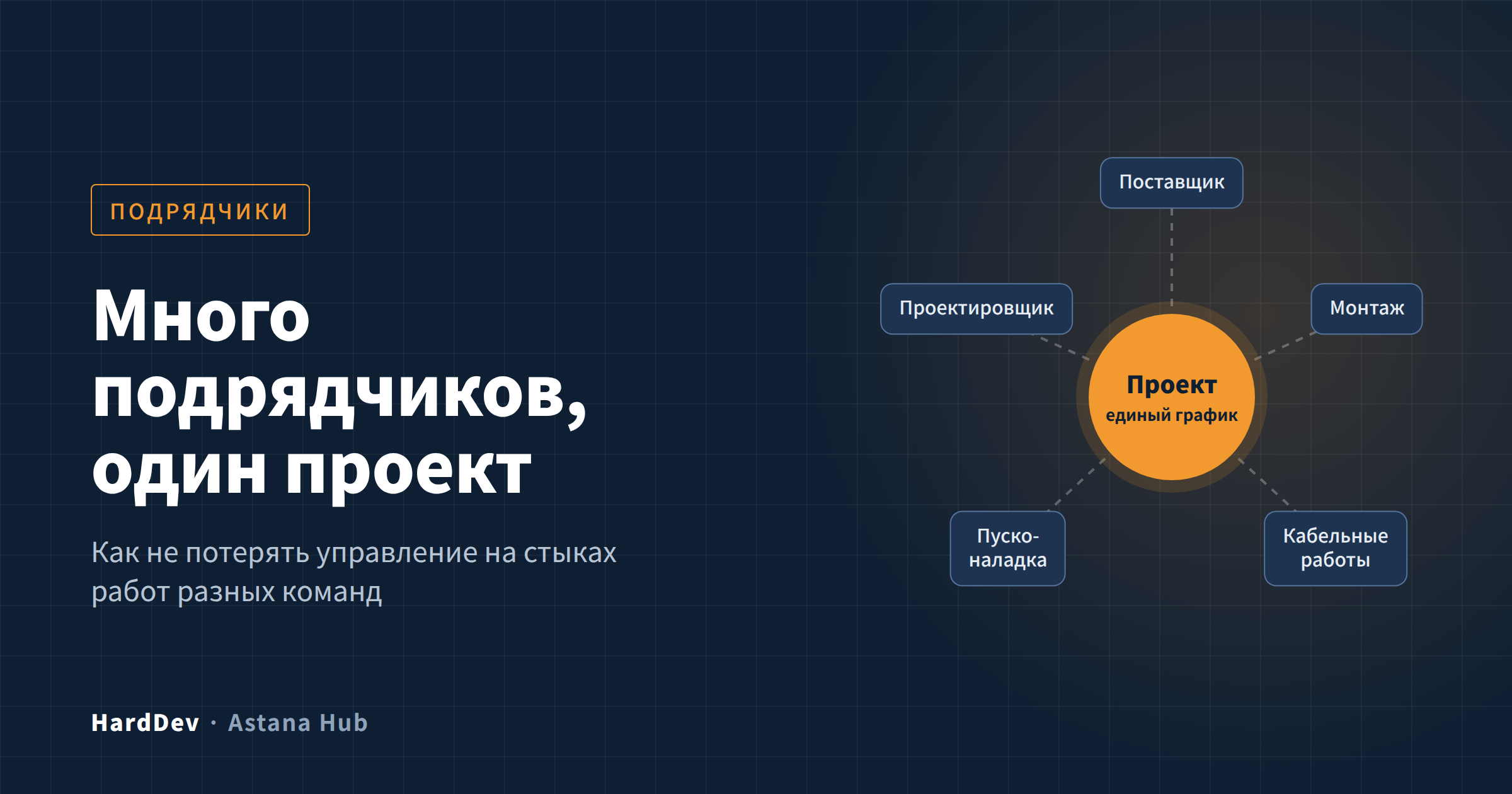
It is rare for a single team to work on industrial projects. The designer prepares the documentation, the supplier delivers the equipment, one team lays the cable, another installs the cabinets, and the third does the commissioning. Everyone is responsible for their part, and everyone can honestly say that they have done everything according to the contract. And the project is worth it.
Most often, problems arise at the joints. The installers are waiting for the cable workers, the cable workers are waiting for the designer with the corrected circuit, the installers have arrived at the facility, and the cabinets have not yet been connected. No contractor is individually to blame, but a simple one pays for the entire project.
Therefore, the general contractor needs three things. The first is clear areas of responsibility: who does what, where the work of one ends and the work of the other begins. The second is a single schedule that shows who depends on whom, rather than separate deadlines in each contract. The third is a regular general meeting, albeit a short one, where contractors check plans together and see in advance where they can interfere with each other.
Working with contractors is not only about control, but also coordination. When everyone understands how their work affects others, contractors themselves begin to warn about delays and negotiate among themselves. The task of the project manager is to create the conditions in which this happens, and not to sort out each conflict manually.
В промышленных проектах редко работает одна команда. Проектировщик готовит документацию, поставщик везёт оборудование, одна бригада прокладывает кабель, другая монтирует шкафы, третья делает пусконаладку. Каждый отвечает за свою часть, и каждый может честно сказать, что сделал всё по договору. А проект при этом стоит.
Чаще всего проблемы возникают на стыках. Монтажники ждут кабельщиков, кабельщики ждут проектировщика с исправленной схемой, пусконаладчики приехали на объект, а шкафы ещё не подключены. Ни один подрядчик не виноват по отдельности, но простой оплачивает весь проект.
Поэтому генподрядчику нужны три вещи. Первая — чёткие зоны ответственности: кто что делает, где заканчивается работа одного и начинается работа другого. Вторая — единый график, в котором видно, кто от кого зависит, а не отдельные сроки в каждом договоре. Третья — регулярная общая встреча, пусть короткая, где подрядчики вместе сверяют планы и заранее видят, где могут помешать друг другу.
Работа с подрядчиками — это не только контроль, но и координация. Когда каждый понимает, как его работа влияет на остальных, подрядчики начинают сами предупреждать о задержках и договариваться между собой. Задача руководителя проекта — создать условия, в которых это происходит, а не разбирать каждый конфликт вручную.

 Share





