
The post has been translated automatically. Original language: Russian




What can I do to double my height?
This question can be often heard. And almost always there is a ready-made list behind it: add ads, hire two sellers, update the website, and enter a new region. A list of efforts. Every effort costs money and your energy.
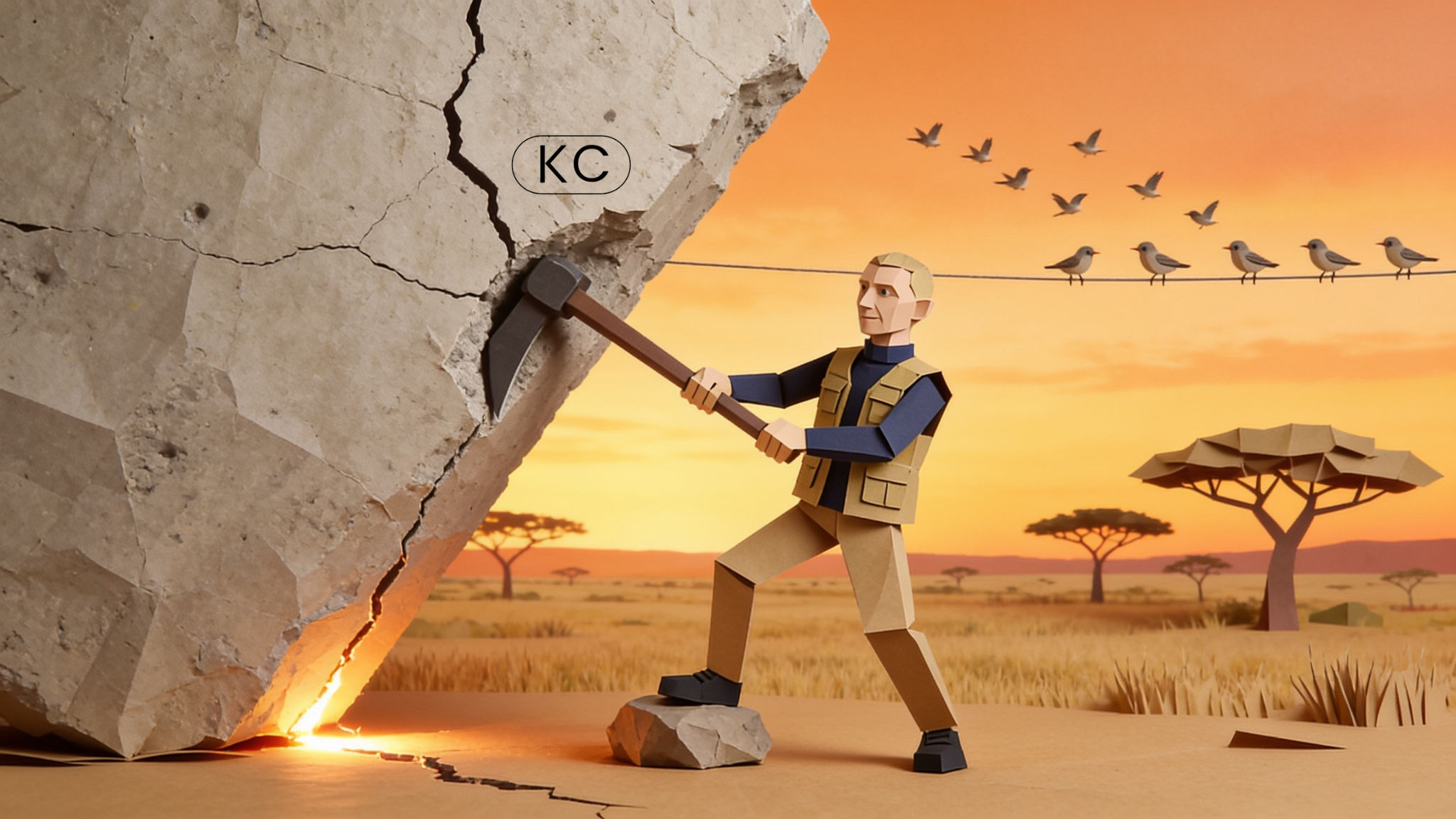
There is a boring thing in engineering — the point of application of force. The same person breaks a concrete slab with a crowbar. There is only one power. The difference is where he put the crowbar and what he used.
Business is the same construction. It has places where your movement multiplies and places where it is extinguished. The problem is that these places are not distinguishable by eyes. Advertising looks equally important when it triples the flow, and when it just pours water into a leaky bucket.
Effort gives a linear response. I invested a ruble and got a ruble, I invested two rubles and got two rubles. Leverage gives a non-linear. And almost always the owner puts pressure where he is used to, and not where the shoulder is more effective.
The effort is visible. You can show it to the team, put it in a report, and feel like work. The shoulder is not visible, it must be counted. And counting the sensitivity of one's economy can be dangerous: it may turn out that half of the turnover is held in three positions, and half of the attention is spent on the remaining forty.
There is a story about a man who was asked: How can you compete with the hot dog stand that's been on this corner for fifty years? The answer was: sell Chinese food. You're unlikely to get better on the same field — try on another one. The difference requires a decision, and making a decision is scarier than paying for another channel.
The second shoulder is a narrow group of people who really love you. Not the coverage, but the few hundred customers who come back and bring others. Working with them costs almost nothing and is almost never done.: it doesn't look like growth.
Every business has its own leverage. One. And it is located where a small change is multiplied by a large volume. The price of a position that holds half of the revenue. One stage of the funnel, through which all transactions pass without exception. The terms of purchase are in that part of the cost price where the main money is sitting. One percent on a large volume costs more than doubling efforts on a small one.
They usually look for absolute amounts of expenses: where they spent more, we will save there. It's not about the shoulder. It's about where it's easier to cut off. High expense is not about effective leverage. It's just a big line in the report. The difference between a big line and a big multiplier is an expensive difference in management.
When I'm invited to take a look at their business from above, I don't ask what can be improved. Everything can be improved, the list will be compiled in an hour. I'm looking for something else: where small gives big. Usually this is one place, and it is where the owner has decided everything for himself a long time and no longer looks there.
If you find the wrong place and put a lot of pressure on it, you're exploiting your own mistake. Revenue is growing, margins are melting, there is no money in the cash register, and the team is working twice as hard. It's not a crash, a crash would be more honest. It's a slow death with a beautiful growth record. And the more effort I put in, the harder it is to admit that I was being pushed in the wrong place: I had enough expensive mistakes of my own, and I started admitting them much later than it was worth.
Name yourself one place in your economy where you can improve the entire system with little effort.
Что сделать, чтобы вырасти в два раза?
Этот вопрос можно часто услышать. И почти всегда за ним стоит готовый список: добавить рекламы, нанять двух продавцов, обновить сайт, выйти в новый регион. Список усилий. Каждое усилие стоит денег и Вашей энергии.
В инженерии есть скучная штука — точка приложения силы. Один и тот же человек ломом ломает бетонную плиту. Сила одна. Разница в том, куда он лом подсунул и на что опёр.
Бизнес — такая же конструкция. У неё есть места, где Ваше движение множится, и места, где оно гасится. Проблема в том, что глазами эти места не различаются. Реклама выглядит одинаково важной и в том случае, когда она втрое усиливает поток, и в том, когда она просто наливает воду в дырявое ведро.
Усилие даёт линейный ответ. Вложил рубль — получил рубль, вложил два — получил два. Плечо даёт нелинейный. И почти всегда собственник давит там, где привык, а не там, где эффективнее плечо.
Усилие видно. Его можно показать команде, поставить в отчёт, ощутить как работу. Плечо не видно, его надо считать. А считать чувствительность своей экономики — это занятие может быть опасным: может выясниться, что половина оборота держится на трёх позициях, а половина внимания уходит на остальные сорок.
Есть история про человека, у которого спросили: как соперничать с ларьком с хот-догами, который стоит на этом углу пятьдесят лет? Ответ был: продавай китайскую еду. Ты вряд ли станешь лучше на том же поле — попытайся на другом. Отличие требует решения, а решение принимать страшнее, чем оплатить ещё один канал.
Второе плечо — узкая группа людей, которые Вас реально любят. Не охват, а те несколько сотен покупателей, которые возвращаются и приводят других. Работа с ними почти ничего не стоит и почти никогда не делается: она не выглядит как рост.
Плечо у каждого бизнеса своё. Одно. И находится оно там, где маленькое изменение умножается на большой объём. Цена на позицию, которая держит половину выручки. Один этап воронки, через который проходят все сделки без исключения. Условия закупки в той части себестоимости, где сидят основные деньги. Один процент на большом объёме уносит больше, чем удвоение стараний на малом.
Ищут же обычно по абсолютным суммам расходов: где потратили больше — там и будем экономить. Это не про плечо. Это про то, где легче отрезать. Большой расход — не про эффективное плечо. Это просто большая строчка в отчёте. Разница между большой строчкой и большим множителем — дорогая разница в управлении.
Когда меня зовут взглянуть сверху на их бизнес, не спрашиваю, что можно улучшить. Улучшить можно всё, список составится за час. Ищу другое: где малое даёт большое. Обычно это одно место, и оно — там, где собственник давно всё для себя решил и больше туда не смотрит.
Если Вы нашли не то место и надавили сильно — Вы масштабируете собственную ошибку. Выручка растёт, маржа тает, денег в кассе нет, а команда работает вдвое больше. Это не крах, крах был бы честнее. Это медленная смерть с красивым отчётом о росте. И чем больше сил вложено, тем труднее признать, что давили не туда: своих дорогих ошибок у меня хватало, и признавать их я начинал значительно позже, чем стоило.
Назовите себе одно место в Вашей экономике, где можно улучшить всю систему малым усилием.

 Share