
The post has been translated automatically. Original language: Russian





Implementation reports often only mention successes. But the most valuable conclusions often relate to what works worse than expected.
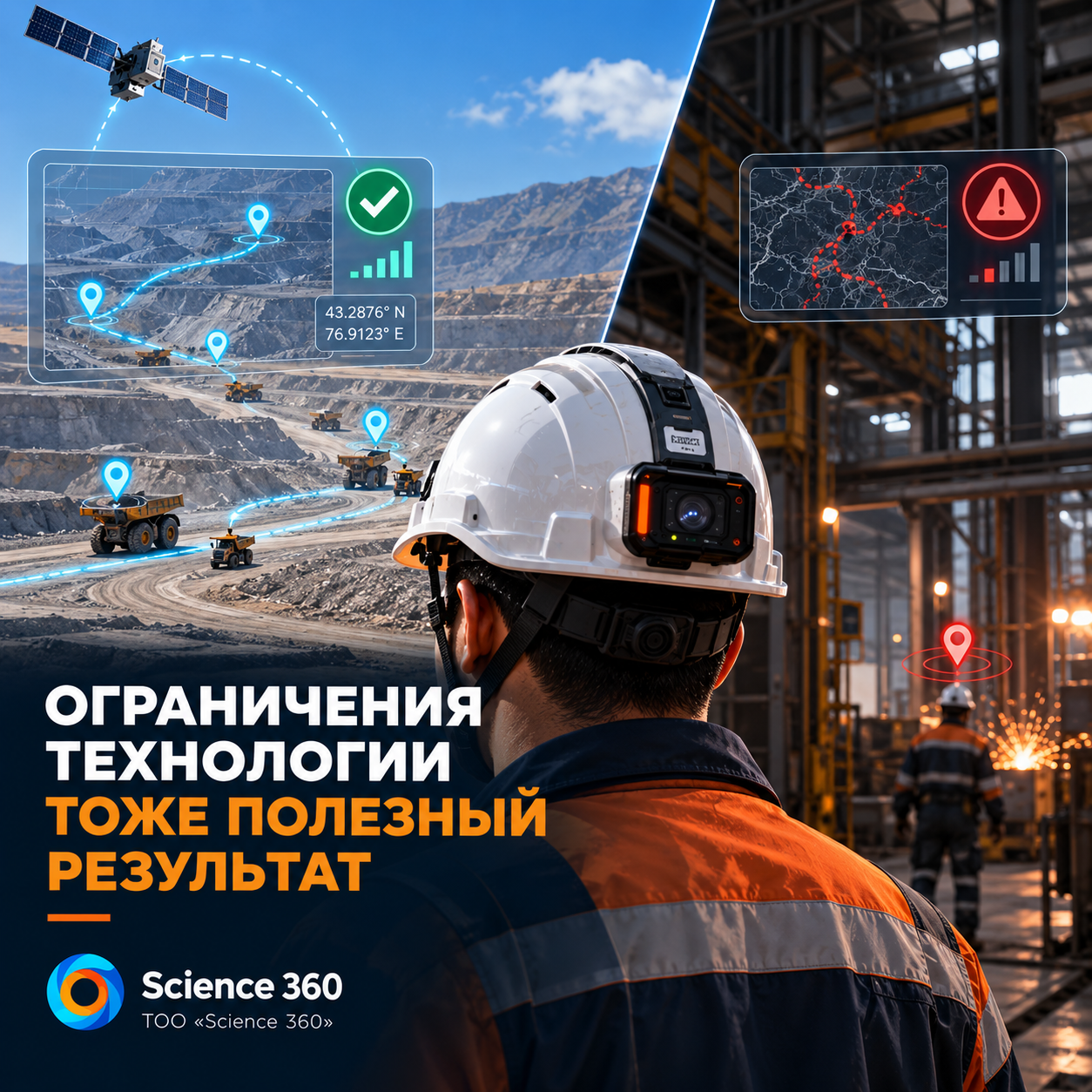
Let's get back to testing the smart helmets. Navigation worked perfectly in open areas: smooth trajectories, without breaks and jumps in coordinates. In enclosed spaces with metal structures, in repair shops and welding boxes, the positioning accuracy has noticeably decreased.
This is not considered a failure. Satellite navigation does not work well inside metal buildings, and this has long been written about in the scientific literature. The researchers expected this effect in advance and confirmed it in practice. Now the company knows that additional solutions will be needed for the workshops, such as local beacons or geofences.
The second example. During the entire observation period, the alarm module did not register a single event, and there were no false alarms either. It sounds great, but the authors honestly noted: The short test period did not allow us to verify rare scenarios, such as emergencies or prolonged immobility of the employee. This requires long-term monitoring.
If these restrictions had been silenced, the company would have faced them after full implementation, at the most inconvenient moment.
Our recommendation: in the report on any test or pilot, answer three questions separately:
- Where does the technology work worse than advertised, and why?
- What scenarios were we unable to test?
- What should be done in the next step to close these gaps?
An honestly fixed limitation is cheaper and more useful than a problem found after scaling.
В отчётах о внедрении часто пишут только об успехах. Но самые ценные выводы нередко касаются того, что работает хуже ожидаемого.
Вернёмся к испытанию умных касок. На открытых площадках навигация работала отлично: ровные траектории, без разрывов и скачков координат. В закрытых помещениях с металлоконструкциями, в ремонтных цехах и сварочных боксах точность позиционирования заметно снизилась.
Провалом это не считается. Спутниковая навигация плохо работает внутри металлических зданий, и об этом давно пишут в научной литературе. Исследователи ожидали этот эффект заранее и подтвердили его на практике. Теперь предприятие знает: для цехов понадобится дополнительное решение, например локальные маяки или геозоны.
Второй пример. За весь период наблюдений модуль тревог не зафиксировал ни одного события, и ложных срабатываний тоже не было. Звучит отлично, но авторы честно отметили: короткий срок испытаний не позволил проверить редкие сценарии, такие как аварийные ситуации или длительная неподвижность работника. Для этого нужен долгосрочный мониторинг.
Если бы эти ограничения замолчали, предприятие столкнулось бы с ними уже после полного внедрения, в самый неудобный момент.
Наша рекомендация: в отчёте о любом тесте или пилоте отдельно ответьте на три вопроса:
- Где технология работает хуже, чем заявлено, и почему?
- Какие сценарии мы не смогли проверить?
- Что нужно сделать на следующем этапе, чтобы закрыть эти пробелы?
Честно зафиксированное ограничение дешевле и полезнее, чем проблема, найденная после масштабирования.

 Share