
The post has been translated automatically. Original language: Russian



For me, GameDev conferences are primarily an opportunity to dramatically accelerate the development of B2B relationships: to meet the right people in person, understand what is happening inside production, and quickly identify real points for cooperation.
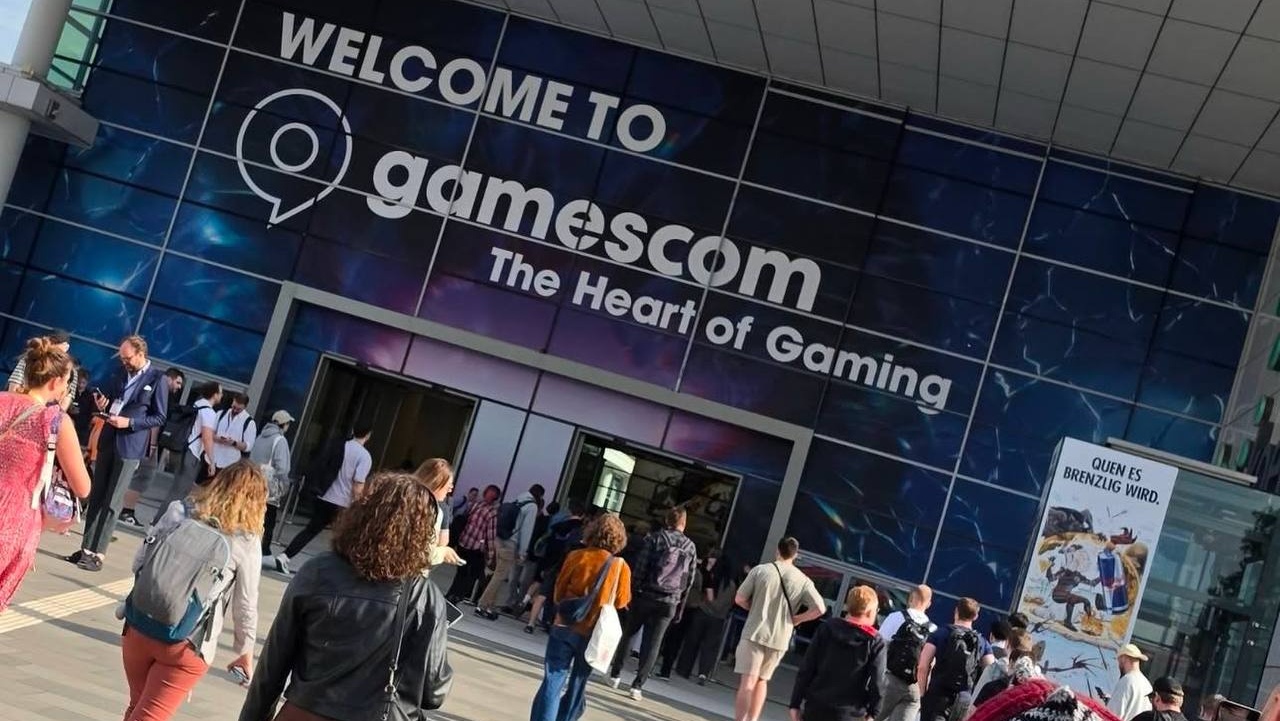
My experience at Gamescom this year has shown well how different meetings can develop that look equally successful at the time of the conversation. After one, we were asked to send a rate card. After another, interest quickly narrowed to animation and motion capture. In the third case, I really liked the portfolio, but the economics of the small studio did not match our production model. In several more conversations, the main result was reaching a more relevant person within the company.
A good conference should end not with a list of contacts, but with a map of the next steps.
What do I need to understand after a good meeting?:
A completed calendar can easily be mistaken for a strong business development. But twenty meetings are not twenty opportunities. After the conversation, four things are more important to me: production need, timing, access, and commercial fit.
Production need is a real task within a project. Where does the limitation appear: there is not enough capacity in front of the milestone, internal leads are overloaded, the volume of environment production is growing, an external animation stream, technical art or ownership of the whole workstream is needed? While the problem is not clear, the offer remains a general list of capabilities.
Timing answers the question of when this problem becomes a business problem: now, after the vertical slice, in the next quarter, or after the budget is approved.
Access — am I talking to a person who is really involved in choosing external partners in this area?
Commercial fit — whether the level of responsibility, volume, procurement and economics of the two companies coincide.
If these four things are at least partially understood, the meeting turns into a pipeline. If not— this is still a good contact that still needs to be qualified.
"Not now" is not the same as "no"
After one of the meetings at Gamescom, a representative of a large company first asked for materials, then a rate card, but immediately indicated that there would most likely be no immediate need in the coming months.
In such a situation, you can disappear for six months or write "just following up" every two weeks. I don't think either option is strong. If there is a timeframe, it is more important for me to understand the trigger: what needs to change inside production in order for the conversation to become relevant — a new scope, the next stage of the project, a revision of capacity or budget.
Then, before the task appears, you can already do useful work: understand vendor onboarding and qualification, contact the right production team, close NDA and procurement issues, and show several cases for the intended scope. When the need arises, both sides do not start dating from scratch.
The follow-up should not remind you of your existence, but reduce it.
the number of unknowns between the two companies.
The further the conversation goes, the narrower the pitch should become.
Another Gamescom case: after meeting with AAA developer, the general conversation quickly focused on animation. At first, I was asked to send the animation portfolio, and later the pricing for animation and motion capture.
For me, this is a simple but important principle: the more a client talks about their task, the less general marketing should remain in the next email. If it's about animation, show animation. If you need realistic characters, don't force the person to go through environments, vehicles, and props all over again. If the ownership of an entire workstream is being discussed, then leads, QA, pipeline, scalability, technical validation, and responsibility for the result are already important.
The client rarely buys "ten more artists" as an independent value. He buys a solution to the production problem: make it to the milestone, take the load off internal leads, close the volume jump, get specialist expertise, or transfer the entire direction to a partner. "Therefore, "for me, a strong B2B conversation does not begin with "what else can I show you about us?", but with "what is happening now inside your production?".
The deal should make economic sense for both sides.
Another real situation after the conference: a small studio rated our portfolio very highly, but its budget objectively did not match our production model.
The goal of business development is, of course, a commercial result and, ultimately, a contract. But a strong deal is not based on trying to fit the offer to the client's budget at any cost, but on finding a working configuration for both sides. Sometimes it makes sense to change the scope, team composition, or interaction format. Sometimes budget mismatch just shows that companies are on different production stages and solving different tasks.
In such a situation, I am not looking for a way to save the lead at all costs, but for a commercially sound entry point: a benchmark, a complex specialized task, a short senior-heavy stage or another scope where our expertise gives the client measurable value. If there is such a point, it can be developed into a deal. If it is not available now, it is important to understand when the budget, scale, or production stage changes, the conversation will become relevant again. The client qualifies the vendor; the vendor must also qualify opportunity in order to focus efforts where there is a realistic path to a contract.
The right person inside the company is sometimes more valuable than the perfect deck.
I've had this experience at international conferences more than once: the meeting itself is going great, but the next logical step is not another presentation, but getting to know another person inside the company. In large studios and publishers, external development, art leadership, production, and procurement can participate in the decision in different ways. Therefore, the question "who else within the team does it make sense for us to know?" sometimes creates more business than an additional pitch. For the same reason, for priority companies, I consider multi-threading to be a normal part of B2B: not to "bypass" the contact, but to understand the real structure of the solution.
How I rate conferences now.
I leave the number of meetings as the activity metric. For business, it is more important to me how many conversations I managed to qualify, where the potential production need is clear, who has a timeframe, how many specific next steps and internal introductions have appeared, and which contacts can be honestly derived from the active pipeline. Before the next conferences, I also define the purpose of each meeting more strictly. Somewhere I need to understand production plans, somewhere I need to go to decision maker, check my interest in a particular workstream, get permission to send a private portfolio, or arrange the next call with the production team. One universal deck here works worse than a modular pitch assembled around a specific person's task. And I try to end the meeting with a specific action. "We'll be in touch" means almost nothing. "Send"""animation""portfolio," "come back in November", "I'll introduce you to the Art Director", "let's connect the production team" — this is already the beginning of the process.
The conference gives access. Business starts after!
This year's Gamescom has become for me a concentrated example of how international GameDev conferences work in general. Their value is not in the number of business cards or even in the number of people who liked your work. "It"s about being able to reduce the distance between the two companies: to move from "we don't know anything about each other" to "we understand the conditions under which it makes sense for us to work together."
Sometimes the next step is scope. Sometimes test, benchmark, onboarding, or getting to know another person. Sometimes there is an honest understanding that there is no fit right now.
For me, the task of business development after the conference is to consistently bring qualified capabilities to a commercial result. The contract is the goal. But the path to it begins with an accurate understanding of where the real business opportunity exists, what needs to happen to make it relevant, who makes the decision and what steps can be taken in advance so that by the time production need appears, both sides are ready to move towards a deal.
The conference gives access. Strong business development transforms this
access in a clear way to the transaction!
Для меня GameDev-конференции — это прежде всего возможность резко ускорить развитие B2B отношений: встретить нужных людей лично, понять, что происходит внутри production, и быстро определить реальные точки для сотрудничества.
Мой опыт Gamescom в этом году хорошо показал, насколько по-разному могут развиваться встречи, которые в момент разговора выглядят одинаково успешными. После одной нас попросили прислать rate card. После другой интерес быстро сузился до animation и motion capture. В третьем случае портфолио очень понравилось, но экономика небольшой студии не совпала с нашей production model. Еще в нескольких разговорах главным результатом стал выход на более релевантного человека внутри компании.
Хорошая конференция должна заканчиваться не списком контактов, а картой следующих действий.
Что мне нужно понять после хорошей встречи:
Заполненный календарь легко принять за сильный business development. Но двадцать встреч — это не двадцать возможностей. После разговора мне важнее четыре вещи: production need, timing, access и commercial fit.
Production need — это реальная задача внутри проекта. Где появляется ограничение: не хватает capacity перед milestone, перегружены internal leads, растет объем environment production, нужен внешний animation stream, technical art или ownership целого workstream? Пока проблема не понятна, предложение остается общим списком capabilities.
Timing отвечает на вопрос, когда эта проблема становится бизнес-задачей: сейчас, после vertical slice, в следующем квартале или после утверждения бюджета.
Access — разговариваю ли я с человеком, который действительно участвует в выборе external partners по этому направлению.
Commercial fit — совпадают ли уровень ответственности, объем, procurement и экономика двух компаний.
Если эти четыре вещи хотя бы частично понятны, встреча превращается в pipeline. Если нет — это пока хороший контакт, который еще нужно квалифицировать.
«Не сейчас» — не то же самое, что «нет»
После одной из встреч на Gamescom представитель крупной компании сначала попросил материалы, затем rate card, но сразу обозначил: непосредственной потребности в ближайшие месяцы, скорее всего, не будет.
В такой ситуации можно исчезнуть на полгода или каждые две недели писать «just following up». Я не считаю ни один вариант сильным. Если есть timeframe, мне важнее понять trigger: что должно измениться внутри production, чтобы разговор стал актуальным — новый scope, следующий этап проекта, пересмотр capacity или бюджет.
Тогда до появления задачи уже можно сделать полезную работу: понять vendor onboarding и qualification, выйти на нужную production-команду, закрыть NDA и procurement-вопросы, показать несколько кейсов под предполагаемый scope. Когда потребность появится, обе стороны не начинают знакомство с нуля.
Follow-up должен не напоминать о вашем существовании, а уменьшать
количество неизвестных между двумя компаниями.
Чем дальше разговор, тем уже должен становиться pitch.
Другой кейс с Gamescom: после встречи с AAA developer общий разговор быстро сфокусировался на animation. Сначала меня попросили отправить именно animation portfolio, позже — pricing по animation и motion capture.
Для меня это простой, но важный принцип: чем больше клиент рассказывает о своей задаче, тем меньше общего маркетинга должно оставаться в следующем письме. Если речь об animation — показывайте animation. Если нужны realistic characters — не заставляйте человека заново проходить через environments, vehicles и props. Если обсуждается ownership целого workstream — тогда уже важны leads, QA, pipeline, scalability, technical validation и ответственность за результат.
Клиент редко покупает «еще десять художников» как самостоятельную ценность. Он покупает решение production-проблемы: успеть к milestone, снять нагрузку с internal leads, закрыть скачок объема, получить specialist expertise или передать партнеру направление целиком. Поэтому сильный B2B-разговор для меня начинается не с «что еще показать вам о нас?», а с «что происходит сейчас внутри вашего production?».
Сделка должна иметь экономический смысл для обеих сторон.
Еще одна реальная ситуация после конференции: небольшая студия очень высоко оценила наше портфолио, но ее бюджет объективно не соответствовал нашей production model.
Цель business development, конечно, коммерческий результат и в конечном счете контракт. Но сильная сделка строится не на попытке любой ценой подогнать предложение под бюджет клиента, а на поиске рабочей конфигурации для обеих сторон. Иногда имеет смысл изменить scope, состав команды или формат взаимодействия. Иногда budget mismatch просто показывает, что компании находятся на разных production stages и решают разные задачи.
В такой ситуации я ищу не способ любой ценой сохранить лид, а коммерчески здравую точку входа: benchmark, сложную специализированную задачу, короткий senior-heavy этап или другой scope, где наша экспертиза дает клиенту измеримую ценность. Если такая точка есть, ее можно развивать в сделку. Если ее нет сейчас, важно понимать, при каком изменении бюджета, масштаба или production stage разговор снова станет актуальным. Клиент квалифицирует vendor; vendor так же должен квалифицировать opportunity, чтобы концентрировать усилия там, где есть реальный путь к контракту.
Правильный человек внутри компании иногда ценнее идеального deck.
На международных конференциях у меня не раз было так: сама встреча проходит отлично, но следующий логичный шаг — не еще одна презентация, а знакомство с другим человеком внутри компании. В больших studios и publishers external development, art leadership, production и procurement могут участвовать в решении по-разному. Поэтому вопрос «кого еще внутри команды нам имеет смысл знать?» иногда создает больше бизнеса, чем дополнительный pitch. По той же причине для приоритетных компаний я считаю multi-threading нормальной частью B2B: не чтобы «обойти» контакт, а чтобы понимать реальную структуру решения.
Как я теперь оцениваю конференции.
Количество встреч я оставляю как activity metric. Для бизнеса мне важнее, сколько разговоров удалось квалифицировать, где понятен потенциальный production need, у кого есть timeframe, сколько появилось конкретных next steps и internal introductions, а какие контакты можно честно вывести из активного pipeline. Перед следующими конференциями я также жестче определяю цель каждой встречи. Где-то мне нужно понять production plans, где-то — выйти на decision maker, проверить интерес к определенному workstream, получить permission отправить private portfolio или договориться о следующем звонке с production team. Один универсальный deck здесь работает хуже, чем modular pitch, собранный вокруг задачи конкретного человека. И я стараюсь заканчивать встречу конкретным действием. «Будем на связи» почти ничего не значит. «Пришлите animation portfolio», «вернитесь в ноябре», «я познакомлю вас с Art Director», «давайте подключим production team» — это уже начало процесса.
Конференция дает доступ. Бизнес начинается после!
Gamescom в этом году стал для меня концентрированным примером того, как работают международные GameDev-конференции в целом. Их ценность не в количестве визиток и даже не в количестве людей, которым понравилась ваша работа. Она в возможности сократить дистанцию между двумя компаниями: перейти от «мы друг о друге ничего не знаем» к «мы понимаем, при каких условиях нам имеет смысл работать вместе».
Иногда следующим шагом будет scope. Иногда test, benchmark, onboarding или знакомство с другим человеком. Иногда — честное понимание, что сейчас fit отсутствует.
Для меня задача business development после конференции — последовательно доводить квалифицированные возможности до коммерческого результата. Контракт — цель. Но путь к нему начинается с точного понимания, где существует реальная business opportunity, что должно произойти, чтобы она стала актуальной, кто принимает решение и какие шаги можно сделать заранее, чтобы к моменту появления production need обе стороны уже были готовы двигаться к сделке.
Конференция дает доступ. Сильный business development превращает этот
доступ в понятный путь к сделке!
 Share