
The post has been translated automatically. Original language: Russian





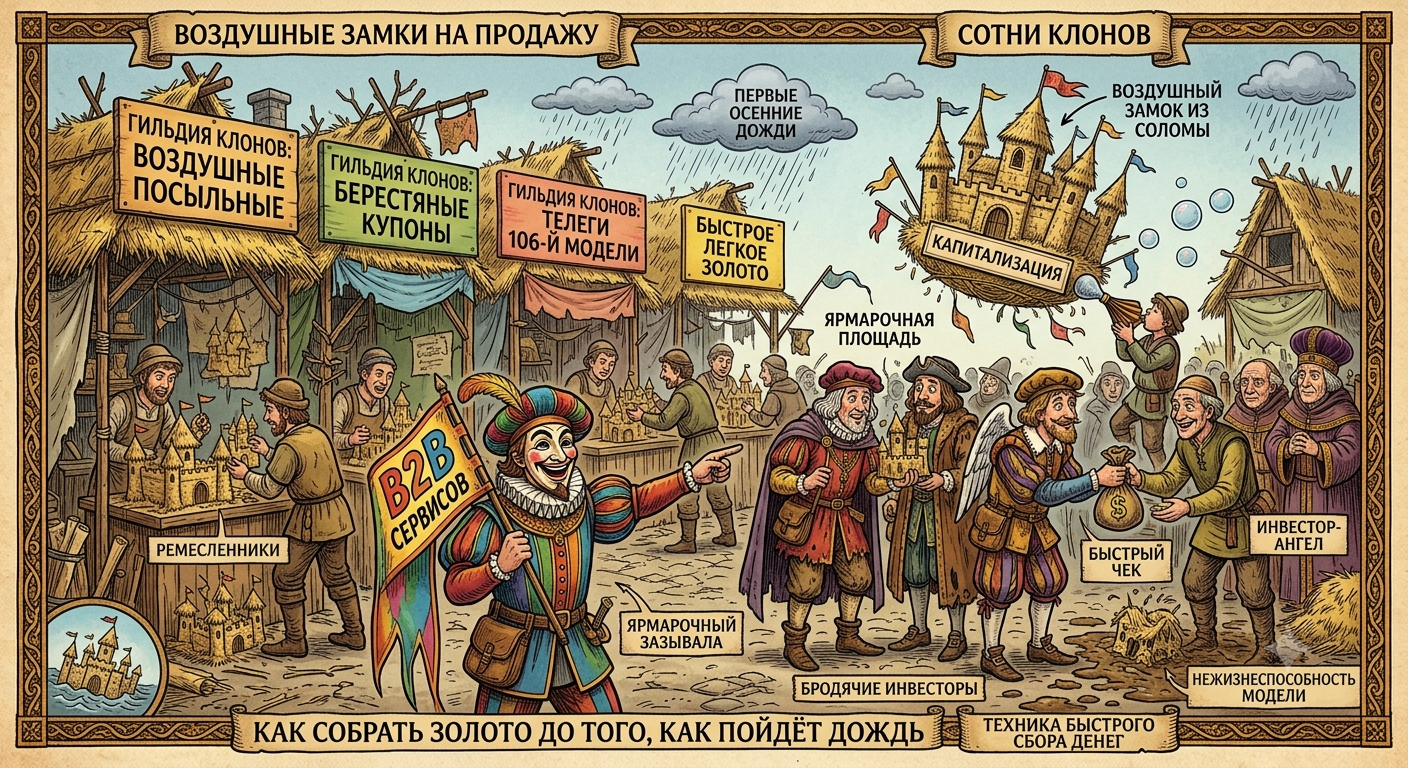
If you walk around the Fairground of the Kingdom on a sunny day, your eyes run away from abundance. There are smart tents of young startups on every corner. However, if you look closely, nine out of ten workshops sell the same thing: the hundredth modification of a birch bark messenger for the purchase of pies or the 105th model of a wooden cart with a discount coupon.
The question is: why does the Kingdom need another cart when the old ones are stuck in the mud of unfinished roads? Why are artisans so eager to create clones instead of repairing the roads themselves?
The secret is simple and lies in the mechanics of getting rich quickly at the fair.
To build a real infrastructure — for example, a stone aqueduct or the accounting system of the royal barns — you need to work hard for years. You need to dig the ground, study the drawings, negotiate and answer to the strict Royal Treasury. And it's long, hard, and requires real skill.
It is much easier to deploy a "Fast Light Air" strategy.
The circuit works flawlessly:
• Take someone else's idea: look at what was in demand in the neighboring Overseas Kingdom last season.
• Knock down a mock-up made of straw and bright feathers: call it an "innovative hut".
• Run to Passing Merchants: find angel investors who are looking for a place to put an extra bag of gold.
• Start a beautiful song: tell us how your straw hut will conquer all the bazaars of the world.
A passing Merchant sees bright feathers, hears familiar words, gives the first quick investment check and drives on. The apprentices are happy, and the barker mentors in the Town Hall applaud: "Look at the successful pitching! The man sold the air for gold!"
But this tale always has the same ending.
The straw layout is not designed for life. It was created only to look beautiful during the fair parade. As soon as the gold from the merchants runs out and the first autumn rains come, the business model inevitably washes into the mud. But by that time, the cunning "architect" had already packed his bags, changed the signboard and ran to sell the 106 model of a straw whistle to Merchants.
Most founders choose to create clones not because of professional limitations, but out of a desire for the easiest and fastest start. They do not need a working business for centuries, but quick capital and public attention before the complete non-viability of their design comes to light.
Real capitalization is never born out of thin air. While the fair is noisy and drowning in straw dust, true value is created where complex, heavy and deep infrastructure is taken up.
Если в солнечный день прогуляться по Ярмарочной площади Королевства, глаза разбегаются от изобилия. На каждом углу стоят нарядные шатры молоденьких стартапов. Правда, если присмотреться, девять из десяти мастерских продают одно и то же: сотую модификацию берестяного гонца для закупки пирожков или 105-ю модель деревянной телеги с купоном на скидку.
Спрашивается: зачем Королевству ещё одна телега, когда старые намертво застряли в грязи непостроенных дорог? Почему ремесленники с таким азартом лепят клонов вместо того, чтобы чинить сами дороги?
Секрет прост и кроется в механике быстрого ярмарочного обогащения.
Чтобы построить настоящую инфраструктуру — например, каменный акведук или систему учета королевских амбаров, — нужно усердно трудиться годами. Нужно копать землю, изучать чертежи, договариваться и держать ответ перед строгой Королевской Казной. А это долго, тяжело и требует реального мастерства.
Куда проще развернуть стратегию «Быстрого Легкого Воздуха».
Схема работает безупречно:
• Возьми чужую идею: посмотри, на что в соседнем Заморском Царстве был спрос в прошлом сезоне.
• Сбей макет из соломы и ярких перьев: назови это «инновационной избушкой».
• Беги к Проезжим Купцам: найди инвесторов-ангелов, которые ищут, куда бы пристроить лишний мешок золота.
• Заведи красивую песню: расскажи о том, как твоя соломенная избушка покорит все базары мира.
Проезжий Купец видит яркие перья, слышит знакомые слова, даёт первый быстрый чек-инвестицию и едет дальше. Подмастерья счастливы, наставники-зазывалы в Ратуше аплодируют: «Смотрите, какой успешный питчинг! Человек воздух за золото продал!»
Но у этой сказки всегда один и тот же конец.
Соломенный макет не предназначен для жизни. Он создан только для того, чтобы красиво выглядеть во время ярмарочного парада. Как только заканчивается золото от купцов и наступают первые осенние дожди — бизнес-модель неизбежно смывает в грязь. Но к тому моменту хитрый «зодчий» уже собрал свои манатки, сменил вывеску и побежал продавать Купцам 106-ю модель соломенной свистульки.
Большинство основателей выбирают создание клонов не из-за профессиональных ограничений, а из стремления к наиболее легкому и быстрому старту. Им нужен не работающий бизнес на века, а быстрый капитал и внимание публики до того, как всплывёт полная нежизнеспособность их конструкции.
Настоящая капитализация никогда не рождается из лёгкого воздуха. Пока ярмарка шумит и тонет в соломенной трухе, истинная ценность создаётся там, где берутся за сложную, тяжёлую и глубокую инфраструктуру.

 Share