
The post has been translated automatically. Original language: Russian





Let's say an enterprise wants to implement digital staff monitoring. It is risky to purchase hundreds of devices at once: it is not known how they will behave on a specific site.
It is more correct to start with a small pilot in real conditions.
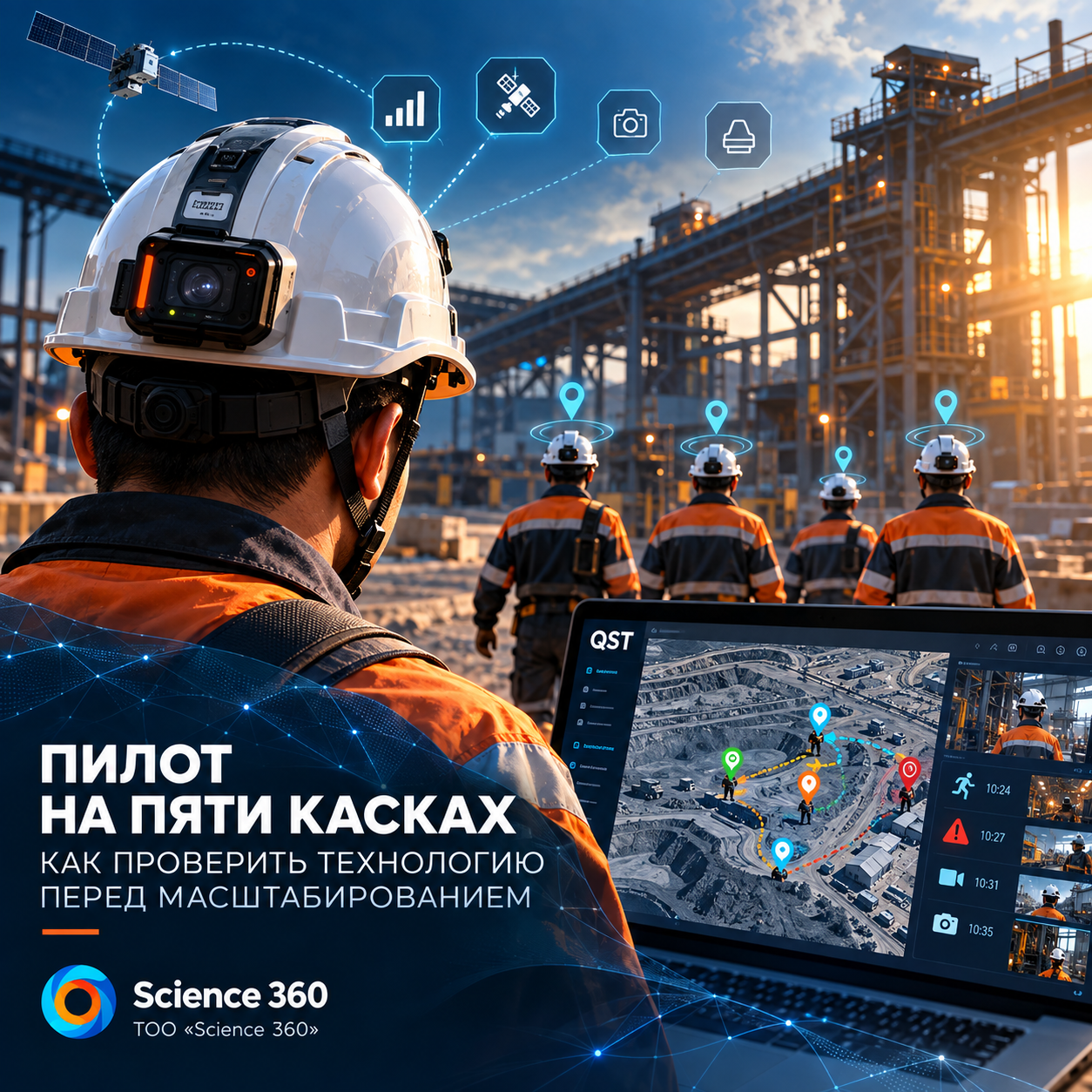
This was done during the testing of RD-D1+ intelligent safety helmets at the "Central Asia Mining Co" LLP production site in Shymkent. We took five helmets with GSM/GPRS modules, GPS/BeiDou navigation, sensors and cameras. Each was assigned to a specific employee and connected to the QST monitoring platform.
The test took place in four stages:
- Preparation: registration of devices, SIM cards and survey of communication coverage areas.
- Field tests: checking the stability of communication, positioning accuracy, and the influence of metal structures.
- Data analysis: movement tracks, disturbing events, photos and videos.
- Evaluation: comparison with the stated characteristics and recommendations for scaling.
The site was not an easy one to choose: workshops, welding sites, warehouses, a lot of metal and electrical equipment. For wireless devices, this is close to the worst-case scenario, so the test turned out to be honest.
The result: the platform never confused the devices, communication interruptions did not exceed one polling cycle (10 seconds), and there were no false alarms. This made it possible to assess the system's readiness for implementation at the TRL 8-9 level.
Our recommendation: before scaling any technology
- Conduct the pilot on a small number of devices, but in real, not laboratory conditions.
- Determine in advance what you are checking: communication, accuracy, reliability.
- Determine which result you consider sufficient to move on to the next stage.
Five devices and several weeks of observations are cheaper than a failed purchase for the entire enterprise.
"Science 360" LLP
Допустим, предприятие хочет внедрить цифровой мониторинг персонала. Закупить сразу сотни устройств рискованно: неизвестно, как они поведут себя на конкретной площадке.
Правильнее начать с небольшого пилота в реальных условиях.
Так поступили при испытании интеллектуальных защитных касок RD-D1+ на производственной площадке ТОО «Central Asia Mining Co» в Шымкенте. Взяли пять касок с модулями GSM/GPRS, навигацией GPS/BeiDou, датчиками и камерами. Каждую закрепили за конкретным сотрудником и подключили к платформе мониторинга QST.
Испытание прошло в четыре этапа:
- Подготовка: регистрация устройств, SIM-карт и обследование зон покрытия связи.
- Полевые испытания: проверка стабильности связи, точности позиционирования, влияния металлоконструкций.
- Анализ данных: треки перемещений, тревожные события, фото и видео.
- Оценка: сравнение с заявленными характеристиками и рекомендации по масштабированию.
Площадку выбрали непростую: цеха, сварочные участки, склады, много металла и электрооборудования. Для беспроводных устройств это близко к худшему сценарию, поэтому и проверка получилась честной.
Результат: платформа ни разу не перепутала устройства, перерывы связи не превышали одного цикла опроса (10 секунд), ложных тревог не было. Это позволило оценить готовность системы к внедрению на уровне TRL 8–9.
Наша рекомендация: перед масштабированием любой технологии
- Проведите пилот на небольшом числе устройств, но в реальных, а не в лабораторных условиях.
- Заранее определите, что проверяете: связь, точность, надёжность.
- Зафиксируйте, какой результат будете считать достаточным для перехода к следующему этапу.
Пять устройств и несколько недель наблюдений обходятся дешевле, чем неудачная закупка для всего предприятия.
ТОО «Science 360»

 Share