

The post has been translated automatically. Original language: Russian




Intelligence has become cheaper.
This change has especially affected the IT world. For example, over the past couple of years, my approach to hiring has changed 180 degrees. If I used to look for guys who write code only themselves, now if a developer doesn't use AI, he either doesn't tell the truth, or he's a real expert with 15 years of experience who basically doesn't trust neural networks.On the one hand, it's cool. The entry threshold has dropped: anyone can quickly bring their idea to life. You roughly described the AI (LLM) task, did a lot of copy-pasts, strictly followed the instructions, and in just a week you have a platform, website, or application ready. In fact, there is something that people can touch with their hands and feedback. I am absolutely IN FAVOR of this approach for hypothesis testing. This is called a PoC (Proof of Concept).
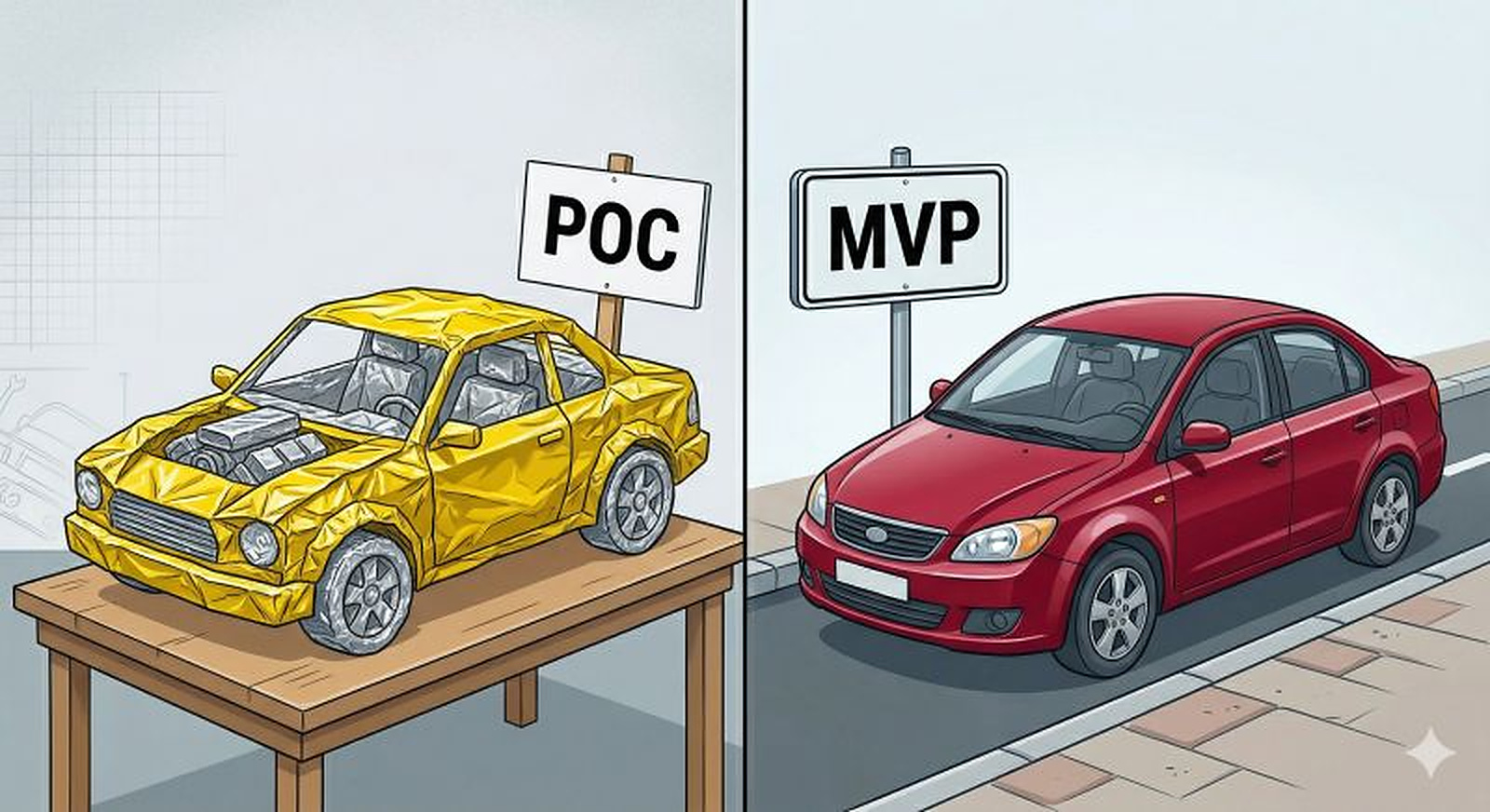
The problem is that due to the availability of AI, many began to pass off a hastily assembled PoC as an MVP (Minimum Viable Product). And MVP is already a product that can be safely used. Yes, it has few features, but it is proven and works reliably.
The analogue is beautiful cars from new nouname brands. Outside is space: technological, powerful, comfortable. On a test drive, you just enjoy it. But six months pass, and sores come out: the metal is not the same, the electronics are buggy in the cold, there are no spare parts. This is just an example of a raw MVP. And the PoC is even worse, it's just a foil concept car that won't start at all or will fall apart at the first wash.Due to the boom of "cheap code", the market was flooded with frankly crude solutions. This is usually a beautiful web platform with aggressive marketing, where you are promised to solve all the pain with the help of AI. Therefore, when I see another startup solution developed by guys without much experience in IT and a good team of programmers, I always pay attention to the following things:- Authentication: Do they ask for username and password without email/phone confirmation or without normal OAuth? It's a huge red flag. - How is the data stored? Is there basic encryption? Which of the platform's employees has access to them? - If a company works with confidential client documents, how are they isolated during AI processing?- Disaster Recovery: Are there backups? What will happen to our data if the lights go out in the data center or force majeure occurs? - Flexibility: How deeply can you customize the platform for yourself and does the team help with customization, or is it just a beautiful wrapper over someone else's API?
My task is to determine: this is a real solution, built according to normal engineering standards, or a prototype, riveted in 3 months. The former are determined to work long-term. The latter die in 99% of cases.I hope this checklist will help you better understand who to trust with your business data and who to wait with. And for startups, this post is essentially free advice on how to turn from a PoC to an MVP.
In the next post, I'll talk about such crude solutions in the field of chatbots and voice AI agents.
Интеллект стал дешевле.
Особенно это изменение затронуло мир IT. Например, за последние пару лет мой подход к найму изменился на 180 градусов. Если раньше я искал ребят, которые пишут код только сами, то сейчас, если разработчик не использует AI — он либо недоговаривает, либо это реальный эксперт с 15 годами опыта, который принципиально не доверяет нейросетям.С одной стороны, это классно. Порог входа снизился: любой человек может быстро воплотить свою идею в жизнь. Примерно описал задачу AI (LLM), много копи-пастов, строго последовал инструкциям — и буквально за недельку у тебя готова платформа, сайт или приложение. По сути появилось что-то что люди могут потрогать руками и feedback. Я абсолютно ЗА такой подход для проверки гипотез. Это называется PoC (Proof of Concept).
Проблема в том, что из-за доступности AI многие стали выдавать наспех собранный PoC за MVP (Minimum Viable Product). А MVP — это уже продукт, которым можно безопасно пользоваться. Да, в нем мало фич, но он проверен и надежно работает.
Аналог — красивые машины от новых ноунейм-брендов. Снаружи — космос: технологичные, мощные, комфортные. На тест-драйве ты просто наслаждаешься. Но проходит полгода, и вылезают болячки: металл не тот, электроника глючит на морозе, запчастей нет. Это как раз-таки пример сырого MVP. А PoC это еще хуже, это просто концепт-кар из фольги, который вообще не заведется или развалится при первой же мойке.Из-за бума «дешевого кода» рынок наводнили откровенно сырые решения. Обычно это красивая веб-платформа с агрессивным маркетингом, где вам обещают решить все боли с помощью AI. Поэтому, когда я вижу очередное решение от стартапа, разработанное ребятами без особого опыта в IT и хорошей команды программистов, я всегда обращаю внимание на следующие вещи:- Аутентификация: Запрашивают username и пароль без подтверждения по почте/телефону или без нормального OAuth? Это огромный red flag. - Как хранятся данные? Есть ли базовое шифрование? Кто из сотрудников платформы имеет к ним доступ? - Если компания работает с конфиденциальными документами клиента, как они изолируются при обработке ИИ?- Отказоустойчивость (Disaster Recovery): Есть ли бэкапы? Что будет с нашими данными, если в дата-центре отрубится свет или случится форс-мажор? - Гибкость: Насколько глубоко можно настроить платформу под себя и помогает ли команда с кастомизацией, или это просто красивая обертка над чужим API?
Моя задача — определить: это реальное решение, построенное по нормальным инженерным стандартам, или прототип, склепанный за 3 месяца. Первые настроены работать долгосрочно. Вторые в 99% случаев умирают.Надеюсь, этот чек-лист поможет вам лучше разбираться, кому доверять свои бизнес-данные, а с кем лучше подождать. А для стартапов этот пост это по сути бесплатный совет, как сделать из PoC в MVP.
В следующем посте расскажу про такие сырые решения в сфере чат-ботов и голосовых AI-агентов.

 Share





