
The post has been translated automatically. Original language: Russian



FinTech has introduced a format that has made installment purchase almost invisible: BNPL - Buy Now, Pay Later ("buy now, pay later").
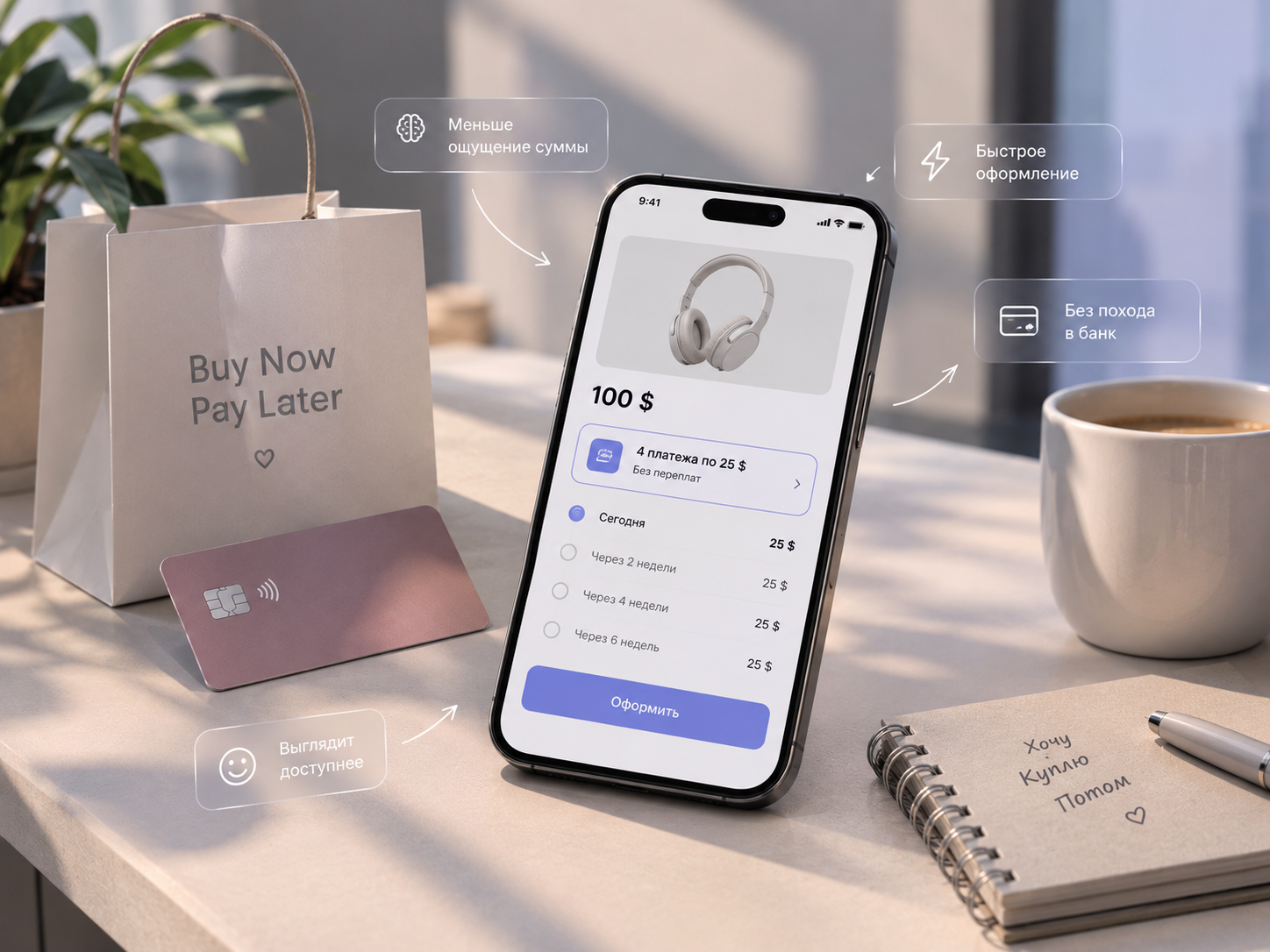
The mechanics are simple: Instead of paying for the product in full, the user splits the amount into several payments. For example, an item worth $100 can be paid for in four installments of 25. Technologically, this is a common financial transaction, but for the user, the main thing is changing - what the price looks like.
""When a person sees "25 today" rather than "100 right away", the purchase may seem more affordable. Moreover, we are not necessarily talking about a conscious decision: the format of submitting the amount can affect how we perceive the financial burden.
That is why BNPL has become an interesting phenomenon for FinTech. The service is located at the intersection of payment technology, lending, and user experience. To make a purchase, the customer often does not need to go to the bank, fill out a long application or understand complex banking products - the installment payment appears directly on the payment page.
But there is an important side to this model: a small individual payment does not cancel out the full purchase price. If you make several installments at the same time, each of which seems insignificant, the total amount of future payments may be much higher than the initial feeling of "I'm spending almost nothing."
It turns out an interesting paradox: FinTech doesn't just speed up financial transactions - it changes the interface of financial decision-making.
Previously, the question was "Can I spend 100?". Now the interface can offer a different look.: "Am I ready to pay 25 now?"
That is why UX becomes a part of financial behavior in modern financial services. The way the app shows the amount, payments, and obligations may be no less important than the technology behind the transaction itself.
В FinTech появился формат, который сделал покупку в рассрочку практически незаметной: BNPL - Buy Now, Pay Later («купи сейчас, заплати позже»).
Механика простая: вместо полной оплаты товара пользователь разбивает сумму на несколько платежей. Например, товар стоимостью 100 долларов можно оплатить четырьмя частями по 25. Технологически это обычная финансовая операция, но для пользователя меняется главное - то, как выглядит цена.
Когда человек видит «25 сегодня», а не «100 сразу», покупка может казаться более доступной. Причем речь не обязательно идет о сознательном решении: формат подачи суммы способен влиять на то, как мы воспринимаем финансовую нагрузку.
Именно поэтому BNPL стал интересным явлением для FinTech. Сервис находится на пересечении платежных технологий, кредитования и пользовательского опыта. Чтобы оформить покупку, клиенту часто не нужно идти в банк, заполнять длинную заявку или разбираться в сложных банковских продуктах - рассрочка появляется прямо на странице оплаты.
Но у такой модели есть важная сторона: маленький отдельный платеж не отменяет полной стоимости покупки. Если одновременно оформить несколько рассрочек, каждая из которых кажется незначительной, общая сумма будущих платежей может оказаться гораздо выше первоначального ощущения «я почти ничего не трачу».
Получается интересный парадокс: FinTech не просто ускоряет финансовые операции - он меняет интерфейс принятия финансовых решений.
Раньше вопрос звучал как «Могу ли я потратить 100?». Теперь интерфейс может предложить другой взгляд: «Готов ли я заплатить 25 сейчас?».
Именно поэтому в современных финансовых сервисах UX становится частью финансового поведения. То, как приложение показывает сумму, платежи и обязательства, может быть не менее важным, чем сама технология, которая стоит за операцией.
 Share