



The post has been translated automatically. Original language: Russian





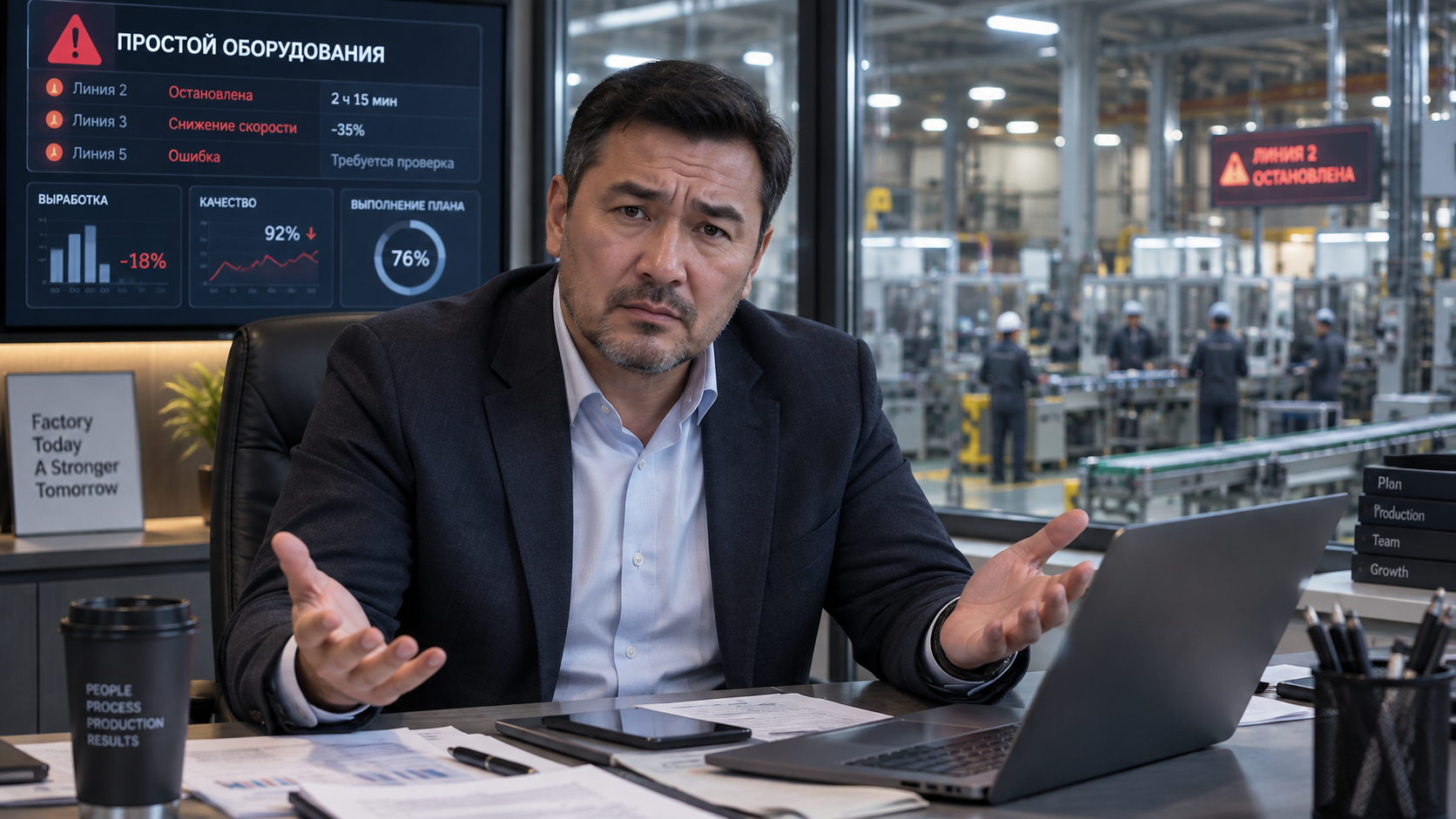
Modern production facilities can have everything: 1C, ERP, CRM, sensors, cameras, terminals, Excel reports, and dozens of regulations. And at the same time, the director will still find out about the real problem when the batch has already been disrupted, the equipment has been standing for several hours, or the client called first.
The paradox is that there is more data in enterprises, but there is not always manageability.
We work a lot with automation of production processes and we see one recurring mistake: companies try to collect as much data as possible first. But we need to start with another question.:
What event in production requires action — and who should be the first to know about it?
For example, the machine stopped. The very fact of stopping is almost useless. Management needs answers: when it stopped, why, which batch was in operation, who was responsible for the operation, whether there is a risk of disruption of the plan, what has already been done and how much money the company is losing every minute.
That's when telemetry turns into management.
There are several principles that we recommend to manufacturers.
The first is to record events rather than reports. The material has been received. The employee started the operation. The operation is over. The OTC has detected a defect. The machine stopped. The shipment has been transferred to the warehouse. The closer the fixation is to the actual event, the less the company manages the past.
The second is to connect the person, the equipment, the material and the result. If these data are in different systems, it is difficult to find the real reason for the deviation. A drop in output may not be an employee's problem, but a consequence of equipment downtime or lack of material.
The third is to measure the trend, not just the indicator. "91% plan completion" means almost nothing to the manager. More importantly, yesterday it was 97%, three days ago it was 101%, and the decline began after a change in a certain process. The leader needs to see not only where we are now, but also where everything is moving.
The fourth is not to automate unnecessary actions. If a worker has to fill in ten fields to record an operation, the system very quickly begins to receive formal data. In the workplace, a good digital interface often has to be reduced to one or two actions: NFC, scanning, a button on the terminal, or automatic locking by equipment.
And finally, the most important thing.
Digitalization of production does not end with a dashboard. It ends with a managerial action.
A good system should be able to go through the entire chain.:
Event → deviation → reason → risk → action → responsible → result.
If there is no last part, the company has built an expensive surveillance system, but has not yet built a management system.
Therefore, before purchasing new software, sensors, or implementing AI, we would advise the production director to conduct a simple test.
Choose one critical deviation that occurred over the past week, and try to restore the entire chain in five minutes: what happened, with what, with whom, why, how much it cost, who reacted, and whether the decision helped.
If you need to call five people and open three Excel files to respond, this is where the real object for digitalization is located.
In production, it's not the one with the most data who wins. The winner is the one who has a shorter distance between the problem and the correct solution.
На современном производстве может быть всё: 1С, ERP, CRM, датчики, камеры, терминалы, Excel-отчёты и десятки регламентов. И при этом директор всё равно узнаёт о реальной проблеме тогда, когда партия уже сорвана, оборудование простояло несколько часов или клиент позвонил первым.
Парадокс в том, что данных на предприятиях становится больше, а управляемости — не всегда.
Мы много работаем с автоматизацией производственных процессов и видим одну повторяющуюся ошибку: компании пытаются сначала собрать максимум данных. Но начинать нужно с другого вопроса:
Какое событие на производстве требует действия — и кто должен узнать о нём первым?
Например, станок остановился. Сам факт остановки почти бесполезен. Для управления нужны ответы: когда остановился, почему, какая партия находилась в работе, кто отвечал за операцию, есть ли риск срыва плана, что уже сделано и сколько денег предприятие теряет каждую минуту.
Вот тогда телеметрия превращается в управление.
Есть несколько принципов, которые мы рекомендуем производствам.
Первый — фиксировать не отчёты, а события. Материал поступил. Работник начал операцию. Операция закончена. ОТК обнаружил дефект. Станок остановился. Партия передана на склад. Чем ближе фиксация к реальному событию, тем меньше предприятие управляет прошлым.
Второй — связывать человека, оборудование, материал и результат. Если эти данные находятся в разных системах, найти настоящую причину отклонения сложно. Падение выработки может оказаться не проблемой сотрудника, а следствием простоя оборудования или отсутствия материала.
Третий — измерять тренд, а не только показатель. «Выполнение плана — 91%» почти ничего не говорит руководителю. Гораздо важнее: вчера было 97%, три дня назад — 101%, а снижение началось после изменения определённого процесса. Руководителю нужно видеть не только где мы сейчас, но и куда всё движется.
Четвёртый — не автоматизировать лишние действия. Если рабочему для фиксации операции приходится заполнянять десять полей, система очень быстро начинает получать формальные данные. На рабочем месте хороший цифровой интерфейс часто должен сводиться к одному-двум действиям: NFC, сканирование, кнопка на терминале или автоматическая фиксация оборудованием.
И, наконец, самое важное.
Цифровизация производства заканчивается не дашбордом. Она заканчивается управленческим действием.
Хорошая система должна уметь пройти всю цепочку:
Событие → отклонение → причина → риск → действие → ответственный → результат.
Если последней части нет, предприятие построило дорогую систему наблюдения, но ещё не построило систему управления.
Поэтому перед покупкой очередного ПО, датчиков или внедрением AI мы бы советовали директору производства провести простой тест.
Выберите одно критическое отклонение, произошедшее за последнюю неделю, и попробуйте за пять минут восстановить всю цепочку: что произошло, с чем, с кем, почему, сколько это стоило, кто отреагировал и помогло ли принятое решение.
Если для ответа нужно обзвонить пять человек и открыть три Excel-файла — именно здесь и находится настоящий объект для цифровизации.
На производстве выигрывает не тот, у кого больше данных. Выигрывает тот, у кого короче расстояние между проблемой и правильным решением.

 Share





