
The post has been translated automatically. Original language: Russian





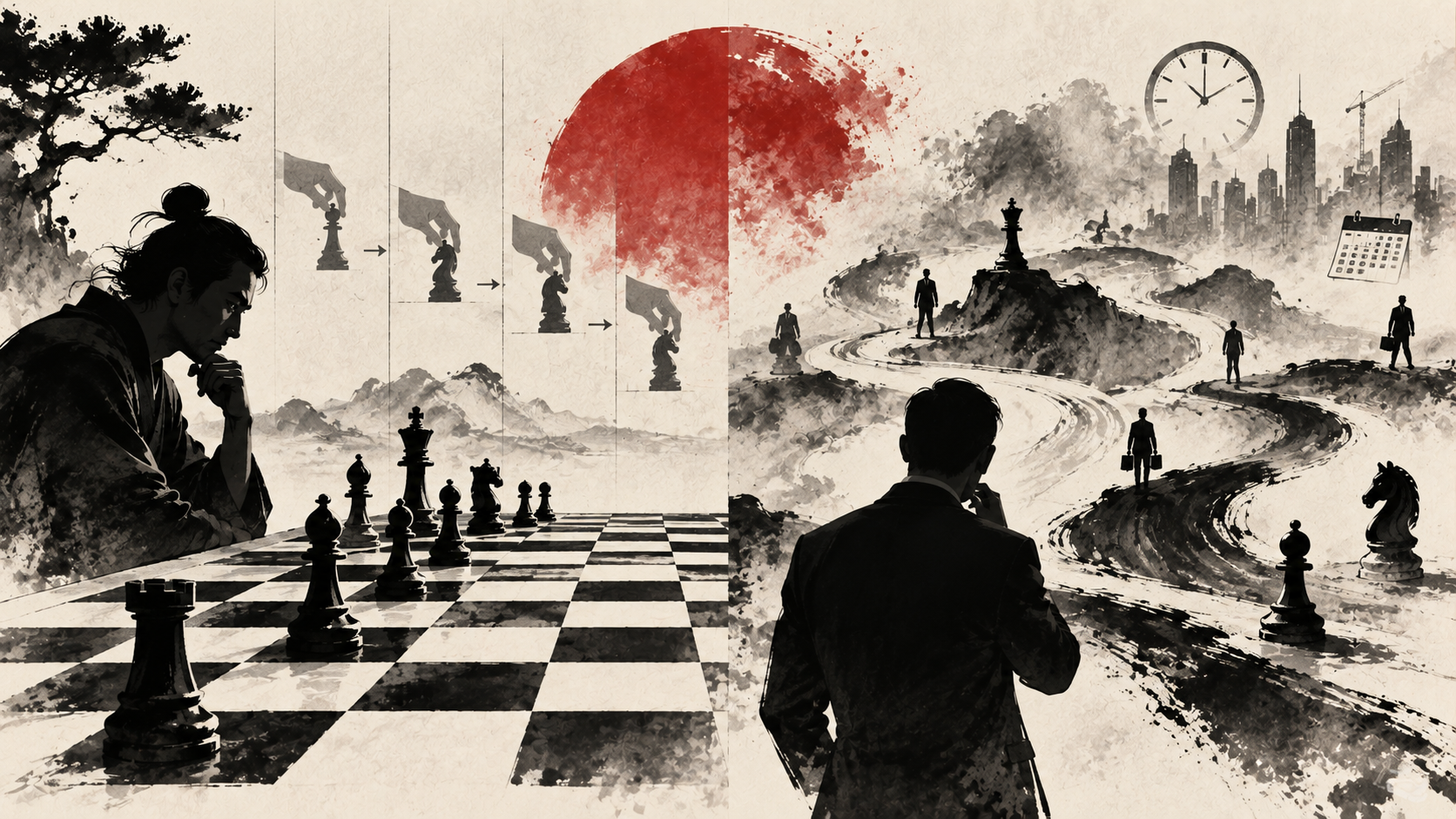
Chess and business are very similar.
There is a position. There are limited resources. There are rivals. You need to anticipate the consequences of your actions, choose between several options, and sometimes sacrifice something today for the sake of tomorrow's advantage.
Therefore, it seems natural to assume:
If a person is good at playing strategy games, he must be good at business.
But this is not necessary at all.
The reason is the different rhythm of the game.
In chess, the opponent must walk
You've made a move.
Now it's the opponent's turn.
He can't tell:
Let's come back to this issue in three months.
It cannot disappear after the demonstration.
He cannot coordinate the course with the finance director.
He can't do nothing for six months and then suddenly change his entire position.
In chess, rhythm is built into the rules.
Move — response — move —response.
There is no such rhythm in business.
You can do ten actions and get no reaction.
And sometimes nothing happens for several months, after which everything changes in two days.
In chess, time is clear
Even if the game is played with a clock, the nature of time is known.
You have ten minutes left.
The opponent has five.
You can make decisions based on this.
Business times are much stranger.
You're launching a product and you don't know when the market should respond.
A week?
Three months?
Two years?
You write to a potential client and you don't know if there is no response.:
"not interesting",
or:
"it's September now, and the budget will be discussed in November."
This is where a good player can make very bad business moves.
He's used to receiving feedback quickly.
In business, it often comes with a delay.
Sometimes the right move looks wrong.
Imagine that an entrepreneur launches a new product.
After a month, there are almost no sales.
He concludes:
The positioning is incorrect.
Changes the positioning.
Another month and the result is weak.
So the price is wrong.
Changes the price.
Then he changes the audience.
Then the product.
Then the sales channel.
He's constantly reacting.
In chess, it looks logical: the position has changed — you need to make the next move.
But what if the customer's purchase cycle takes four months?
Then the entrepreneur simply never waited for the result of his own action.
He was playing faster than the market.
But it happens the other way around
There is an opposite error.
The company is used to working slowly.
Long meetings. Annual plans. Big projects. Careful decisions.
And suddenly the market is changing very fast.
A new technology is emerging.
A competitor releases a product in a month.
Customers are starting to change their habits.
The company continues to move at the same pace.
Each of her decisions can be reasonable in itself.
But the party is already moving faster.
In this sense, you can make the right decisions and still lose.
That's what Musashi was talking about.
For Miyamoto Musashi, rhythm is not just speed.
It is important to understand your own rhythm, the opponent's rhythm, and the moment when one rhythm collides with another.
This is much more useful for business than the idea of "we need to act faster."
Sometimes you really need to speed up.
Sometimes it's waiting.
Sometimes it's to force the other person to act faster than is convenient for him.
And sometimes the opposite is true: slow down the game and not let the competitor impose his pace.
Business differs in one more thing
In chess, the whole board is visible.
Not in business.
You don't know what's going on inside the client's company right now.
You don't know what your competitors are discussing.
You don't know if a new product will be released in a month.
You don't know if the legislation will change.
You don't even know if the lack of sales is a consequence of your decision or just an accident.
It turns out to be a strange game:
Some of the pieces are hidden, the rules change, the moves do not take place in turn, and some players may leave the game altogether.
And you still need to make decisions.
Therefore, strategy games provide only half of the skill.
They teach you how to see positions well.
Compare options.
Count the consequences.
Don't make pointless moves.
But there is another skill emerging in business.:
understand how fast the situation is developing and when to act at all.
This is no longer just a position analysis.
It's a sense of rhythm.
Perhaps that's why entrepreneurs often make mistakes with speed.
Some people are always in a hurry.
Every week, the product, advertising, and strategy change.
Others have been waiting too long.
They have been improving the product for a year when the market has already moved on.
Both errors look like the opposite.
But they have one reason.:
the person did not get into the rhythm of the system.
In chess, you need to choose the best move.
In business, the task is more difficult.
Need to understand:
which move to make, when to make it, and how long to wait for the result.
Therefore, a good chess player can really become a good businessman.
But the ability to see the position alone is not enough.
Because business is a chess game where no one has to take turns.
And perhaps that's why Musashi paid no less attention to rhythm than to the fighting technique itself.
Шахматы и бизнес очень похожи.
Есть позиция. Есть ограниченные ресурсы. Есть соперники. Нужно предвидеть последствия своих действий, выбирать между несколькими вариантами и иногда жертвовать чем-то сегодня ради преимущества завтра.
Поэтому кажется естественным предположить:
Если человек хорошо играет в стратегические игры, он должен быть хорош и в бизнесе.
Но это совсем не обязательно.
Причина — разный ритм игры.
В шахматах противник обязан ходить
Вы сделали ход.
Теперь ход соперника.
Он не может сказать:
Давайте вернёмся к этому вопросу через три месяца.
Не может исчезнуть после демонстрации.
Не может согласовать ход с финансовым директором.
Не может полгода ничего не делать, а потом внезапно поменять всю позицию.
В шахматах ритм встроен в правила.
Ход — ответ — ход — ответ.
В бизнесе такого ритма нет.
Вы можете сделать десять действий и не получить никакой реакции.
А иногда несколько месяцев ничего не происходит, после чего за два дня меняется всё.
В шахматах время понятно
Даже если игра идёт с часами, природа времени известна.
У вас осталось десять минут.
У противника — пять.
Можно принимать решения исходя из этого.
В бизнесе время гораздо страннее.
Вы запускаете продукт и не знаете, когда рынок должен ответить.
Неделю?
Три месяца?
Два года?
Вы пишете потенциальному клиенту и не знаете, означает отсутствие ответа:
«не интересно»,
или:
«сейчас сентябрь, бюджет будет обсуждаться в ноябре».
Именно здесь хороший игрок может совершать очень плохие бизнес-ходы.
Он привык получать обратную связь быстро.
В бизнесе она часто приходит с задержкой.
Иногда правильный ход выглядит неправильным
Представьте, что предприниматель запускает новый продукт.
Через месяц продаж почти нет.
Он делает вывод:
Позиционирование неправильное.
Меняет позиционирование.
Ещё месяц — результат слабый.
Значит, цена неправильная.
Меняет цену.
Потом меняет аудиторию.
Потом продукт.
Потом канал продаж.
Он постоянно реагирует.
В шахматах это выглядит логично: изменилась позиция — нужно сделать следующий ход.
Но что, если цикл покупки у клиента занимает четыре месяца?
Тогда предприниматель просто ни разу не дождался результата собственного действия.
Он играл быстрее, чем рынок.
А бывает наоборот
Есть противоположная ошибка.
Компания привыкла работать медленно.
Долгие совещания. Годовые планы. Большие проекты. Осторожные решения.
И вдруг рынок меняется очень быстро.
Появляется новая технология.
Конкурент выпускает продукт за месяц.
Клиенты начинают менять привычки.
Компания продолжает двигаться в прежнем ритме.
Каждое её решение может быть разумным само по себе.
Но партия уже идёт быстрее.
В этом смысле можно принимать правильные решения и всё равно проигрывать.
Мусаси говорил именно об этом
У Миямото Мусаси ритм — не просто скорость.
Важно понимать собственный ритм, ритм противника и момент, когда один ритм сталкивается с другим.
Для бизнеса это гораздо полезнее идеи «нужно действовать быстрее».
Иногда действительно нужно ускоряться.
Иногда — ждать.
Иногда — заставить другого действовать быстрее, чем ему удобно.
А иногда наоборот: замедлить игру и не позволить конкуренту навязать свой темп.
Бизнес отличается ещё одной вещью
В шахматах доска видна целиком.
В бизнесе — нет.
Вы не знаете, что прямо сейчас происходит внутри компании клиента.
Не знаете, что обсуждают ваши конкуренты.
Не знаете, выйдет ли через месяц новый продукт.
Не знаете, изменится ли законодательство.
Не знаете даже, является ли отсутствие продаж следствием вашего решения или просто случайностью.
Получается странная игра:
часть фигур скрыта, правила меняются, ходы происходят не по очереди, а некоторые игроки вообще могут выйти из партии.
И всё равно нужно принимать решения.
Поэтому стратегические игры дают только половину навыка
Они хорошо учат видеть позиции.
Сравнивать варианты.
Считать последствия.
Не делать бессмысленных ходов.
Но в бизнесе появляется ещё один навык:
понимать, с какой скоростью развивается ситуация и когда вообще стоит действовать.
Это уже не просто анализ позиции.
Это чувство ритма.
Возможно, именно поэтому предприниматели часто ошибаются со скоростью
Одни постоянно торопятся.
Каждую неделю меняют продукт, рекламу и стратегию.
Другие слишком долго ждут.
Год совершенствуют продукт, когда рынок уже ушёл дальше.
Обе ошибки выглядят противоположными.
Но причина у них одна:
человек не попал в ритм системы.
В шахматах нужно выбрать лучший ход
В бизнесе задача сложнее.
Нужно понять:
какой ход делать, когда его делать и сколько ждать результата.
Поэтому хороший шахматист действительно может стать хорошим бизнесменом.
Но одного умения видеть позицию недостаточно.
Потому что бизнес — это шахматы, где никто не обязан ходить по очереди.
И, возможно, именно поэтому Мусаси уделял ритму не меньше внимания, чем самой технике боя.

 Share