
The post has been translated automatically. Original language: Russian





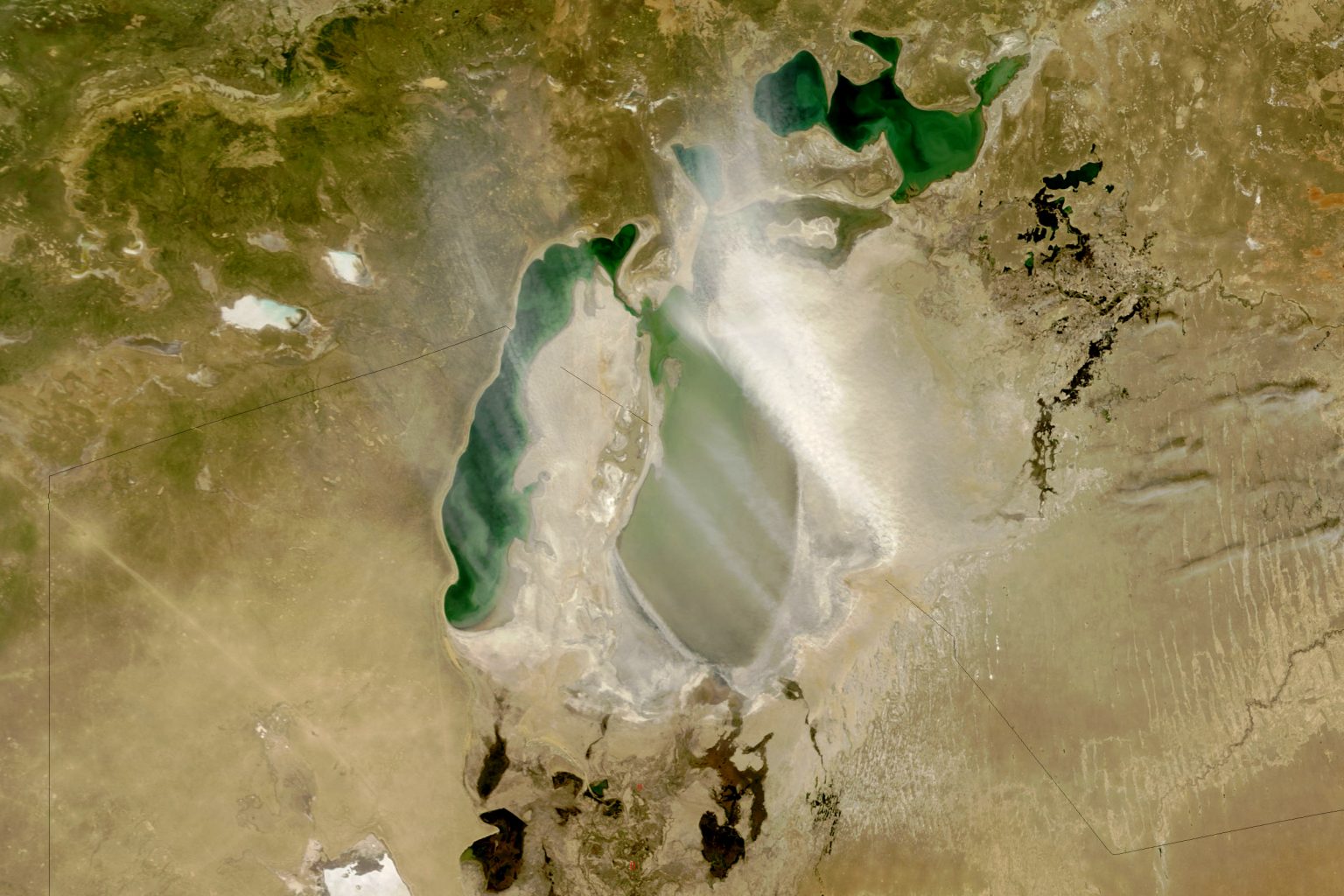
The Aral Sea.... There is no more sea here. There is Aralkum. The youngest desert in the world and the largest source of dust in Eurasia.
1960: the area of the Aral Sea is 68 thousand square kilometers.
Today: less than 10% of the water is left. There are 5.5 million hectares of salt, sand and pesticides on the bare bottom.
And this land is taking revenge.
WHAT EXACTLY IS FLYING US
According to UNEP and KazNIIEKO, every year the wind lifts from 75 to 100 million tons of dust from the dried-up bottom.
This is not ordinary sand. It is a concentrate from 60 years of intensive farming.
Ingredients: table salt and bitter salt, gypsum. There are also remnants of DDT, lindane and other pesticides that have been dumped into the Aral Sea since the 60s. Plus heavy metals: lead, cadmium, mercury.
On days of severe storms, the concentration of fine PM2.5 dust in Kyzylorda and Aralsk exceeds the norm by 15-40 times. Such dust passes through all the body's filters and settles in the lungs.
IMPACT CARD: REACHES ALMATY
The storms from the Aral Sea have 3 main corridors.
- The first one hits Kazakhstan: Kyzylorda — Turkestan — Shymkent — Taraz. The cloud reaches Almaty in 36-48 hours. In March 2024, the instruments recorded the Aral dust even in the metropolis.
- The second one goes south: Nukus — Urgench — Bukhara — Samarkand — Tashkent — Dushanbe.
- The third is to the west: through Atyrau and Aktau, dust flies across the Caspian Sea and goes to Russia.
In 2022, NASA satellites spotted a cloud from Aralkum over Georgia. 2500 kilometers from the epicenter.
PRICE IN MATTERS OF HEALTH AND ECONOMICS
The medicine of the Aral Sea region is sounding the alarm. In the Kyzylorda region, the incidence of respiratory diseases is 47% higher than in the central Kazakhstan region. Childhood asthma is 2.3 times more common. Oncology is 30% higher.
The economy is losing money at every turn. One strong storm cuts off up to 20% of the grain harvest in the fallout zone. Salt burns out the shoots. Dust breaks down machinery, clogs filters, stops construction sites and airports.
Experts estimate that the direct annual damage to Kazakhstan and Uzbekistan ranges from 200 to 400 million dollars. And this figure is growing.
WHY DID IT GET WORSE
There are three reasons. And they all reinforce each other.
- The first is the climate. In 30 years, the Aral Sea region has become 2.1 degrees hotter. Precipitation falls by 18% less. The soil cracks faster.
- The second is that the desert itself is growing. The crust of salt at the bottom collapses. New pockets of dust appear.
- The third is a human. Cattle grazing and the passage of machinery along the bottom finish off the last areas where vegetation was kept.
The result: if in the 1980s there were 4-6 major storms per year, now there are 12-18.
FIGHTING TECHNOLOGY: 4 LINES OF DEFENSE
The desert cannot be stopped. But you can tie her up and learn to live next to her.
Line one. "Green shield" from drones. The main task is to consolidate 1.1 million hectares of the seabed by 2030. It's not possible to do it manually.
Solution: drones. From a height of 50 meters, they "shoot" capsules with seeds of saxaul, cherkeza and tamarix into the ground. One drone covers 100 hectares per day.
The UNDP and IFAS project has already sown 270 thousand hectares. Survival rate is 35-45%. One hectare of adult saxaul traps up to 80 tons of dust per year.
Line two. Artificial intelligence and satellites. The task is to warn the city in 3 days. The system analyzes data from Sentinel and MODIS satellites, readings from 200 ground-based sensors, and runs everything through the WRF-Chem model. The neural network has been trained on 20 years of observations.
The pilot in Kyzylorda showed an accuracy of 87%. A warning arrives 72 hours in advance: "A storm is expected. AQI 300+. Children and the elderly are not allowed out." On alert days, emergency calls drop by 22%.
Line three. Engineering protection of cities. Wind shields with a height of 6 meters are being installed around Aralsk and Kazalinsk. They dampen wind speed by 60%. Immediately behind them, a "green belt" of fast-growing trees is planted. In 2 years, dust levels in Aralsk have dropped by 31%.
Line four. Human protection. According to the state program, HEPA filters are installed in schools and hospitals in the Aral Sea region. Parametric insurance was launched for farmers: the sensor detected a storm for more than 12 hours — the payment to the card came automatically, without papers.
HOW MUCH DOES INACTION COST?
A complete phytomelioration of 1.1 million hectares will cost 450-600 million dollars until 2030. Central Asia's annual losses from healthcare, soil degradation, and economic downtime are already $1.2 billion per year.
Investing in a shield is twice as cheap as paying for the consequences.
Based on the above, Aralkum is the first man—made desert in history that exports neither cotton nor fish. She exports the disease. We will not return the sea. But we can take back control of its bottom.
The technology is there. They have proven effective. They're paying off.One question remains. Will 5 years be enough for us to close the entire critical zone with a "green shield"?
If not, then in 10 years we won't be fighting dust. We will live in it.
Арал.... Здесь больше нет моря. Есть Аралкум. Самая молодая пустыня в мире и самый большой источник пыли в Евразии.
1960 год: площадь Арала 68 тысяч квадратных километров.
Сегодня: воды осталось меньше 10%. На оголенном дне лежит 5.5 миллионов гектаров соли, песка и ядохимикатов.
И эта земля мстит.
ЧТО ИМЕННО ЛЕТИТ НАС
По данным ЮНЕП и КазНИИЭКО, каждый год ветер поднимает с высохшего дна от 75 до 100 миллионов тонн пыли.
Это не обычный песок. Это концентрат за 60 лет интенсивного земледелия.
В составе: поваренная и горькая соль, гипс. А еще остатки ДДТ, линдана и других пестицидов, которые сбрасывали в Арал с 60-х годов. Плюс тяжелые металлы: свинец, кадмий, ртуть.
В дни сильных бурь концентрация мелкой пыли PM2.5 в Кызылорде и Аральске превышает норму в 15-40 раз. Такая пыль проходит все фильтры организма и оседает в легких.
КАРТА УДАРА: ДОЛЕТАЕТ ДО АЛМАТЫ
У бурь с Арала есть 3 главных коридора.
- Первый бьет по Казахстану: Кызылорда — Туркестан — Шымкент — Тараз. До Алматы облако доходит за 36-48 часов. В марте 2024 года приборы зафиксировали аральскую пыль даже в мегаполисе.
- Второй идет на юг: Нукус — Ургенч — Бухара — Самарканд — Ташкент — Душанбе.
- Третий на запад: через Атырау и Актау пыль перелетает Каспий и уходит в Россию.
В 2022 году спутники NASA засекли облако из Аралкума над Грузией. 2500 километров от эпицентра.
ЦЕНА В ВОПРОСАХ ЗДОРОВЬЯ И ЭКОНОМИКИ
Медицина Приаралья бьет тревогу. В Кызылординской области заболеваемость болезнями органов дыхания выше среднеказахстанской на 47%. Детская астма — в 2.3 раза чаще. Онкология — на 30% выше.
Экономика теряет на каждом шагу. Одна сильная буря срезает до 20% урожая зерновых в зоне выпадения. Соль выжигает всходы. Пыль ломает технику, забивает фильтры, останавливает стройки и аэропорты.
По оценкам экспертов, прямой ежегодный ущерб для Казахстана и Узбекистана составляет от 200 до 400 миллионов долларов. И эта цифра растет.
ПОЧЕМУ СТАЛО ХУЖЕ
Причин три. И все они усиливают друг друга.
- Первая — климат. За 30 лет в Приаралье стало на 2.1 градуса жарче. Осадков выпадает на 18% меньше. Почва трескается быстрее.
- Вторая — сама пустыня растет. Корка соли на дне разрушается. Появляются новые очаги пыления.
- Третья — человек. Выпас скота и проезд техники по дну добивают последние участки, где держалась растительность.
Результат: если в 1980-х было 4-6 крупных бурь в год, то сейчас их 12-18.
ТЕХНОЛОГИИ БОРЬБЫ: 4 ЛИНИИ ОБОРОНЫ
Остановить пустыню нельзя. Но можно ее связать и научиться жить рядом.
Линия первая. "Зеленый щит" с дронов. Главная задача — скрепить 1.1 миллиона гектаров дна к 2030 году. Вручную это нереально.
Решение: беспилотники. Они с высоты 50 метров "выстреливают" в землю капсулы с семенами саксаула, черкеза и тамарикса. Один дрон за день закрывает 100 гектаров.
Проект ПРООН и МФСА уже засеял 270 тысяч гектаров. Приживаемость 35-45%. Один гектар взрослого саксаула задерживает до 80 тонн пыли в год.
Линия вторая. Искусственный интеллект и спутники. Задача — предупредить город за 3 дня. Система анализирует данные со спутников Sentinel и MODIS, показания 200 наземных датчиков и прогоняет все через модель WRF-Chem. Нейросеть обучена на 20 годах наблюдений.
Пилот в Кызылорде показал точность 87%. За 72 часа приходит предупреждение: "Ожидается буря. AQI 300+. Детям и пожилым не выходить". В дни оповещений обращения в скорую падают на 22%.
Линия третья. Инженерная защита городов. Вокруг Аральска и Казалинска ставят ветрозащитные экраны высотой 6 метров. Они гасят скорость ветра на 60%. Сразу за ними высаживают "зеленый пояс" из быстрорастущих деревьев. За 2 года запыленность в Аральске упала на 31%.
Линия четвертая. Защита человека. В школах и больницах Приаралья по госпрограмме ставят HEPA-фильтры. Для фермеров запустили параметрическое страхование: датчик зафиксировал бурю дольше 12 часов — выплата на карту пришла автоматически, без бумаг.
СКОЛЬКО СТОИТ БЕЗДЕЙСТВИЕ
Полная фитомелиорация 1.1 млн га стоит 450-600 миллионов долларов до 2030 года. Ежегодные потери ЦА от здравоохранения, деградации почв и простоя экономики — уже 1.2 миллиарда долларов в год.
Инвестировать в щит в два раза дешевле, чем платить за последствия.
Исходя из вышеизложенного Аралкум — это первая в истории рукотворная пустыня, которая экспортирует не хлопок и не рыбу. Она экспортирует болезнь. Море мы не вернем. Но мы можем вернуть контроль над его дном.
Технологии есть. Они доказали эффективность. Они окупаются.Остался один вопрос. Хватит ли нам 5 лет, чтобы закрыть "зеленым щитом" всю критическую зону.
Если нет — то через 10 лет мы будем не бороться с пылью. Мы будем в ней жить.
 Share