
The post has been translated automatically. Original language: Russian





The project has been completed, the act has been signed, and the team has already switched to the next facility. It is at this point that the most valuable thing is lost: the experience gained over the months of work. Six months later, on a new project, the team steps on the same rake, because no one wrote down where they were lying.
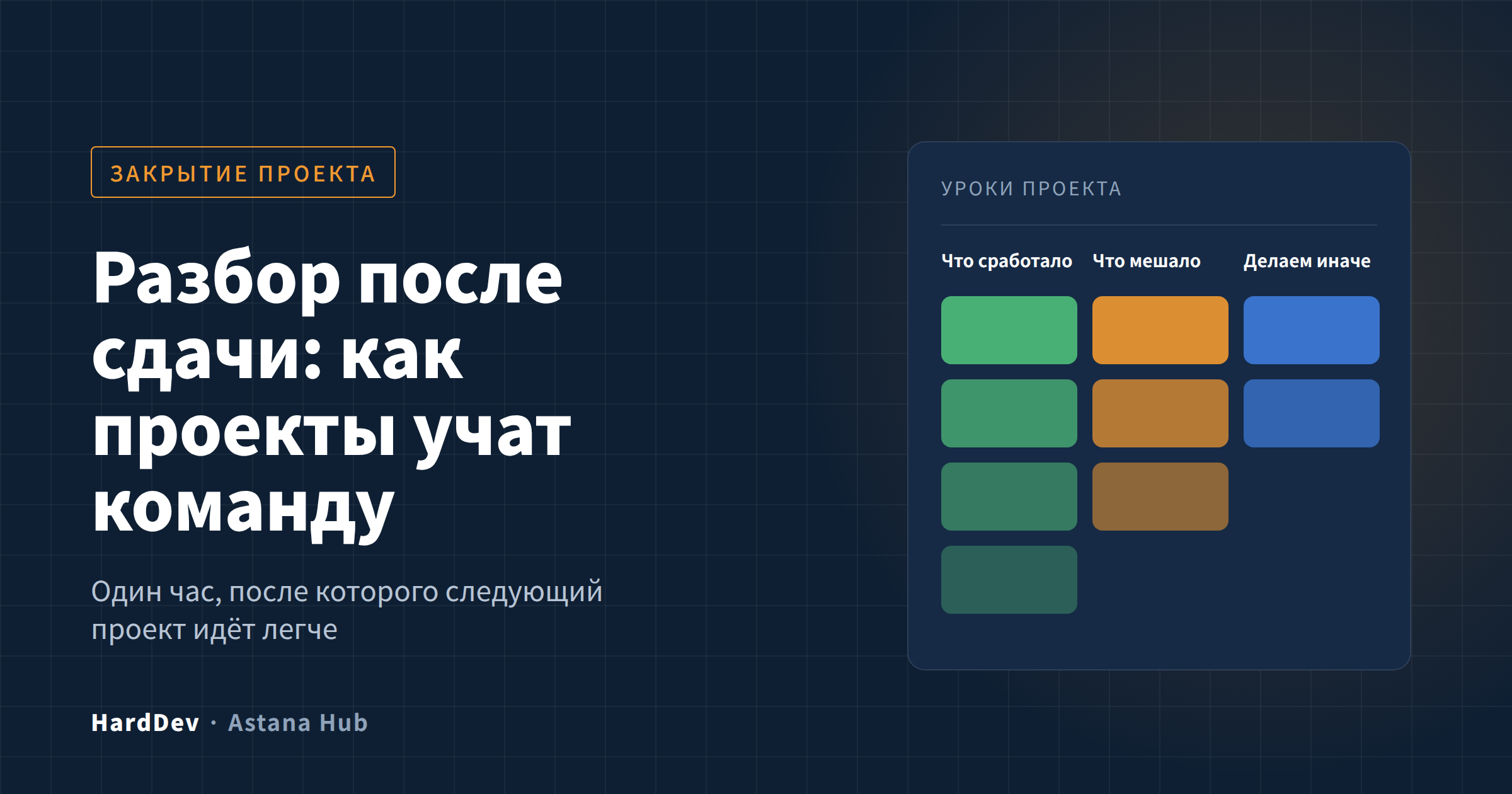
To prevent this from happening, a short review is conducted after the handover. The team meets for an hour and answers three questions. What worked well and what is worth repeating? What was bothering and taking up time? What will we do differently on the next project? It is also useful to invite a customer's representative: he often sees what is invisible from the inside.
The main rule of analysis is to look for the reasons, not the culprits. If the delivery is delayed, the question is not who made the mistake, but why the risk was not noticed in advance and how to take it into account next time. When people aren't afraid to talk about problems openly, debriefing provides real benefits rather than a formal protocol.
The results of the analysis should be recorded in the general knowledge base of the company and returned to them when starting new projects. Over time, such records create their own standards and checklists that are suitable for your team and your customers. This way, each project makes the next one a little easier and more predictable.
Проект сдан, акт подписан, команда уже переключилась на следующий объект. Именно в этот момент теряется самое ценное: опыт, который был получен за месяцы работы. Через полгода на новом проекте команда наступает на те же грабли, потому что никто не записал, где они лежали.
Чтобы этого не происходило, после сдачи проводится короткий разбор. Команда собирается на час и отвечает на три вопроса. Что сработало хорошо и что стоит повторить? Что мешало и отнимало время? Что мы будем делать иначе на следующем проекте? Полезно пригласить и представителя заказчика: он часто видит то, что изнутри незаметно.
Главное правило разбора — искать причины, а не виноватых. Если поставка задержалась, вопрос не в том, кто ошибся, а в том, почему риск не заметили заранее и как его учесть в следующий раз. Когда люди не боятся говорить о проблемах открыто, разбор даёт реальную пользу, а не формальный протокол.
Итоги разбора стоит записать в общую базу знаний компании и возвращаться к ним при старте новых проектов. Со временем из таких записей складываются собственные стандарты и чек-листы, которые подходят именно вашей команде и вашим заказчикам. Так каждый проект делает следующий немного проще и предсказуемее.

 Share