



The post has been translated automatically. Original language: Russian



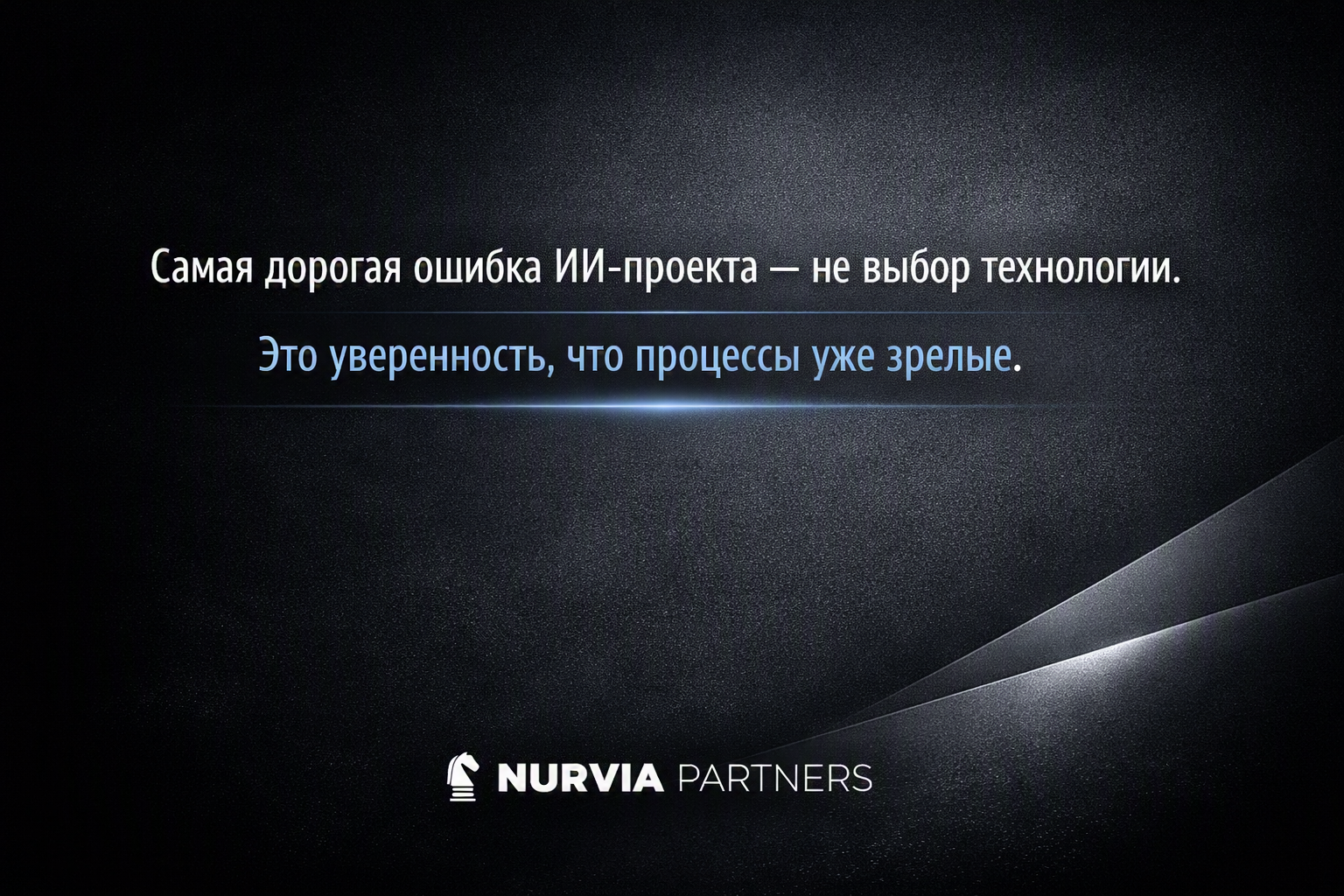
The most expensive part of an AI project is not technology, but the company's self-deception that its processes are already quite mature.
In recent years, I've seen a noticeable shift in the way companies approach AI. Previously, the conversation started with a tool: which platform to choose, which pilot to launch first. Now the more mature question sounds different: which management decision do we want to improve and where is the time actually being wasted. This is a good shift. But it also exposes something that many managers are uncomfortable admitting.
I see the same scene more and more often. The company buys the technology because it's easier than figuring out its own processes. It's easier to choose a platform than to answer the question: who really makes decisions here, and on the basis of what. It's easier to launch a pilot than to admit that employees have been compensating for a weak process with manual workarounds for months. AI in this logic is not the solution. It's a way to delay recognition.
And here I always come back to one thought.: AI does not create a weakness in the operating model. He exposes it — faster and more noticeably than a human has ever done. Blurred roles, unclear rules, unstable data — everything that has been based on the patience and manual labor of the team for years ceases to be invisible with AI.
And it's inconvenient. Because it's easier to blame an insufficiently advanced model than to admit that the responsibility for this lies with the management, which has not cleaned up the process for years. To admit this is to accept that the problem was managerial even before AI appeared in the conversation at all. It requires a certain amount of courage.: to tell the team and yourself that it's not about technology, but about decisions that have been made— or not made — for years.
That is why a strong AI project does not begin with the question "what can the model do?", but with the question "what decision are we ready to take on?". Sometimes the honest answer is not to launch AI right away, but first remove unnecessary approvals, name out loud who is responsible for what, and agree on what exactly is considered a good result. This is less impressive than the demo of the new platform. But that's exactly the job of a supervisor, not the job of technology. As practice shows, it is this less spectacular step that most often determines whether a company will get a real result from AI— or just a more expensive version of the previous chaos.
AI does not fix a weak operating model. He makes her weaknesses too obvious.
And how do you see it: is AI still a technological initiative in your company today, or is it already a tool for managerial rethinking?
#Kazakhstan #AI #Operational Efficiency #Digital Transformation #Leadership
Самая дорогая часть ИИ-проекта — не технология, а самообман компании о том, что её процессы уже достаточно зрелые.
За последние годы я вижу заметный сдвиг в том, как компании подходят к ИИ. Раньше разговор начинался с инструмента: какую платформу выбрать, какой пилот запустить первым. Сейчас более зрелый вопрос звучит иначе: какое управленческое решение мы хотим улучшить и где на самом деле теряется время. Это хороший сдвиг. Но он же обнажает то, что многим руководителям неудобно признавать.
Я всё чаще вижу одну и ту же сцену. Компания покупает технологию, потому что это проще, чем разбираться в собственных процессах. Проще выбрать платформу, чем ответить на вопрос: кто у нас на самом деле принимает решения, и на основе чего. Проще запустить пилот, чем признать, что сотрудники уже месяцами компенсируют слабый процесс ручными обходными путями. ИИ в этой логике — не решение. Это способ отложить признание.
И здесь я всегда возвращаюсь к одной мысли: ИИ не создаёт слабость операционной модели. Он её обнажает — быстрее и заметнее, чем это когда-либо делал человек. Размытые роли, неясные правила, нестабильные данные — всё, что годами держалось на терпении и ручном труде команды, при ИИ перестаёт быть незаметным.
И это неудобно. Потому что легче обвинить недостаточно продвинутую модель, чем признать: ответственность за это лежит на руководстве, которое годами не наводило порядок в процессе. Признать это — значит принять, что проблема была управленческой ещё до того, как в разговоре вообще появился ИИ. Это требует определённой смелости: сказать команде и себе, что дело не в технологии, а в решениях, которые принимались — или не принимались — годами.
Именно поэтому сильный ИИ-проект начинается не с вопроса "что умеет модель?", а с вопроса "какое решение мы готовы взять на себя?". Иногда честный ответ — не запускать AI сразу, а сначала убрать лишние согласования, назвать вслух, кто за что отвечает, и договориться, что именно считается хорошим результатом. Это менее эффектно, чем демо новой платформы. Но именно это — работа руководителя, а не работа технологии. Как показывает практика, именно этот менее эффектный шаг чаще всего определяет, получит ли компания реальный результат от ИИ— или просто более дорогую версию прежнего хаоса.
ИИ не исправляет слабую операционную модель. Он делает её слабости слишком заметными.
А как вы это видите: в вашей компании ИИ сегодня — это ещё технологическая инициатива или уже инструмент управленческого переосмысления?
#Казахстан #ИИ #ОперационнаяЭффективность #ЦифроваяТрансформация #Лидерство

 Share





