
The post has been translated automatically. Original language: Russian




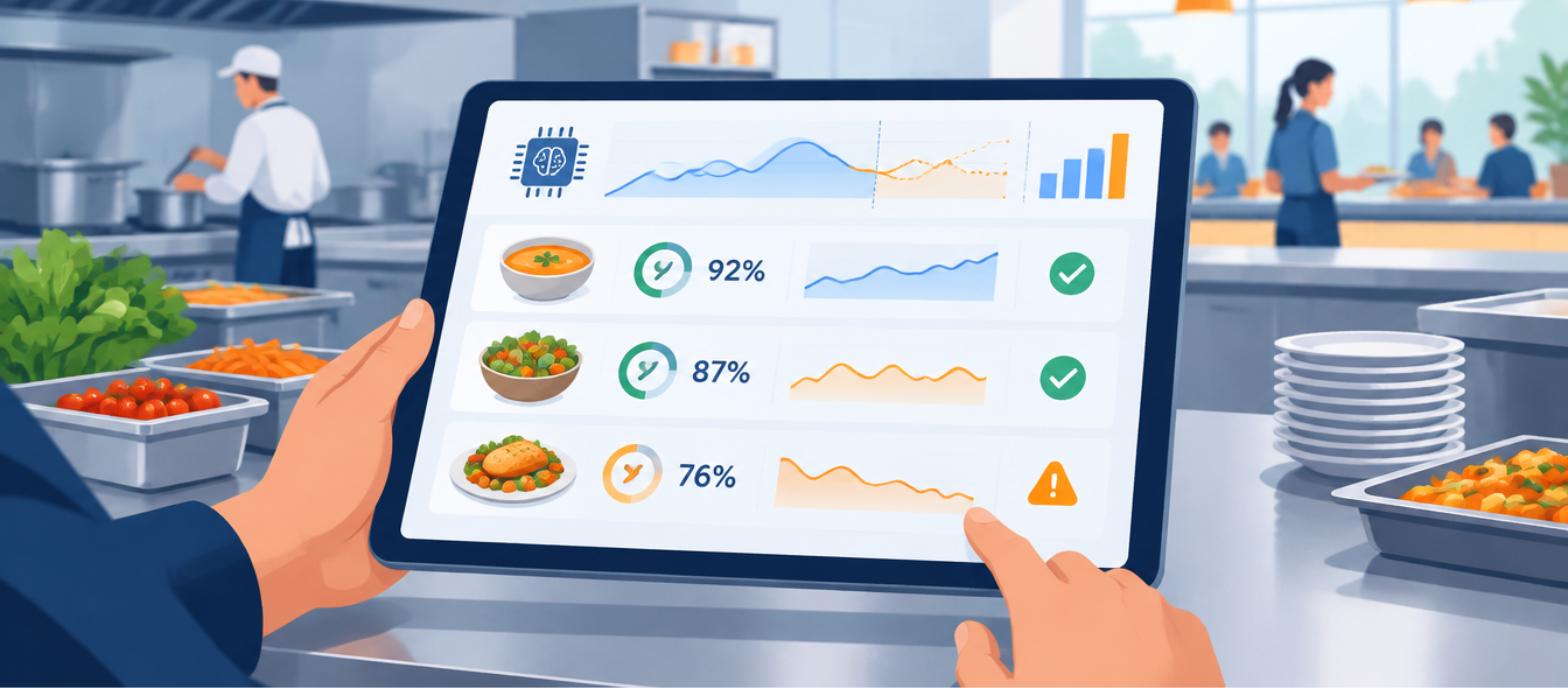
In the last post, there was step 5: the agent checks yesterday's forecast every morning with the fact from the cash register for 7 categories. If the deviation stays above 15% for three consecutive days, it raises the flag.
The flag is raised. What's next? Here, the implementation most often breaks down in one of two ways:
- The agent handles everything himself. The forecast jumps with every splash, and the cook stops believing it.
- The agent only honks. The reports accumulate in Telegram, no one reads them, and in a month everything is as it was.
The third working option is to clearly separate what the agent rules himself and what the person decides.
First, the agent determines the type of error
Not every deviation needs to be corrected. The agent looks at the error sign (forecast − fact) / fact for the last 5 days:
- The offset is an error in one direction all the time. (-12%, -14%, -11%...). The forecast needs to be edited.
- Noise — the sign jumps (+9%, -12%, +6%...). Leave the forecast alone, and the 70/30 rule holds the insurance.
Noise is the normal life of the dining room. If you "treat" it with corrections, the prognosis will only get worse.
The auto-correction rule
The agent controls himself if:
- offset confirmed (5 days, one digit);
- correction by category is not more than ± 10% per week;
- each change is written to the log: what, by how much, and why.
The agent asks the person if:
- correction requires an amendment of more than 10%;
- The bias appeared in several categories at once;
- the offset continues after auto-correction.
A conditional example
"Hot with meat": 120 servings forecast, fact 138, 135, 141, 136, 139. The error is always with a minus sign, on average about -13%.
The agent raises the correction by an acceptable 10% and writes to the operating officer: "The demand for hot meat is consistently above the forecast by 13%. I've made a +10% correction, but I can't close the rest. Is there a new customer or has the menu of the neighbors changed?"
Only the person knows the answer. He decides whether to recalculate the base or wait.
The main thing
Automation without borders is a risk, automation without authority is reports that no one reads. A reliable system knows three things: when it makes a mistake, what it can fix itself, and when to call a person.
A question for those who have already implemented it: which decisions have you left to the agent, and which ones are up to the person? Where was the line drawn?
В прошлом посте был шаг 5: агент каждое утро сверяет вчерашний прогноз с фактом из кассы по 7 категориям. Если отклонение держится выше 15% три дня подряд, он поднимает флаг.
Флаг поднят. Что дальше? Здесь внедрение чаще всего ломается одним из двух способов:
- Агент правит всё сам. Прогноз прыгает за каждым всплеском, и повар перестаёт ему верить.
- Агент только сигналит. Сводки копятся в Telegram, их никто не читает, и через месяц всё как было.
Рабочий вариант — третий: чётко разделить, что агент правит сам, а что решает человек.
Сначала агент определяет тип ошибки
Не каждое отклонение нужно исправлять. Агент смотрит на знак ошибки (прогноз − факт) / факт за последние 5 дней:
- Смещение — ошибка всё время в одну сторону (−12%, −14%, −11%…). Прогноз нужно править.
- Шум — знак прыгает (+9%, −12%, +6%…). Прогноз не трогать, страховку держит правило 70/30.
Шум — нормальная жизнь столовой. Если «лечить» его поправками, прогноз станет только хуже.
Правило автокоррекции
Агент правит сам, если:
- смещение подтверждено (5 дней, один знак);
- поправка по категории не больше ±10% за неделю;
- каждое изменение пишется в журнал: что, на сколько и почему.
Агент спрашивает человека, если:
- для исправления нужна поправка больше 10%;
- смещение появилось в нескольких категориях сразу;
- смещение продолжается после автокоррекции.
Условный пример
«Горячее с мясом»: прогноз 120 порций, факт 138, 135, 141, 136, 139. Ошибка всё время со знаком минус, в среднем около −13%.
Агент поднимает поправку на допустимые 10% и пишет операционному: «Спрос на мясное горячее стабильно выше прогноза на 13%. Поправку +10% внёс, остаток закрыть не могу. Появился новый клиент или изменилось меню у соседей?»
Ответ знает только человек. Он и решает: пересчитать базу или подождать.
Главное
Автоматизация без границ — это риск, автоматизация без полномочий — это отчёты, которые никто не читает. Надёжная система знает три вещи: когда ошибается, что может исправить сама и когда нужно позвать человека.
Вопрос к тем, кто уже внедрял: какие решения вы оставили агенту, а какие только за человеком? Где провели черту?
 Share