
The post has been translated automatically. Original language: Russian





Books on marketing, sales, and positioning usually give quite reasonable advice.
Find the right customer.
Formulate the value.
Show the difference from the competition.
Remove the objections.
Bring the client to the deal.
There's only one problem.
We are rarely shown the position on the board where the game starts.
And almost everything depends on it.
Position No. 1. Marketing in the textbook
Let's imagine a simple chess position.
We have a king, a queen, a knight and three pawns.
The opponent has one king.
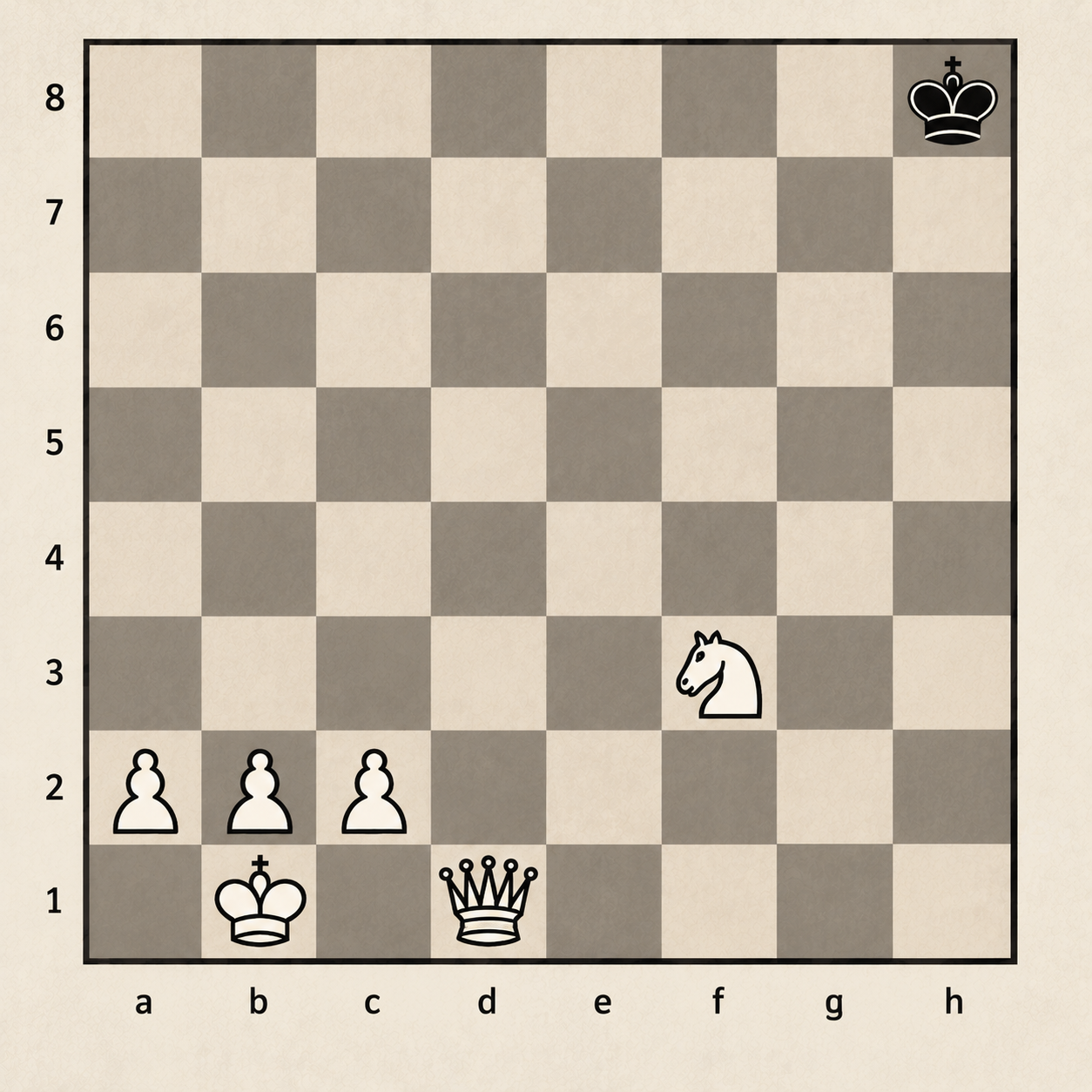
The position is almost won: the client has almost no protection.
This is what a customer sometimes looks like in a sales book.
He already understands the problem.
He wants to solve it.
Has a budget.
Looking for a supplier.
He doesn't have a strong alternative.
It remains to properly explain the value and close the deal.
And here is the advice:
Positioning needs to be improved.
it can really be very useful.
But there is a small problem.
In real life, we don't always start from this position.
Position No. 2. A good real customer
Now let's add a pair of pawns to the opponent.
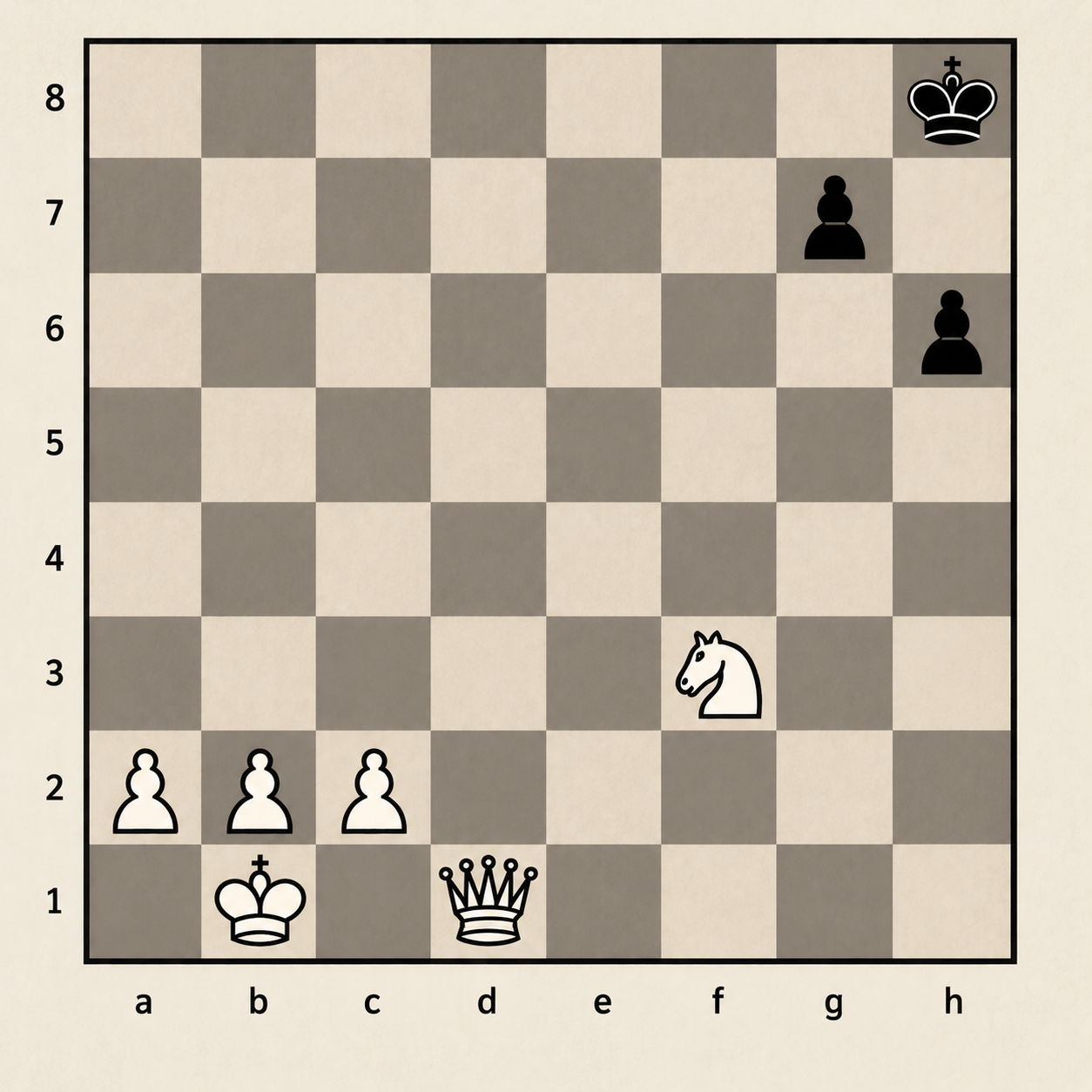
Good client: there are several objections, but the position is strong.
This is more like a good B2B deal.
The client is interested, but there is resistance.
You need to prove the value.
Answer the questions.
Get approval.
Perhaps we can discuss the price.
Sales, marketing, and negotiations really work here.
We have a strong position.
But the party is not over yet.
Position No. 3. Business starts with the initial setup
And sometimes an amazing thing happens.
For some reason, the client comes to negotiate with all his figures.
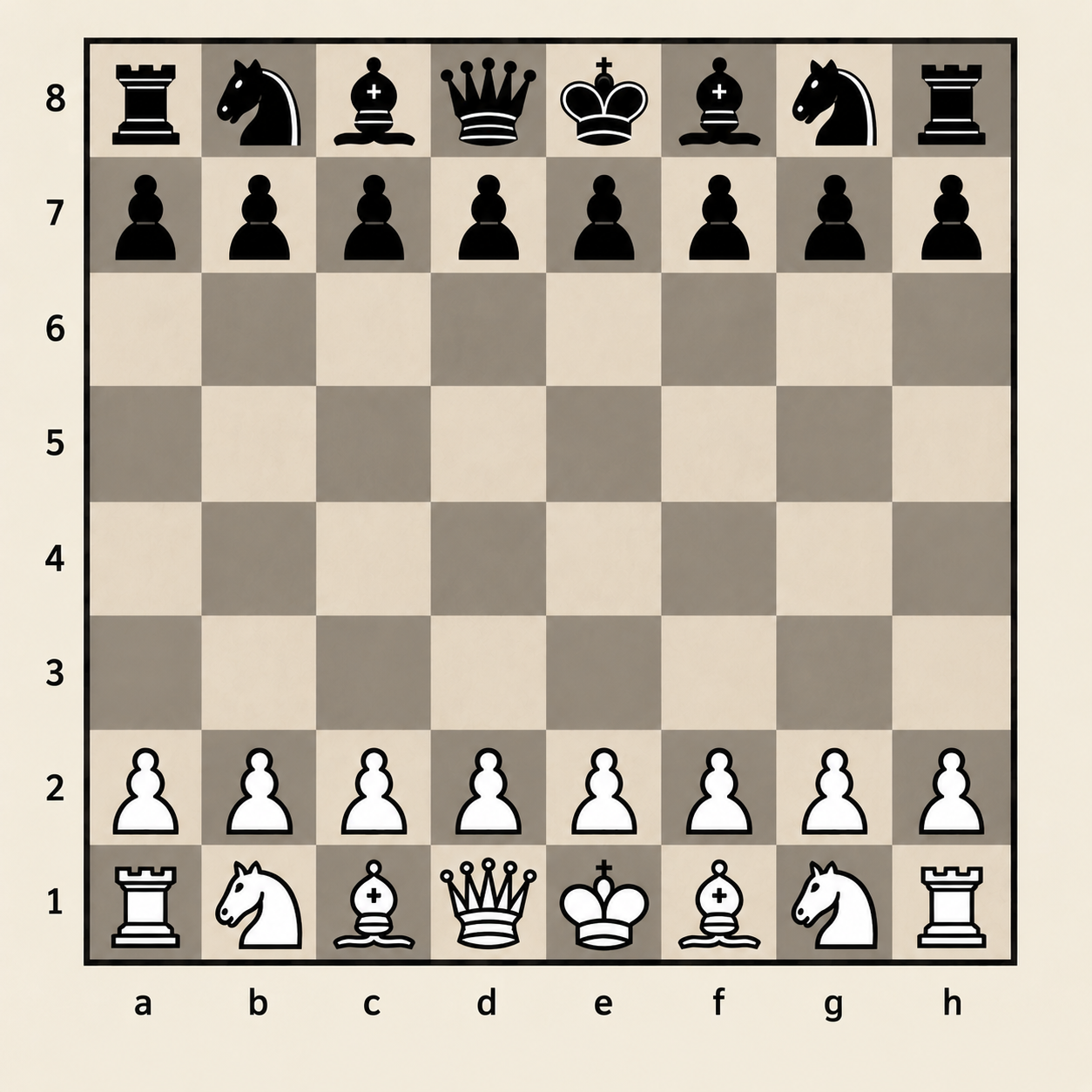
Business as usual: the party starts with a full board.
He already has a supplier.
There is a valid contract.
There is a familiar process.
The staff is trained.
The system is integrated.
The management does not consider the problem urgent.
And in general, no one was particularly going to change anything.
We come and talk:
We have a better solution.
The client responds:
Very interesting. Send the presentation.
A week later, marketing analyzes the situation and reports:
We need to formulate the value proposition more strongly.
Maybe.
But sometimes it's useful to look at the board first.
The party has just started.
And we are already discussing the mat technique.
Position No. 4. Enterprise
But the real beauty begins in large corporate sales.
Let's imagine our side.
King.
The queen.
Horse.
Three pawns.
And now the client's side.
A complete set of figures.
Plus a few extra queens.
And a few more pawns.
Yes, such a position is impossible according to the rules of chess.
But corporate sales sometimes also look like another person wrote the rules.
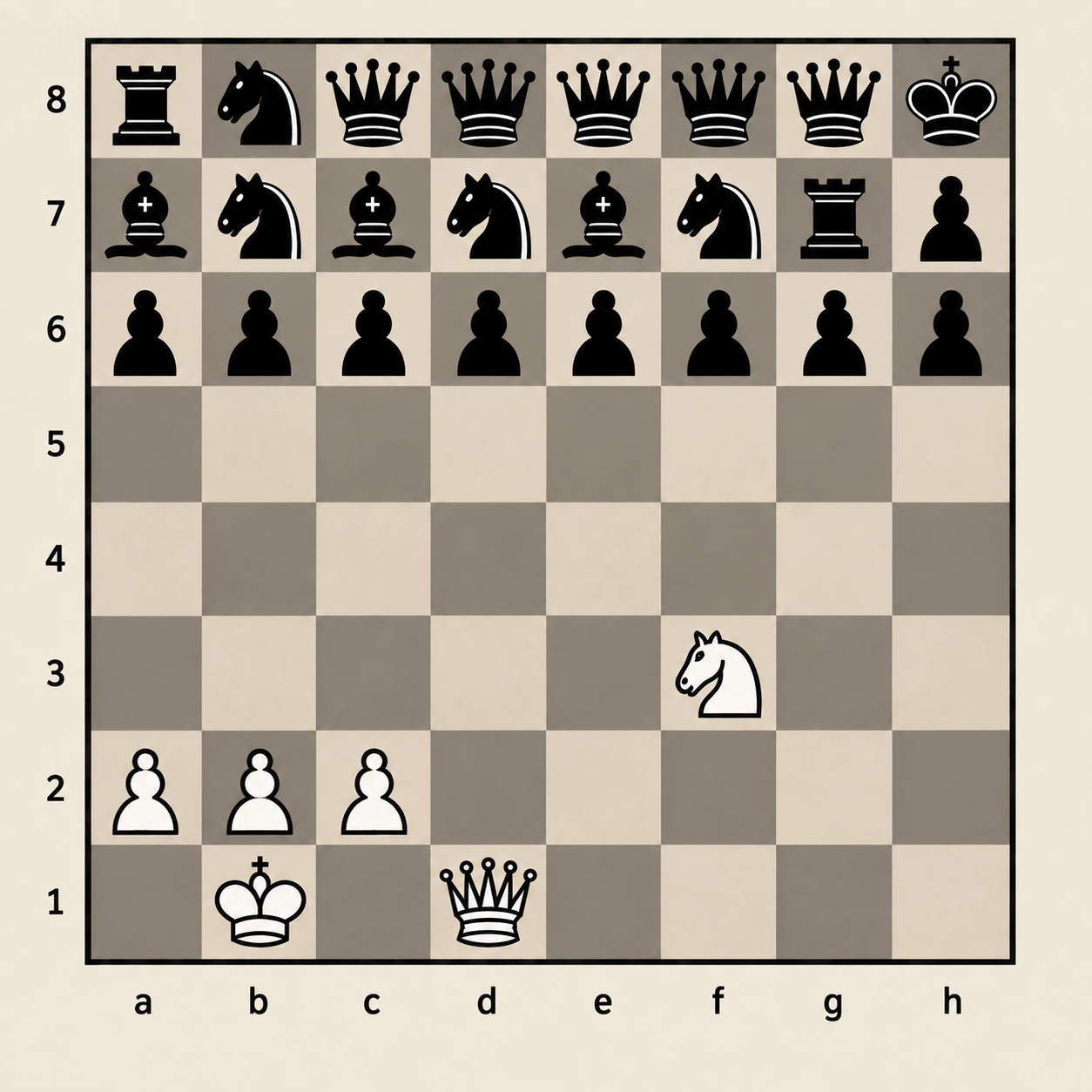
Enterprise: for some reason, the client has +four queens.
The additional figures of the client can be mentally called as follows:
"Current supplier".
"Own development".
"Security."
"Purchases".
"Lawyers."
"The budget has already been allocated."
"We've been working like this for ten years."
And somewhere in the distance stands the human king, who theoretically can say the final "yes."
We come to this board with a twelve-slide presentation.
After the meeting, we discuss the results.
Perhaps we have the wrong positioning.
Or:
This is probably not our ideal client.
A chess player could have formulated the problem a little differently.:
Why was the opponent allowed to start the game with an additional four queens?
Positioning does not cancel the position.
This does not mean that positioning is not important.
Conversely.
Good positioning helps us understand why the client should consider us instead of existing alternatives in the first place.
But it does not turn any starting position into a winning one.
It's ideal to explain the value of a product to a company that has just signed a five-year contract with a competitor.
You can have a great product for a client who doesn't have a budget right now.
It is possible to show huge savings to an organization for which changing an existing process is more dangerous than this saving.
Sometimes the problem is really in our message.
And sometimes it's on the board.
"Not our client" is also not always the right answer.
There is another extreme here.
If the party is difficult, it's easy to say:
It's just not our client.
But this is not always true either.
Perhaps the client will become ours in a year.
The contract will end.
The manager will change.
The existing system will stop coping.
A new task will arise.
And suddenly two queens and several pawns will disappear from the board.
The company is the same.
But the position is completely different.
Therefore, a good market is not just a list of companies with the right number of employees and revenue.
It is also important to understand what position each of them is in now.
A deal is a checkmate, but you don't always need to attack the king right away.
In sales, I really want to reach the final faster.
The demo.
Commercial proposal.
Conversation.
Contract.
But if the opponent's entire army is on the board, sometimes the first good move doesn't involve the king at all.
You need to remove one piece first.
For example, to prove that an existing solution really creates a problem.
Then another one — to reduce the risk of transition.
Then do a little pilot.
And only after that there is a position where the deal becomes real.
It's more like chess.
Not:
How do we close the client?
But:
Which piece should be removed from the board next?
Sometimes marketing is not supposed to convince, but to change the position.
This is perhaps the most interesting thing.
Good marketing does not necessarily immediately lead a customer to a purchase.
He can change the board itself.
The person considered the problem unimportant — now he understands its cost.
The company was confident in the current solution — now it sees its limitations.
The buyer considered the transition too risky — he saw an easy way to start.
The position has become different.
And with it, the seller's possible moves have changed.
Therefore, marketing is not just about the message.
Sometimes his task is to remove several enemy pieces before the first meeting.
And here we come back to Musashi again.
Musashi was not interested in a universal technique that guarantees victory.
He looked at the opponent's position, distance, timing, and rhythm.
In business, you want to get a universal recipe:
What is the right way to sell?
But the question is too general.
Just like:
What is the best move in chess?
First you need a position.
Who is already on the board?
What alternatives protect the client?
What prevents him from changing the situation?
Which shapes can be removed?
And how fast is the party developing in general?
Only then does it make sense to discuss the next move.
Therefore, before correcting the marketing, show the board.
If the deal doesn't go through, the reason may be the price.
In the product.
In the seller.
In the positioning.
But there is another possibility.:
We started the game from a very bad position.
And then the advice "better explain the value" sounds like advice to a chess player.:
Try to checkmate more accurately.
A useful tip.
Especially if the opponent has four queens for some reason.
The position determines the available moves.
The rhythm determines the moment of the move.
And the strategy starts with a simple question.:
What's on the board right now?
Книги по маркетингу, продажам и позиционированию обычно дают вполне разумные советы.
Найдите правильного клиента.
Сформулируйте ценность.
Покажите отличие от конкурентов.
Снимите возражения.
Подведите клиента к сделке.
Проблема только в одном.
Нам редко показывают позицию на доске, с которой начинается партия.
А от неё зависит почти всё.
Позиция №1. Маркетинг в учебнике
Представим простую шахматную позицию.
У нас король, ферзь, конь и три пешки.
У противника — один король.
Примерно так иногда выглядит клиент в книге по продажам.
Он уже понимает проблему.
Хочет её решить.
Имеет бюджет.
Ищет поставщика.
У него нет сильной альтернативы.
Осталось правильно объяснить ценность и закрыть сделку.
И здесь совет:
Нужно улучшить позиционирование.
действительно может быть очень полезен.
Но возникает небольшая проблема.
В реальной жизни мы не всегда начинаем именно с этой позиции.
Позиция №2. Хороший реальный клиент
Теперь добавим противнику пару пешек.
Вот это уже больше похоже на хорошую B2B-сделку.
Клиент заинтересован, но есть сопротивление.
Нужно доказать ценность.
Ответить на вопросы.
Пройти согласование.
Возможно, обсудить цену.
Здесь действительно работают продажи, маркетинг и переговоры.
У нас сильная позиция.
Но партия ещё не закончена.
Позиция №3. Бизнес начинается с начальной расстановки
А иногда происходит удивительная вещь.
Клиент почему-то приходит на переговоры со всеми своими фигурами.
У него уже есть поставщик.
Есть действующий контракт.
Есть привычный процесс.
Сотрудники обучены.
Система интегрирована.
Руководство не считает проблему срочной.
И вообще никто особенно не собирался ничего менять.
Мы приходим и говорим:
У нас есть лучшее решение.
Клиент отвечает:
Очень интересно. Пришлите презентацию.
Через неделю маркетинг анализирует ситуацию и сообщает:
Нужно сильнее сформулировать ценностное предложение.
Возможно.
Но иногда полезно сначала посмотреть на доску.
Партия только началась.
А мы уже обсуждаем технику мата.
Позиция №4. Enterprise
Но настоящая красота начинается в крупных корпоративных продажах.
Представим нашу сторону.
Король.
Ферзь.
Конь.
Три пешки.
А теперь сторону клиента.
Полный комплект фигур.
Плюс несколько дополнительных ферзей.
И ещё несколько пешек.
Да, такая позиция невозможна по правилам шахмат.
Но корпоративные продажи иногда тоже выглядят так, будто правила писал другой человек.
Дополнительные фигуры клиента можно мысленно назвать так:
«Текущий поставщик».
«Собственная разработка».
«Безопасность».
«Закупки».
«Юристы».
«Бюджет уже распределён».
«Мы так работаем десять лет».
И где-то вдалеке стоит король — человек, который теоретически может сказать окончательное «да».
Мы приходим на эту доску с презентацией из двенадцати слайдов.
После встречи обсуждаем результаты.
Возможно, у нас неправильное позиционирование.
Или:
Вероятно, это не наш идеальный клиент.
А шахматист мог бы сформулировать проблему немного иначе:
Почему противнику разрешили начать партию с дополнительными четырьмя ферзями?
Позиционирование не отменяет позицию
Это не означает, что позиционирование не важно.
Наоборот.
Хорошее позиционирование помогает понять, почему клиент вообще должен рассматривать нас вместо существующих альтернатив.
Но оно не превращает любую исходную позицию в выигрышную.
Можно идеально объяснять ценность продукта компании, которая только что подписала пятилетний контракт с конкурентом.
Можно иметь прекрасный продукт для клиента, у которого сейчас нет бюджета.
Можно показать огромную экономию организации, для которой изменение существующего процесса опаснее этой экономии.
Иногда проблема действительно в нашем сообщении.
А иногда — в доске.
«Не наш клиент» тоже не всегда правильный ответ
Здесь есть другая крайность.
Если партия сложная, легко сказать:
Это просто не наш клиент.
Но и это не всегда верно.
Возможно, клиент станет нашим через год.
Закончится контракт.
Поменяется руководитель.
Существующая система перестанет справляться.
Возникнет новая задача.
И внезапно с доски исчезнут два ферзя и несколько пешек.
Компания та же.
А позиция уже совершенно другая.
Поэтому хороший рынок — это не просто список компаний с нужным количеством сотрудников и выручкой.
Важно ещё понимать, в какой позиции каждая из них находится сейчас.
Сделка — это мат, но не всегда нужно сразу атаковать короля
В продажах очень хочется быстрее прийти к финалу.
Демо.
Коммерческое предложение.
Переговоры.
Контракт.
Но если на доске стоит вся армия противника, иногда первый хороший ход вообще не связан с королём.
Нужно сначала убрать одну фигуру.
Например, доказать, что существующее решение действительно создаёт проблему.
Потом другую — снизить риск перехода.
Потом провести небольшой пилот.
И лишь после этого появляется позиция, где сделка становится реальной.
Это уже больше похоже на шахматы.
Не:
Как нам закрыть клиента?
А:
Какую фигуру нужно убрать с доски следующей?
Иногда маркетинг должен не убеждать, а менять позицию
Это, пожалуй, самое интересное.
Хороший маркетинг не обязательно сразу приводит клиента к покупке.
Он может изменить саму доску.
Человек считал проблему неважной — теперь понимает её стоимость.
Компания была уверена в текущем решении — теперь видит его ограничения.
Покупатель считал переход слишком рискованным — увидел простой способ начать.
Позиция стала другой.
И вместе с ней изменились возможные ходы продавца.
Поэтому маркетинг — это не только сообщение.
Иногда его задача — убрать несколько фигур противника ещё до первой встречи.
И здесь мы снова возвращаемся к Мусаси
Мусаси интересовался не универсальным приёмом, который гарантирует победу.
Он смотрел на положение противника, дистанцию, момент и ритм.
В бизнесе хочется получить универсальный рецепт:
Как правильно продавать?
Но вопрос слишком общий.
Так же как:
Какой лучший ход в шахматах?
Сначала нужна позиция.
Кто уже стоит на доске?
Какие альтернативы защищают клиента?
Что мешает ему менять ситуацию?
Какие фигуры можно убрать?
И с какой скоростью вообще развивается партия?
Только после этого имеет смысл обсуждать следующий ход.
Поэтому, прежде чем исправлять маркетинг, покажите доску
Если сделка не идёт, причина может быть в цене.
В продукте.
В продавце.
В позиционировании.
Но существует ещё одна возможность:
мы начали игру из очень плохой позиции.
И тогда совет «лучше объясните ценность» звучит примерно как совет шахматисту:
Попробуйте поставить мат точнее.
Полезный совет.
Особенно если у соперника почему-то четыре ферзя.
Позиция определяет доступные ходы.
Ритм определяет момент хода.
А стратегия начинается с простого вопроса:
Что сейчас стоит на доске?

 Share