
The post has been translated automatically. Original language: Russian





The most expensive mistake in product development is to do something that no one needs. The team has been developing a feature for months that seems obviously useful, and after launching, no one uses it. Interviews with clients before the start of development help protect against this.
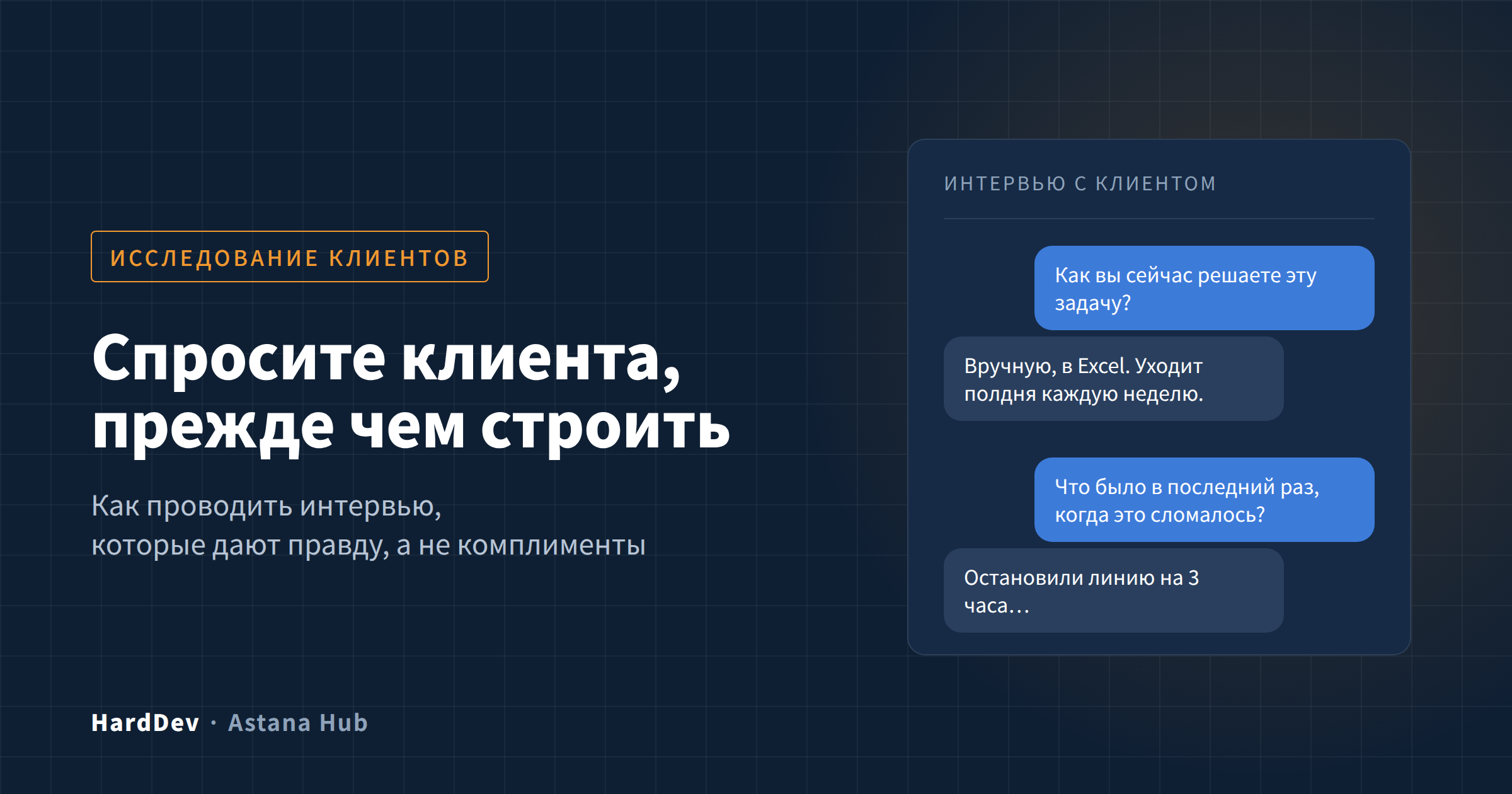
The main rule of such an interview is to ask about past experiences, not about future intentions. The question is "Would you buy such a system?" almost always gives a polite "yes", which means nothing. It is much more useful to ask: "How do you solve this problem now? What happened the last time there was a problem? How much did it cost?"
You should not talk about your idea at the beginning of the conversation, otherwise the other person will begin to adjust to it. The interviewer's job is to listen and clarify. A good interview consists of 80% of the client's speech. Write down specific facts: how much time is spent, what tools are used, and who makes the purchase decision.
Usually, after 5-10 interviews, it becomes clear whether clients have a real problem and how acute it is. This is a few days of work that saves months of development. In B2B, it is especially important to talk not only with the supervisor, but also with those who will use the product every day.
Самая дорогая ошибка в разработке продукта — сделать то, что никому не нужно. Команда месяцами разрабатывает функцию, которая кажется очевидно полезной, а после запуска ею никто не пользуется. Защититься от этого помогают интервью с клиентами до начала разработки.
Главное правило такого интервью — спрашивать о прошлом опыте, а не о будущих намерениях. Вопрос «Вы бы купили такую систему?» почти всегда даёт вежливое «да», которое ничего не значит. Гораздо полезнее спросить: «Как вы решаете эту задачу сейчас? Что произошло в последний раз, когда возникла проблема? Сколько это стоило?»
Не стоит рассказывать о своей идее в начале разговора, иначе собеседник начнёт подстраиваться под неё. Задача интервьюера — слушать и уточнять. Хорошее интервью на 80% состоит из речи клиента. Записывайте конкретные факты: сколько времени тратится, какие инструменты используются, кто принимает решение о покупке.
Обычно после 5–10 интервью становится понятно, есть ли у клиентов реальная проблема и насколько она острая. Это несколько дней работы, которые экономят месяцы разработки. В B2B особенно важно поговорить не только с руководителем, но и с теми, кто будет пользоваться продуктом каждый день.

 Share