
The post has been translated automatically. Original language: Russian




In the comments to the last post about KPIs, Galia suggested a more detailed analysis of staff productivity and food waste. But before that, it's worth closing the question, which ultimately determines why these indicators are counted at all: where and how the decision-maker sees them.
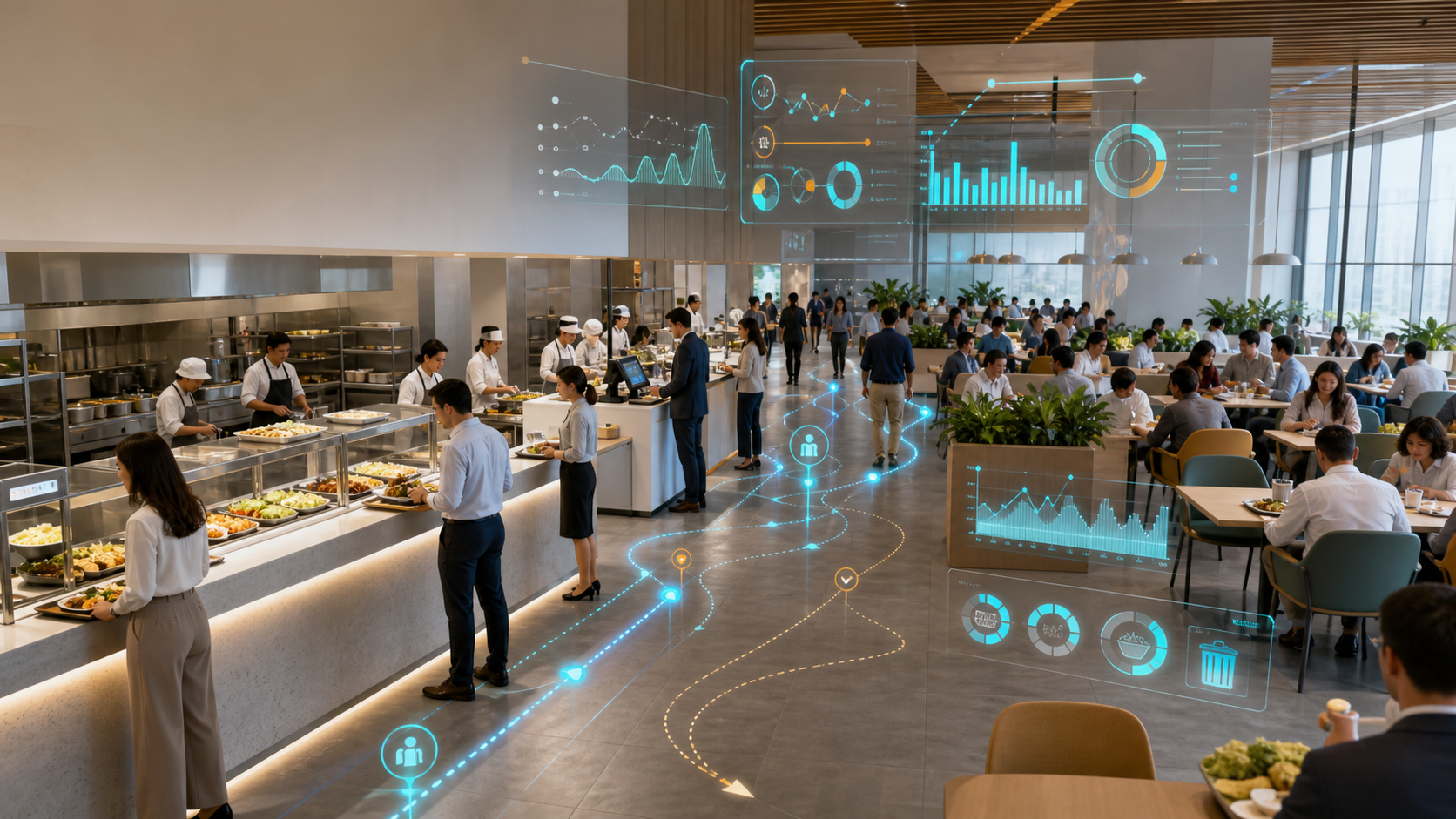
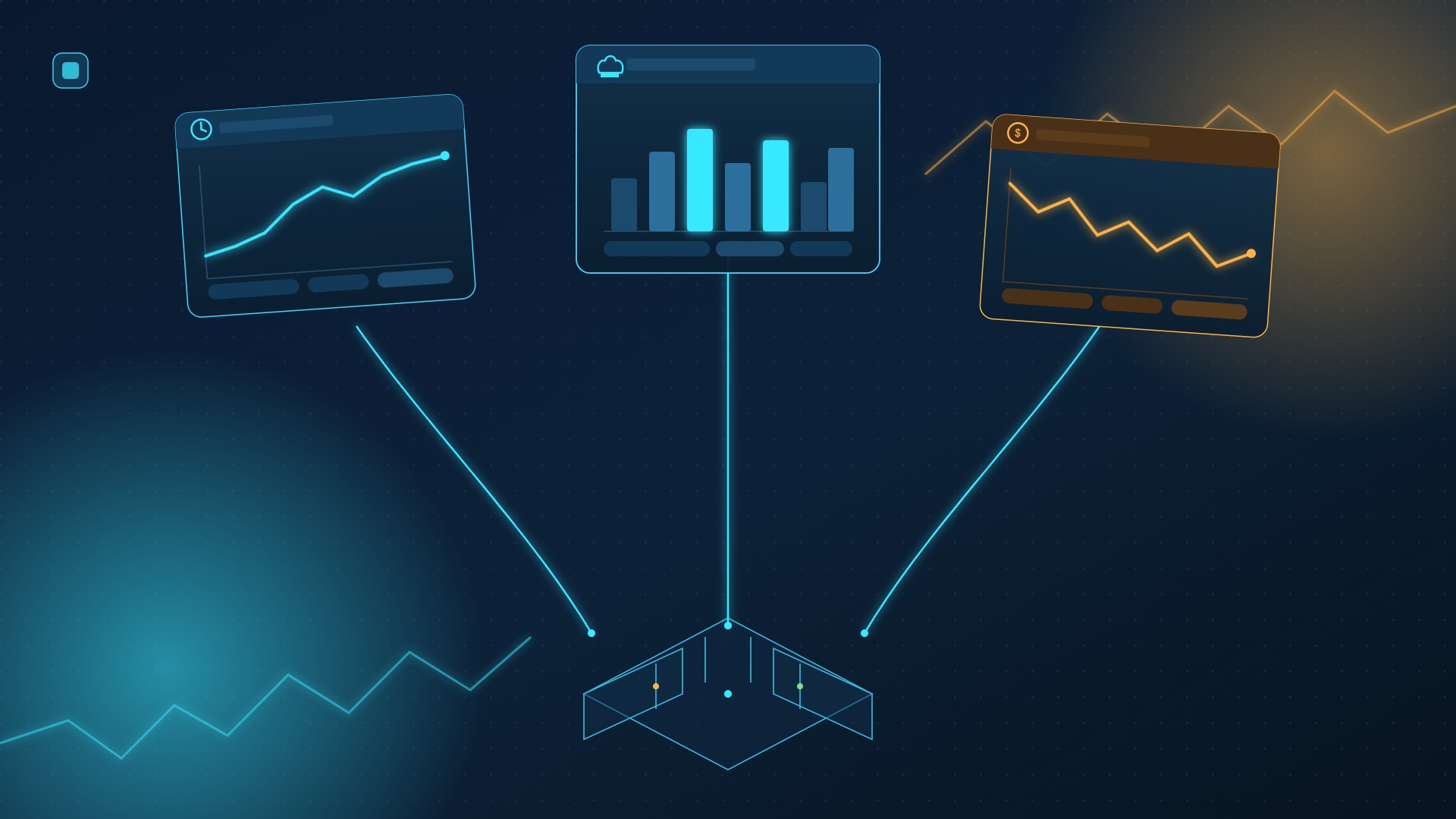
We have analyzed more than 20 indicators: productivity, service speed, quality, losses, process discipline, and visitor flow. If you just put it all in one table, no one will use it — there are too many numbers and it's unclear what to do with them right now.The control panel solves a different task: each role should see only the indicators on which it makes decisions — and see them with the frequency with which decisions need to be made.Three roles — three different screens The canteen manager is responsible for ensuring that the flow of guests is served smoothly here and now.What you need on the screen:— queue and waiting time in real time;— loading of cash registers and distribution lines;— flow forecast for the next 30-60 minutes;— free seats;— deviation of the fact from the plan for each half hour.
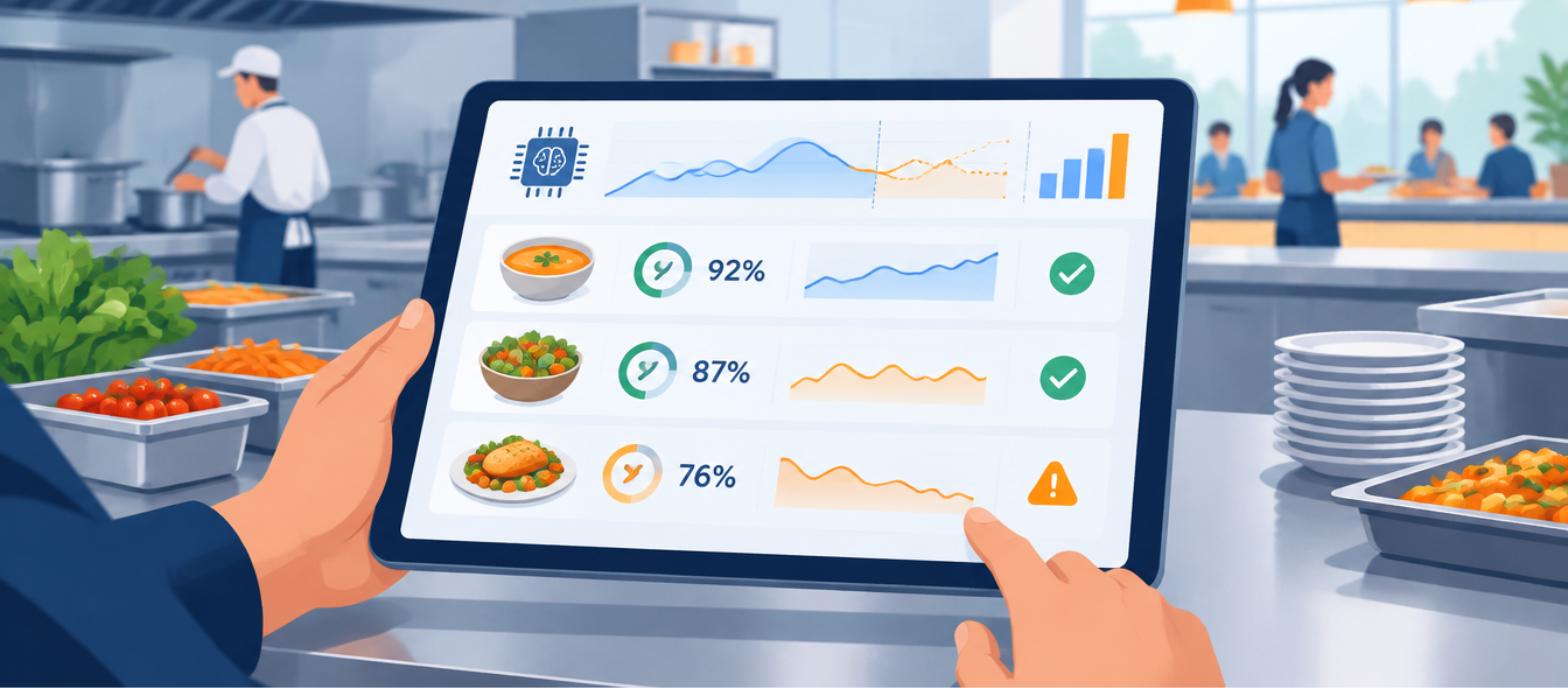
The manager does not need the cost of the dish or the dynamics of write—offs for the quarter - he needs a solution for the next 15 minutes: open a second cash register, transfer a person to the distribution, accelerate the cleaning of tables.The chef is responsible for ensuring that the kitchen prepares the right amount of the right dishes without overproduction and without shortage.What you need on the screen:— leftovers of finished products for each item;— the rate of consumption of meals relative to the shift plan;— the time until the end of popular positions; — write-offs for the shift and for the last similar day;— deviation of the actual consumption of raw materials from the standard.The chef does not need a general report on the dining room, but a signal for a specific dish: "the goulash will end in 20 minutes at the current rate - prepare the additive now."
The customer or owner is responsible for the economy of the facility as a whole and evaluates the dining room not by minutes, but by weeks and months.What you need on the screen:— the cost of meals per visitor;— the share of write—offs in the revenue or in the budget of the dining room;- the dynamics of the flow and loading of the hall by week;— execution of the production plan for the period;— comparison with the previous period and with the budget plan.The owner doesn't need a queue at the checkout at 12:47 p.m. — he needs an answer to the question of whether the canteen fits into the budget and where the trend is heading.
Example: the same situation, three different solutions, let's say by 12:40 the actual flow is 20% higher than the forecast.— The manager sees this as a growing queue and opens an additional cash register.— The chef sees this as an accelerated consumption of dishes and starts the early preparation of the supplement.— The customer will not see this situation in real time at all — it is important for him whether such an excess of flow is repeated systematically and whether it is worth reviewing the procurement plan and staff.One event — three different screens, three different actions.Where AIAI is used on the control panel is useful not because it shows more numbers, but because it reduces the burden on a person who must react quickly.:
— predicts the flow for the next hour and day of the week;— warns in advance about the risk of a queue or a shortage of food;— identifies abnormal write—offs and marks them for verification;— compares the plan and the fact without manual tabulation;- generates a weekly summary for the customer without the participation of the manager.But AI doesn't have to decide for itself whether to open a cash register or rewrite the production plan — it's still the decision of the person in charge of the facility.Main Output The control panel should not show everything that can be measured. Her task is to show each role only what is needed for a specific solution, at the right time.If the manager, chef, and customer are looking at the same shared spreadsheet, it's likely that none of them uses it regularly.In the next publication, I will analyze in more detail the productivity of staff and food waste, as Galia suggested: portions per person-hour, write-offs per visitor, deviation from the norm and typical causes of waste generation.Which is more important to sort out first: staff productivity or food waste?
В комментариях к прошлому посту про KPI Галия предложила подробнее разобрать производительность персонала и пищевые отходы. Но перед этим стоит закрыть вопрос, который в итоге определяет, зачем вообще эти показатели считать: где и как их видит человек, который принимает решения.
Мы разобрали больше 20 показателей: производительность, скорость обслуживания, качество, потери, дисциплину процессов, поток посетителей. Если просто вывести всё это в одну таблицу, никто ей пользоваться не будет — слишком много цифр и непонятно, что с ними делать прямо сейчас.Панель управления решает другую задачу: каждая роль должна видеть только те показатели, по которым она принимает решения — и видеть их с той периодичностью, с которой решения нужно принимать.Три роли — три разных экранаУправляющий столовой отвечает за то, чтобы поток гостей обслуживался без сбоев здесь и сейчас.На экране здесь и сейчас:— очередь и время ожидания в реальном времени;— загрузка касс и линии раздачи;— прогноз потока на ближайшие 30–60 минут;— свободные посадочные места;— отклонение факта от плана по каждому получасу.
Управляющему не нужна себестоимость блюда или динамика списаний за квартал — ему нужно решение на ближайшие 15 минут: открыть вторую кассу, перекинуть человека на раздачу, ускорить уборку столов.Шеф-повар отвечает за то, чтобы кухня приготовила нужное количество нужных блюд без перепроизводства и без дефицита.Ключевые показатели на экране:— остатки готовой продукции по каждой позиции;— темп расхода блюд относительно плана на смену;— время до окончания популярных позиций;— списания за смену и за прошлый аналогичный день;— отклонение фактического расхода сырья от нормативного.Шеф-повару нужен не общий отчёт по столовой, а сигнал по конкретному блюду: «гуляш закончится через 20 минут при текущем темпе — готовить добавку сейчас».
Заказчик или владелец отвечает за экономику объекта в целом и оценивает столовую не по минутам, а по неделям и месяцам.На экране за период:— стоимость питания на одного посетителя;— доля списаний в выручке или в бюджете столовой;— динамика потока и загрузки зала по неделям;— выполнение производственного плана за период;— сравнение с предыдущим периодом и с планом по бюджету.Владельцу не нужна очередь на кассе в 12:47 — ему нужен ответ на вопрос, укладывается ли столовая в бюджет и куда движется тренд.
Пример: одна и та же ситуация, три разных решенияДопустим, к 12:40 фактический поток на 20% выше прогноза.— Управляющий видит это как растущую очередь и открывает дополнительную кассу.— Шеф-повар видит это как ускоренный расход блюд и запускает досрочное приготовление добавки.— Заказчик эту ситуацию вообще не увидит в реальном времени — для него важно, повторяется ли такое превышение потока системно и стоит ли пересматривать план закупок и штат.Одно событие — три разных экрана, три разных действия.Где применяется AIAI на панели управления полезен не тем, что показывает больше цифр, а тем, что снижает нагрузку на человека, который должен реагировать быстро:
— прогнозирует поток на ближайший час и на день недели;— заранее предупреждает о риске очереди или дефицита блюда;— выявляет аномальные списания и помечает их для проверки;— сравнивает план и факт без ручного сведения таблиц;— формирует еженедельную сводку для заказчика без участия управляющего.Но AI не должен сам решать, открывать ли кассу или переписывать производственный план — это по-прежнему решение человека, который отвечает за объект.Главный выводПанель управления не должна показывать всё, что можно измерить. Её задача — показать каждой роли только то, что нужно для конкретного решения, в нужный момент времени.Если управляющий, шеф-повар и заказчик смотрят в одну и ту же общую таблицу — скорее всего, ни один из них не пользуется ей регулярно.В следующей публикации разберу подробнее производительность персонала и пищевые отходы, как предложила Галия: порции на человеко-час, списания на посетителя, отклонение от норматива и типовые причины образования отходов.Что важнее разобрать первым: производительность персонала или пищевые отходы?

 Share