
The post has been translated automatically. Original language: Russian



After the rapid development of generative AI, the technology industry is starting to look for the next big growth point.
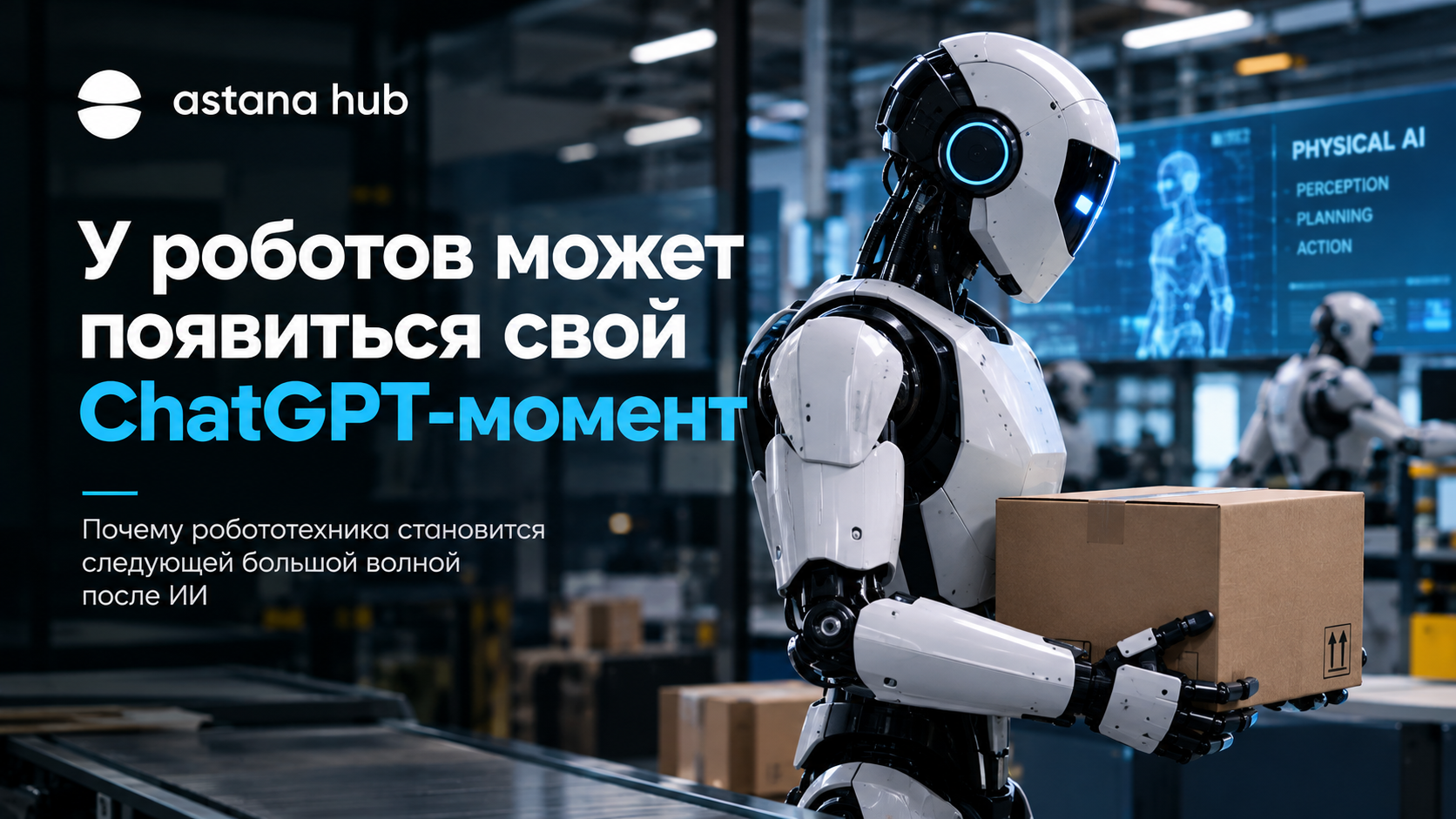
One of the main candidates is robotics.
Large language models have learned how to work with text and digital information thanks to huge amounts of data. But robots have to learn how to interact with the physical world: move, pick up objects, navigate in space, and perform sequences of actions.
And here comes a problem that used to receive much less attention: robots need data. There is a lot of data.
Startups are already building a whole infrastructure to receive them. For example, companies collect information about human movements using cameras, smartphones, and special sensors to use it to train robots.
This may turn out to be no less important than the robots themselves.
In the case of generative AI, data from the Internet played a huge role. Robotics does not have such a universal source yet. It's not enough for a robot to know what a cup is. He needs to learn how to see it, approach it correctly, calculate the movement and carefully take it.
That is why a new market is now emerging around the so—called Physical AI - physical artificial intelligence.
Nvidia already considers robotics as a separate area of AI development and notes that the industry has to solve the problem of the transition from digital intelligence to action in the real world.
If this barrier can be overcome, the consequences may be much bigger than it seems.
Robots will be able to work not only in factories. They will potentially be able to perform tasks in warehouses, logistics, manufacturing, service, and other environments where continuous human involvement is required today.
However, many technical issues still need to be resolved before such systems can be widely distributed.
Therefore, an interesting stage is beginning now.
We have already taught AI to understand the digital world. The next question is whether he will be able to learn to understand the physical world.
And if that happens, the history of robotics may get its counterpart to the moment when ChatGPT made generative AI a mass phenomenon.
После стремительного развития генеративного ИИ технологическая индустрия начинает искать следующую большую точку роста.
Один из главных кандидатов — робототехника.
Большие языковые модели научились работать с текстом и цифровой информацией благодаря огромным массивам данных. А вот роботам приходится учиться взаимодействовать с физическим миром: двигаться, брать предметы, ориентироваться в пространстве и выполнять последовательности действий.
И здесь возникает проблема, которой раньше уделяли гораздо меньше внимания: роботам нужны данные. Очень много данных.
Стартапы уже строят целую инфраструктуру для их получения. Например, компании собирают информацию о движениях человека с помощью камер, смартфонов и специальных датчиков, чтобы использовать её для обучения роботов.
Это может оказаться не менее важным, чем сами роботы.
В случае с генеративным ИИ огромную роль сыграли данные из интернета. У робототехники такого универсального источника пока нет. Роботу недостаточно знать, что такое чашка. Ему нужно научиться увидеть её, правильно подойти, рассчитать движение и аккуратно взять её.
Именно поэтому сейчас появляется новый рынок вокруг так называемого Physical AI — физического искусственного интеллекта.
Nvidia уже рассматривает робототехнику как отдельное направление развития AI и отмечает, что индустрии предстоит решить проблему перехода от цифрового интеллекта к действиям в реальном мире.
Если этот барьер удастся преодолеть, последствия могут быть гораздо масштабнее, чем кажется.
Роботы смогут работать не только на заводах. Они потенциально смогут выполнять задачи на складах, в логистике, производстве, сфере обслуживания и других средах, где сегодня требуется постоянное участие человека.
Но до массового распространения таких систем ещё предстоит решить множество технических вопросов.
Поэтому сейчас начинается интересный этап.
Мы уже научили ИИ понимать цифровой мир. Следующий вопрос — сможет ли он научиться понимать физический.
И если это произойдёт, история робототехники может получить свой аналог того момента, когда ChatGPT сделал генеративный ИИ массовым явлением.
 Share