



The post has been translated automatically. Original language: Russian





Many projects start with a contract and a technical specification, but without a common understanding of why all this is being done. The contract talks about money and deadlines, technical specifications about technical details, and the purpose of the project and its boundaries remain in everyone's head. The customer has one thing in mind, the team has another, and it usually turns out at the time of delivery.
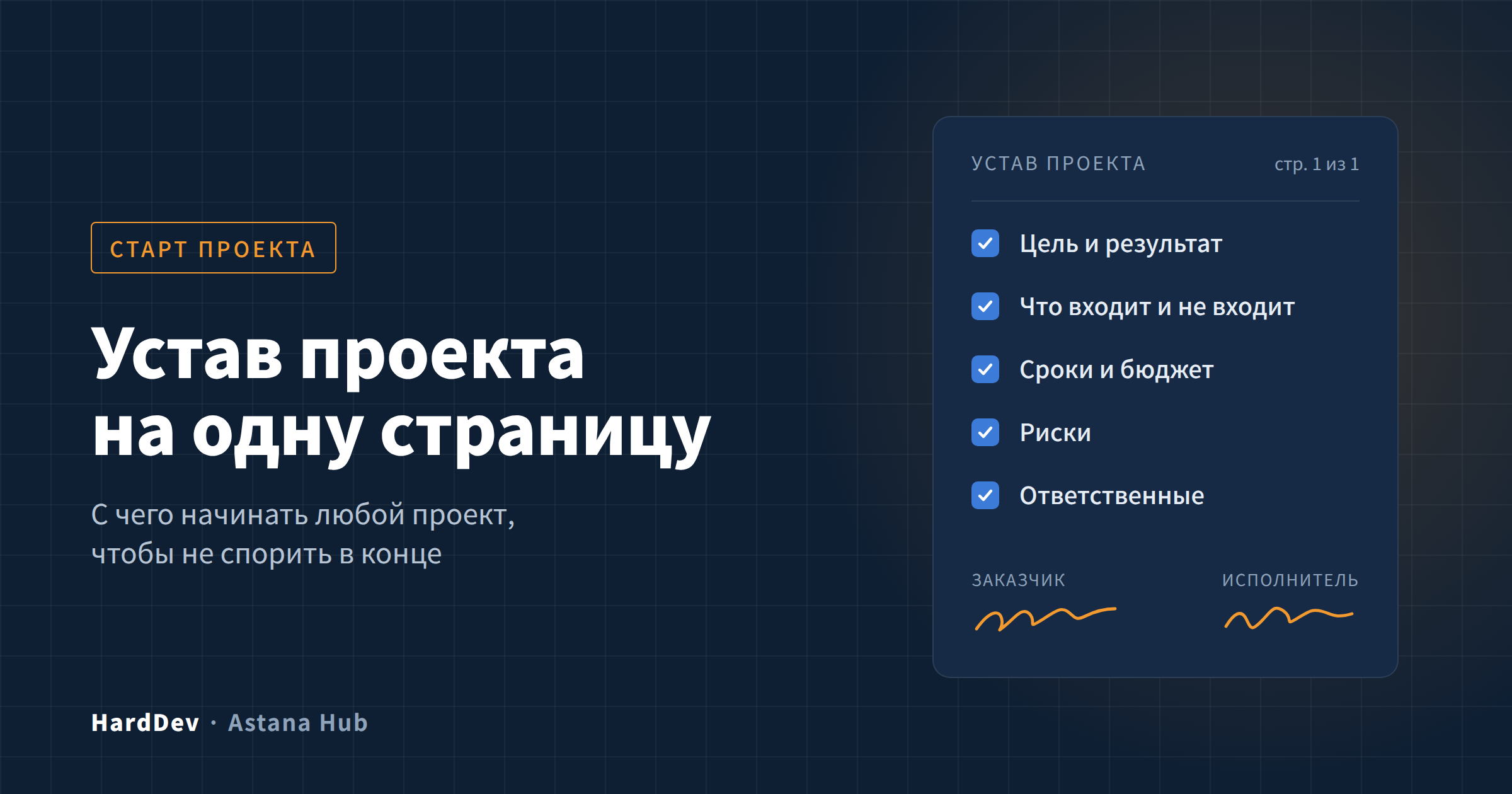
The project charter solves this problem. This is a short one- or two-page document that answers simple questions. What problem does the project solve and what result do we consider a success? What is included in the work and, equally importantly, what is not included? What are the key dates, budget, and main risks? Who is responsible for the project on the part of the customer and on the part of the contractor?
The charter is written before the start of work and agreed with the customer at a separate meeting. At this stage, discrepancies often come up that would otherwise have manifested themselves in a few months. For example, the customer expected staff training to be included in the project, but the contractor did not plan for this. It's much easier and cheaper to discuss this at the start than at the end.
Then the charter becomes the starting point for the entire project. They come back to him when new requests appear, when it is necessary to check whether the project has gone aside, and when the results are summed up. One page of text prepared in an evening saves weeks of arguments and alterations.
Многие проекты начинаются с договора и ТЗ, но без общего понимания, зачем всё это делается. Договор говорит о деньгах и сроках, ТЗ о технических деталях, а цель проекта и его границы остаются у каждого в голове. У заказчика в голове одно, у команды другое, и выясняется это обычно в момент сдачи.
Устав проекта решает эту проблему. Это короткий документ на одну-две страницы, который отвечает на простые вопросы. Какую проблему решает проект и какой результат считаем успехом? Что входит в работы и, не менее важно, что не входит? Какие ключевые даты, бюджет и главные риски? Кто отвечает за проект со стороны заказчика и со стороны исполнителя?
Устав пишется до начала работ и согласовывается с заказчиком на отдельной встрече. На этом этапе часто всплывают расхождения, которые иначе проявились бы через несколько месяцев. Например, заказчик ожидал, что обучение персонала входит в проект, а исполнитель этого не планировал. Обсудить такое на старте гораздо проще и дешевле, чем в конце.
Потом устав становится точкой отсчёта для всего проекта. К нему возвращаются, когда появляются новые пожелания, когда нужно проверить, не ушёл ли проект в сторону, и когда подводятся итоги. Одна страница текста, подготовленная за вечер, экономит недели споров и переделок.

 Share





