



The post has been translated automatically. Original language: Russian




A month ago, I wrote about the selection process for Startup Garage 1.6. Then it was an application and an idea on slides. Today we have two pilots with large companies, a product that I personally tried to break, and several lessons that the presentation would never have shown.
I loaded my own product on purpose.
Financial data is not the area where "trust me" works. That's why I raised the protection level a notch higher and tested it myself, not just verbally.
I conducted a series of stress tests on a real database - I specifically tried to provoke the product into actions that should not be possible in principle. The protection at the transaction level worked as intended: even if the AI had made a mistake in interpreting the request, the system would not have physically allowed anything destructive to be done.
In the process, I found and solved two problems with data isolation between clients. Before fixing it, there was theoretically a risk that one client could access part of the other's data under certain conditions. I fixed both problems on the very day I discovered them.
I'll tell you honestly: finds of this kind are not the most pleasant moment for a founder. But it's better to find them yourself than to have them found by someone else on the client's live data.
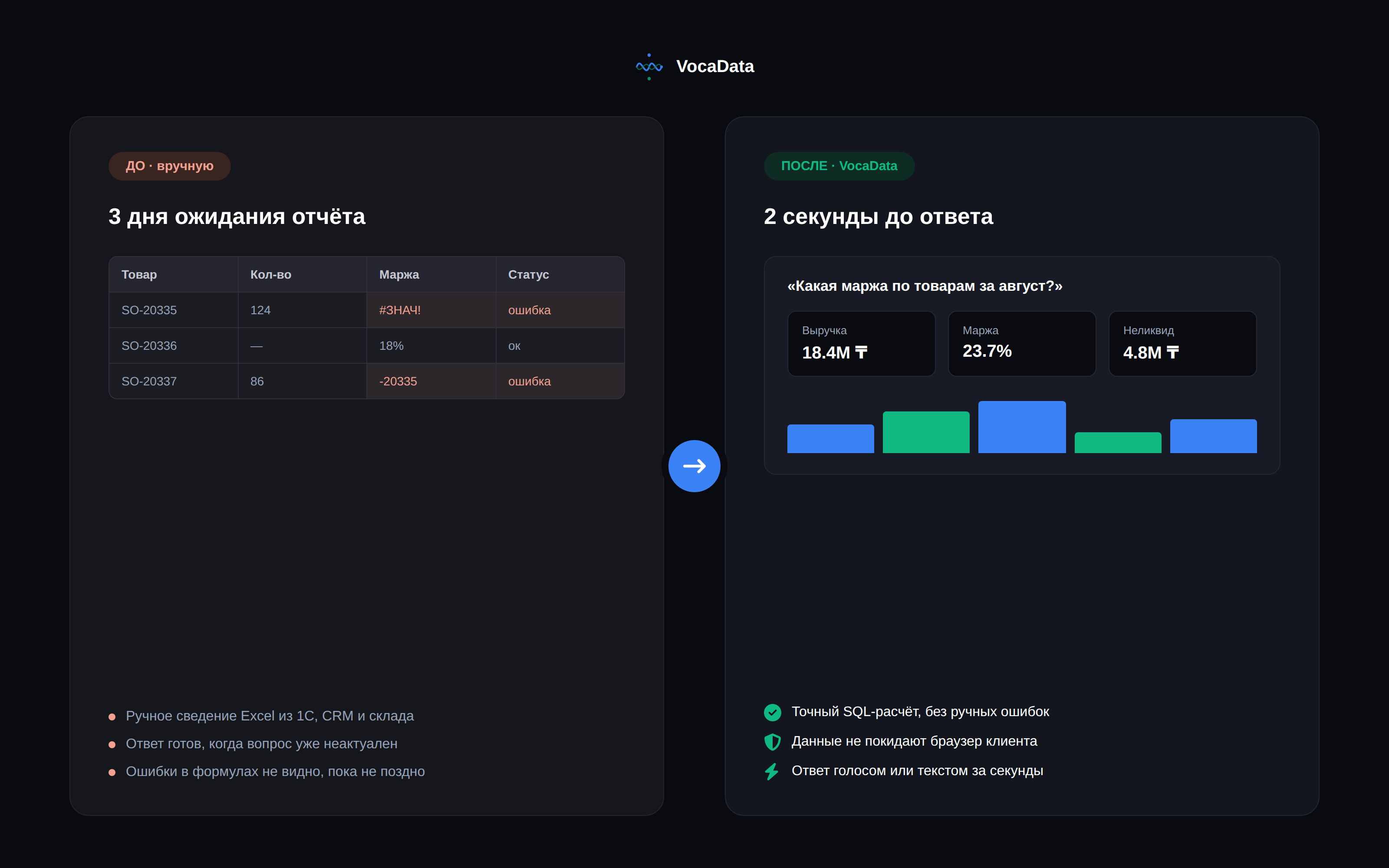
At the same time, I caught a quieter, but no less dangerous bug: articles like "SO-20335" turned into negative numbers during import — the regular program, which parsed the ID, confused the hyphen with the minus sign and ate the letters. For an analytical platform, this is exactly the case when the system is silently lying in numbers, and no one notices until it's too late. I fixed it in the source, at the import stage, and not with a patch on top.
In parallel, I am already working with two large companies
While fixing bugs, I conducted a series of interviews with businesses in wholesale and distribution. I wasn't pitching, I was just asking how their analytics work now.
It turned out that almost everyone has the same template: someone in the company manually sums up the numbers in Excel once a week or once a month, the manager receives a report with a delay of days, not hours, and no one really sees exactly where the margin is "leaking" - it just feels like it's leaking somewhere.. Some of the employees have management abroad, and due to the time difference at the time of requesting the necessary data, analysts may already be outside of working hours.
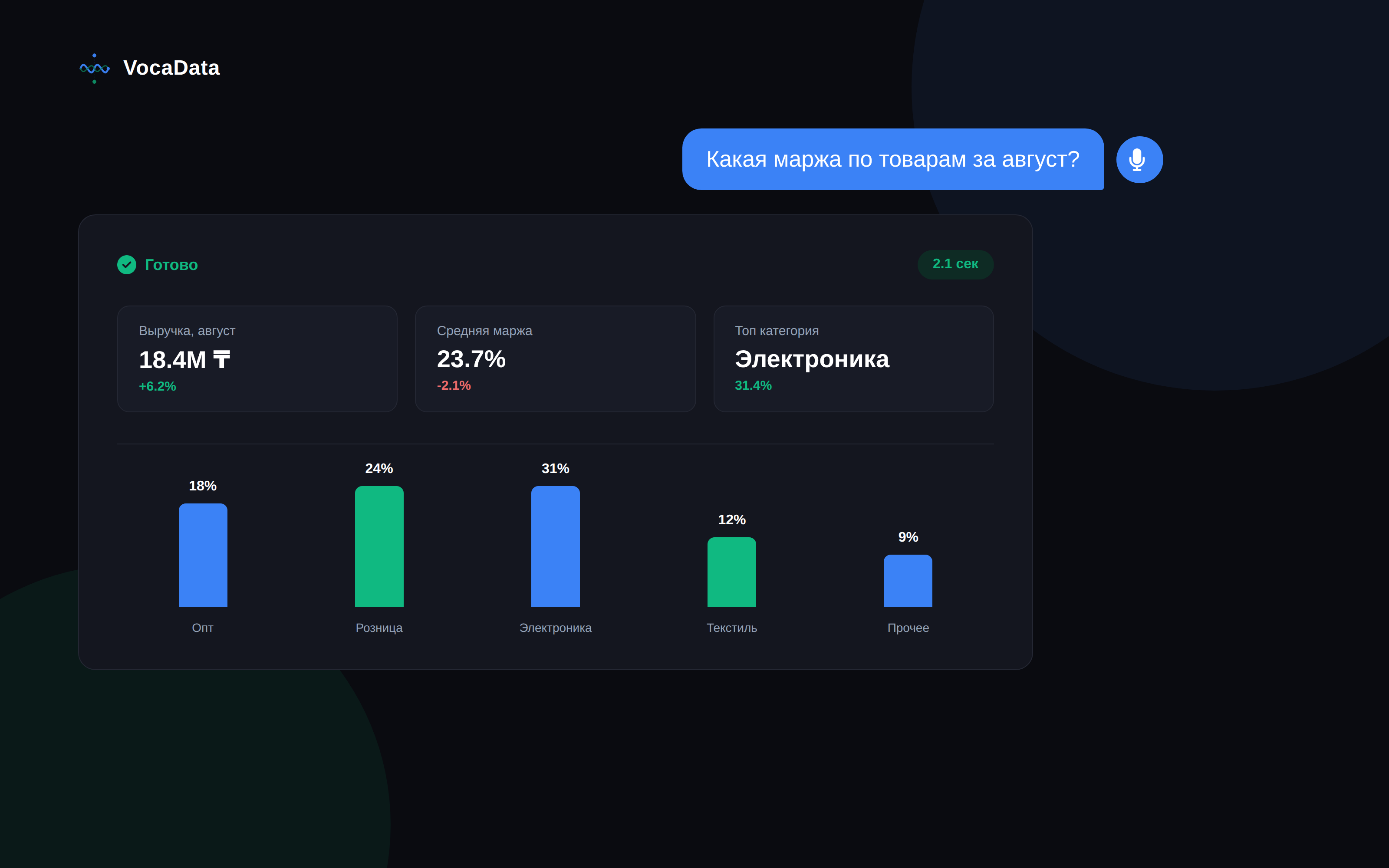
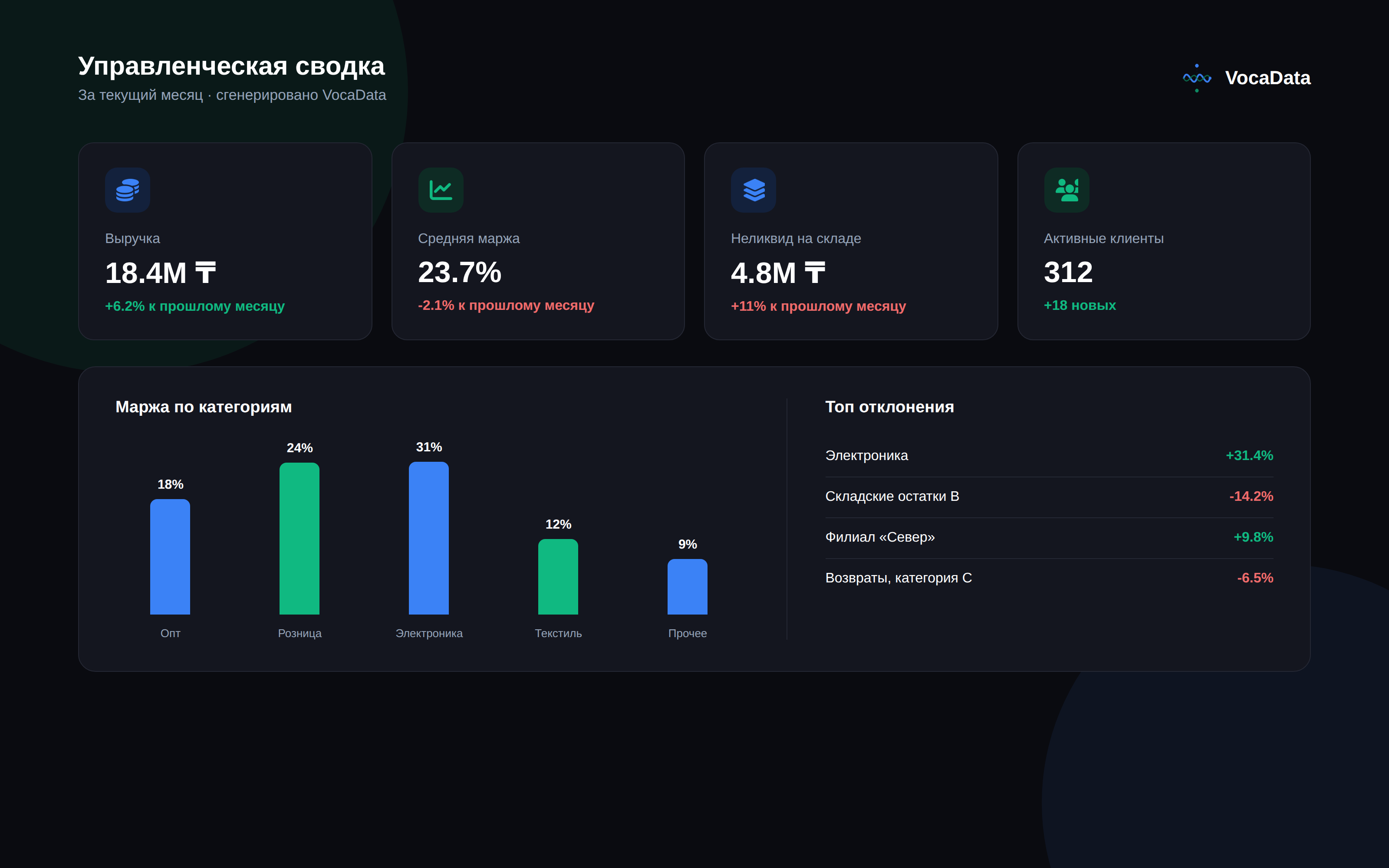
As a result of these conversations, two pilots with large companies are currently underway — we are analyzing real offloads, real questions about margins and balances, and not hypothetical scenarios from the presentation. This is no longer "let me show you how it could be," but "this is what's happening to your numbers right now."
What have I learned from this month
The main lesson is not technical. The point is that declaring privacy and accuracy in a presentation is one thing, but confirming them in practice is quite another. As long as it remained a promise on the slide, I didn't know for sure if the product would stand up to real testing. As soon as I started breaking it myself, finding holes and fixing them before someone else did, the promise turned into something that could be shown, not just spoken.
In this sense, the accelerator does not provide ready—made answers - it just constantly returns to one question: did you check it yourself, or are you just guessing? It turned out that the difference between these two states is the work of the founder at this stage.
Месяц назад я писал, как прошёл отбор в Startup Garage 1.6. Тогда это была заявка и идея на слайдах. Сегодня — два пилота с крупными компаниями, продукт, который я лично пытался сломать, и несколько уроков, которые презентация никогда бы не показала.
Я специально нагружал свой же продукт
Финансовые данные — не та зона, где работает "доверьтесь мне". Поэтому я поднял уровень защиты на ступень выше и проверил его сам, а не только на словах.
Провёл серию стресс-тестов на реальной базе данных — специально пытался спровоцировать продукт на действия, которые не должны быть возможны в принципе. Защита на уровне транзакции сработала так, как задумано: даже если бы AI ошибся в интерпретации запроса, система физически не позволила бы выполнить ничего разрушительного.
В процессе нашёл и закрыл две проблемы с изоляцией данных между клиентами — до исправления теоретически существовал риск, что один клиент при определённых условиях мог получить доступ к части данных другого. Обе проблемы устранил в тот же день, как только обнаружил.
Расскажу честно: находки такого рода — не самый приятный момент для фаундера. Но лучше найти их самому, чем чтобы их нашёл кто-то другой на живых данных клиента.
Заодно поймал баг тише, но не менее опасный: артикулы вроде "SO-20335" при импорте превращались в отрицательные числа — регулярка, парсившая ID, путала дефис со знаком минуса и съедала буквы. Для аналитической платформы это ровно тот случай, когда система молча врёт в цифрах, и никто не замечает, пока не станет поздно. Починил в источнике, на этапе импорта, а не патчем поверх.
Параллельно — уже работаю с двумя крупными компаниями
Пока чинил баги, провёл серию интервью с бизнесом в опте и дистрибуции. Не питчил — просто спрашивал, как у них устроена аналитика сейчас.
Оказалось, шаблон почти у всех один: кто-то в компании раз в неделю или раз в месяц вручную сводит цифры в Excel, руководитель получает отчёт с задержкой в дни, а не в часы, и никто толком не видит, где именно "утекает" маржа — просто чувствует, что где-то утекает. У части сотрудников руководство находится за рубежом, и из-за разницы во времени на момент запроса необходимых данных аналитики могут уже находиться вне рабочего времени.
По итогам этих разговоров сейчас идут два пилота с крупными компаниями — разбираем реальные выгрузки, реальные вопросы про маржу и остатки, а не гипотетические сценарии из презентации. Это уже не "давайте я вам покажу, как могло бы быть" — а "вот что происходит с вашими цифрами прямо сейчас".
Что я вынес из этого месяца
Главный урок — не технический. Он в том, что заявить о приватности и точности в презентации — это одно, а подтвердить их на практике — совсем другое. Пока это оставалось обещанием на слайде, я сам не знал наверняка, выдержит ли продукт реальную проверку. Как только начал ломать его сам, находить дыры и чинить их до того, как это сделает кто-то другой — обещание превратилось в то, что можно показать, а не просто произнести.
Акселератор в этом смысле не даёт готовых ответов — он просто постоянно возвращает к одному вопросу: а ты сам проверил, или только предполагаешь? Оказалось, разница между этими двумя состояниями — и есть работа фаундера на этом этапе.
 Share





