
The post has been translated automatically. Original language: Russian




NET PROFIT AS THE MAIN LONG-TERM INDICATOR - WHAT'S WRONG WITH IT?
One of the common mistakes of an investor or supervisory board when designing remuneration systems for top management, especially for CEO, CCO, and CBDO roles, is a firm emphasis on net profit without any balancing mechanism.
By setting Net Profit for C-level executives as the main KPI, shareholders often risk reducing the interest of their key figures in strategic business development, investments in growth and market expansion, and coming to a model in which the main motive of the first person in business will be only P&L, cost reduction, and the pursuit of short-term benefits.
This in itself is not bad at the late stages of development - if the business is at a stage of slowing growth, at a certain "plateau" of the product lifecycle.
A harvesting strategy is good if further investments in the product are impractical, when investments of such a scale are needed to grow and increase market share that the potential profit from the increase in turnover will not be noticeable.
WHEN NET PROFIT SHOULD NOT BE THE ONLY PRIORITY
For startups, for companies that enter the market, capture market share, enter new territories or enter a new industry, such a strategy can lead to premature business decline, without allowing it to achieve sustainable growth and the scale that was potentially available.
Top management's interest in strategic development and long-term business success may be limited here by the direct dependence of the annual bonus on profit, and the manager will be inclined to reject any "extra" costs, especially if there is no separation between operating costs and development investments in the accounting system.
WHEN THE NET PROFIT INDICATOR BECOMES A DEMOTIVATOR
Sometimes companies invite strong executives at a stage when significant capital has already been invested in a business, and these investments have been directed at it for more than one year. In this case, it becomes impossible to achieve a net profit based on the results of the period, taking into account the accumulated losses of previous periods, and even pushes back several years into the uncertain future.
This can lead to the fact that a CEO or CCO who knows his own worth and is well aware of his opportunities in the market will inevitably compare his income, which he can receive in a business where he may not expect an annual bonus in the next couple of years, and in other structures where the remuneration system is better thought out. And draw conclusions in favor of alternative possibilities of self-realization.
A HEALTHY BALANCE FOR GROWING COMPANIES
To avoid such undesirable effects, you can use the following techniques:
1. To eliminate the temptation of turning a business into a "cash cow" before the company reaches its peak potential (in terms of share, scale and profitability), you can:
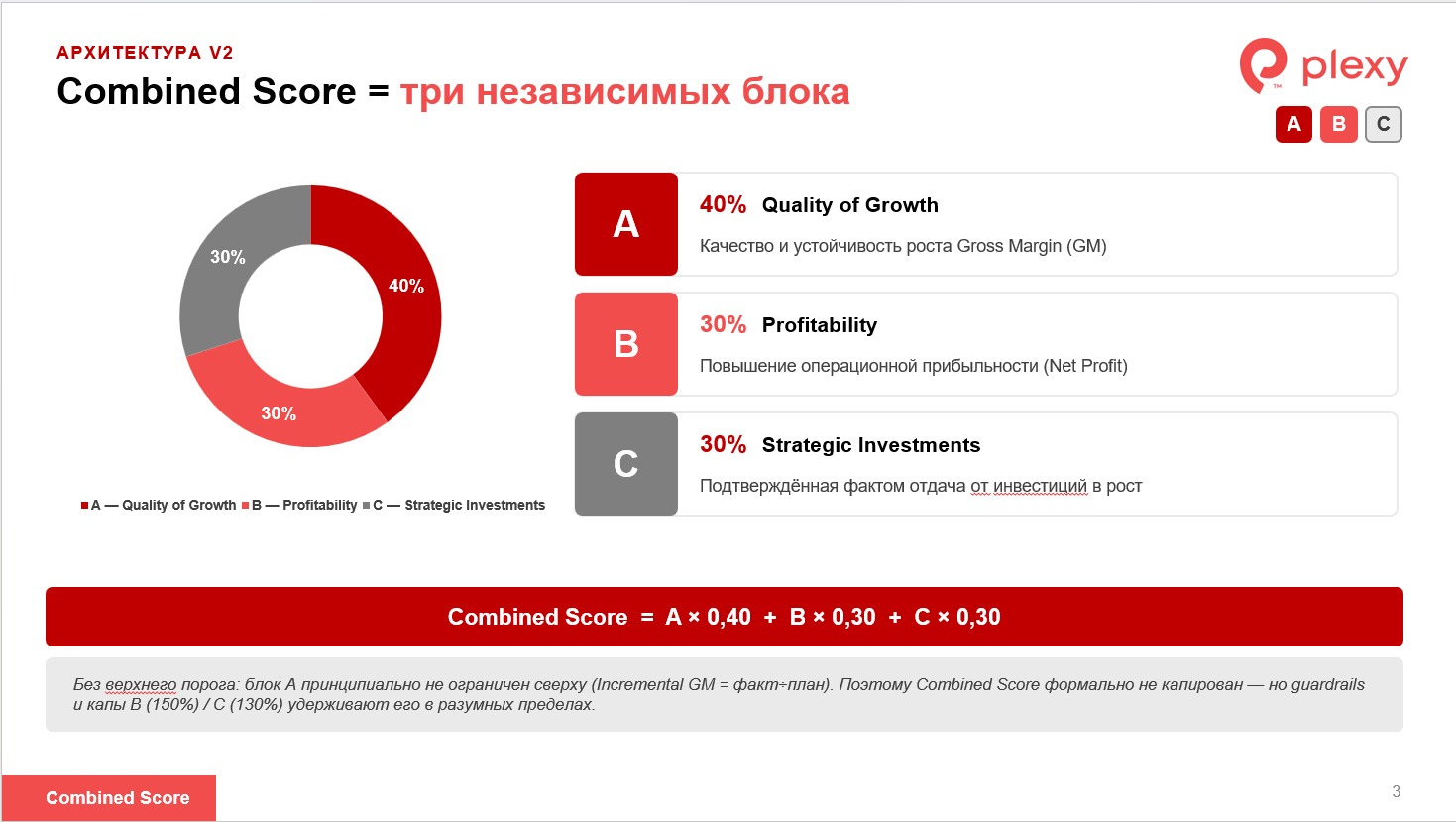
"Balance" Net Profit with indicators of "Quality of growth" (Quality of Growth - the quality and sustainability of growth of the Gross Margin) and "Strategic Investments" (Strategic Investments - ROI from investments in approved strategic initiatives);
- Apply - partially deferred bonus payment by
Net Profit, similar to the schemes used in accordance with the requirements of the regulator for the top management of financial institutions (for example, the payment of bonuses for the previous period according to the scheme: 30% in the current period, 35% in the next and 35% after the period). This tool is similar in meaning to a clawback, a mechanism or condition that obliges you to return previously paid money, bonuses, or assets upon the occurrence of certain circumstances (for example, if there is a sharp reduction in the value or profitability of an asset in subsequent periods after the reporting period). Important: this mechanism is applicable only to businesses with a functioning operating model and stable profitability. This format will focus the manager on solutions that ensure the long-term stability and reliability of the asset.
2. In order not to reduce the motivational effect of waiting for a bonus linked to Net Profit, you can:
- advance Net Profit for the period (to set one of the indicators of operating profit for the period when this particular manager assumed authority and influenced the business - this will eliminate the problem of a kind of "penalty for other people's past mistakes";
- add an early annual cash bonus from Gross Margin.
Anyway, designing a remuneration system requires attention to the business strategy and goals of the management team, the stage of organizational development, the stage of the business lifecycle and the circumstances in which the head assumes authority.
NET PROFIT КАК ОСНОВНОЙ ДОЛГОСРОЧНЫЙ ПОКАЗАТЕЛЬ - ЧТО С ЭТИМ НЕ ТАК?
Одной и частых ошибок инвестора или наблюдательного совета при проектировании систем вознаграждения для топ-менеджмента, особенно для ролей CEO, CCO, CBDO, является твёрдый акцент на показателе чистой прибыли без какого-либо балансирующего механизма.
Выставляя Net Profit для руководителей C-level, как основной KPI, акционеры часто рискуют снизить интерес своих ключевых фигур к стратегическому развитию бизнеса, инвестициям в рост и рыночную экспансию, и прийти к модели, в которой главным мотивом первого лица в бизнесе будет только P&L, сокращение издержек, погоня за краткосрочной выгодой.
Это, само по себе неплохо на поздних этапах развития - если бизнес находится на этапе замедления роста, на неком "плато" жизненного цикла продукта.
Стратегия сбора урожая хороша, если дальнейшие инвестиции в продукт нецелесообразны, когда для роста и увеличения доли рынка оказываются нужны вложения такого масштаба, что потенциальная прибыль от прироста оборота не будет заметна.
КОГДА ЧИСТАЯ ПРИБЫЛЬ НЕ ДОЛЖНА БЫТЬ ЕДИНСТВЕННЫМ ПРИОРИТЕТОМ
Для стартапов, для компаний, которые выходят на рынок, захватывают долю, проникают на новые территории или входят в новую индустрию, такая стратегия может привести к преждевременному увяданию бизнеса, так и не позволив ему достичь устойчивого роста и того масштаба, который был доступен потенциально.
Интерес топ-менеджмента к стратегическому развитию и долгосрочному успеху бизнеса может быть ограничен здесь прямой зависимостью годового бонуса от прибыли, и руководитель будет склонен отклонять любые "лишние" затраты, особенно если в системе учёта нет никакого разделения между операционными издержками и инвестициями в развитие.
КОГДА ПОКАЗАТЕЛЬ NET PROFIT СТАНОВИТСЯ ДЕМОТИВАТОРОМ
Иногда компании приглашают сильных руководителей на этапе, когда в бизнес уже проинвестирован значительный капитал, и эти инвестиции направлялись в него не один год. В этом случае выход в чистую прибыль по итогам периода, с учётом накопленного убытка прошлый периодов, становится невозможным, и даже отодвигается на несколько лет в неопределённое будущее.
Это может приводить к тому, что знающий себе цену CEO или CCO, прекрасно осведомлённый о своих возможностях на рынке, неизбежно будет сравнивать свой доход, который он может получить в бизнесе, где ему можно не рассчитывать в ближайшие пару лет на годовой бонус, и в других структурах, где система вознаграждения продумана лучше. И делать выводы в пользу альтернативных возможностей самореализации.
ЗДОРОВЫЙ БАЛАНС ДЛЯ РАСТУЩИХ КОМПАНИЙ
Чтобы избежать подобных нежелательных эффектов можно применить следующие приёмы:
1. Чтобы устранить соблазн превращения бизнеса в "дойную корову" раньше, чем компания выйдет на пик потенциала (до доле, масштабу и доходности), можно:
- Балансировать Net Profit показателями "Качество роста" (Quality of Growth - качество и устойчивость прироста Gross Margin ) и "Стратегические инвестиции" (Strategic Investments - ROI от инвестиций в утверждённые стратегические инициативы);
- Применять - частично отложенную выплату бонуса по
Net Profit, аналогично схемам, применяемым в соответствии с требованиями регулятора для высшего руководства финансовых организаций (например, выплата бонуса за предыдущий период по схеме: 30% в текущем периоде, 35% в следующем и 35% через период). Этот инструмент аналогичен по смыслу клавбэку (clawback) - механизму или условию, обязывающему вернуть ранее выплаченные деньги, бонусы или активы при наступлении определенных обстоятельств (например, при резком сокращении стоимости или снижению рентабельности актива в последующие периоды после отчётного). Важно: данный механизм применим только к бизнесам с работающей операционной моделью и со стабильной доходностью. Такой формат будет фокусировать руководителя на решениях, обеспечивающих долгосрочную стабильность и надёжность актива.
2. Чтобы не снижать мотивационный эффект от ожидания бонуса, привязанного к Net Profit, можно:
- авансировать Net Profit за период (выставить одним из показателей операционную прибыль за период, когда данный конкретный руководитель принял полномочия и влиял на бизнес - это устранит проблему своего рода "штрафа за чужие прошлые ошибки";
- ввести дополнительно ранний годовой кэш-бонус от Gross Margin.
Так или иначе, проектирование системы вознаграждения требует внимания к стратегии бизнеса и целям управленческой команды, этапу организационного развития, стадии жизненного цикла бизнеса и обстоятельствам, в которых руководитель принимает полномочия.

 Share