



The post has been translated automatically. Original language: Russian





Here we discuss the choice between two completely different approaches to web development: flexible and intuitive client framework (Vue.js) versus a powerful solution that takes on the entire role of a full-stack tool (Next.js ). They solve different tasks, and the success of an IT project directly depends on how well you choose the right tool for your goals.
Vue.js is flexible and friendly
Vue.js is a progressive frontend framework focused on creating user interfaces. His key philosophy is flexibility. It does not impose an architecture, allowing you to integrate it at any level: from improving a single component on an existing page to building a full-fledged single-page application (SPA).
- Key Features: Simplicity and low entry threshold. The syntax using Single-File Components (.vue files) is intuitive for developers with HTML and CSS experience.
- Ecosystem: It is under active development and is supported by a close-knit community. Used by companies such as GitLab, Adobe and BMW
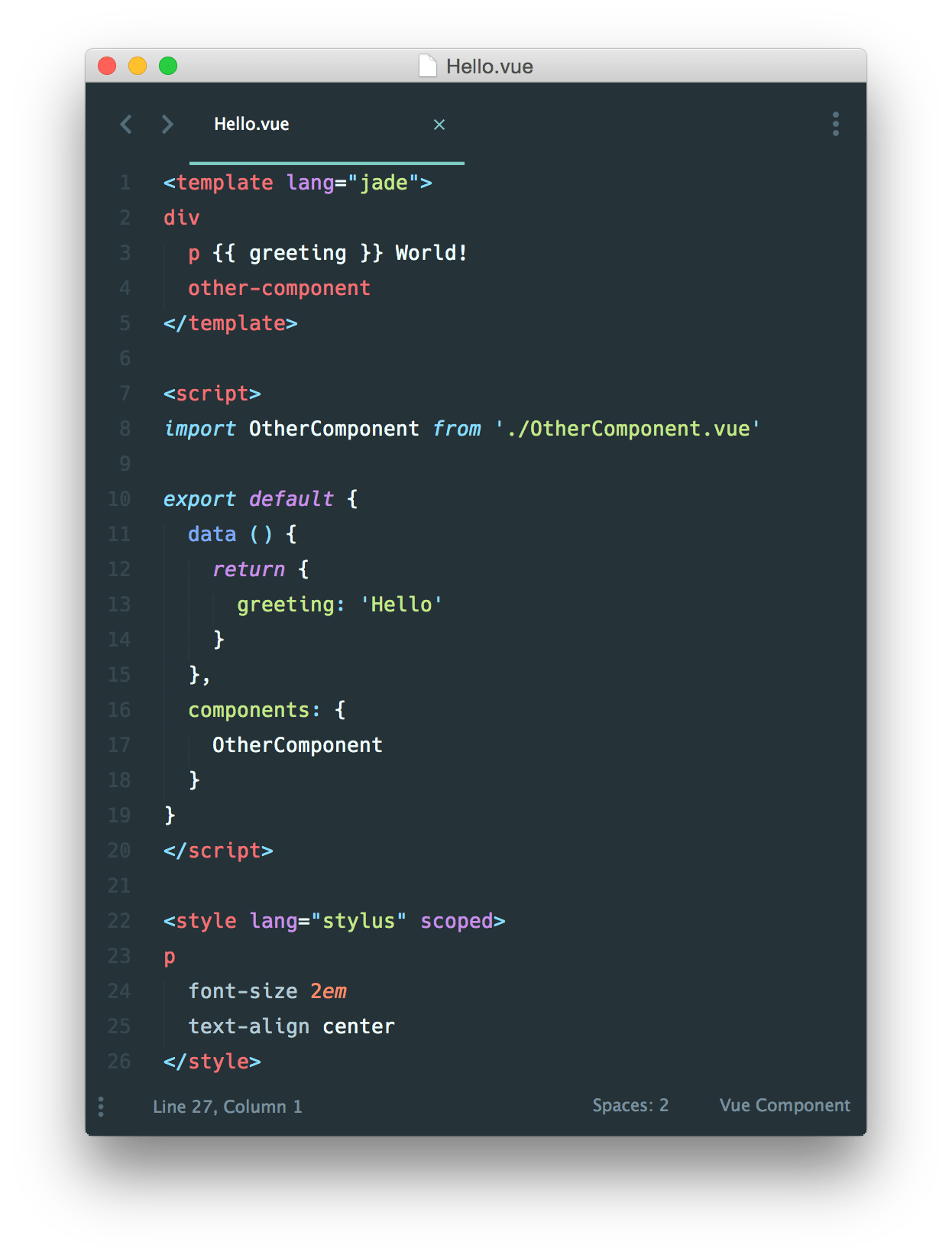
An example of a framework-style source code Vue.js
Next.js — production framework "with batteries"
Next.js is a full—stack React framework (or "meta framework") designed to solve problems that React cannot handle out of the box. It provides a ready-made structure for production applications: routing, server rendering, static generation, and API routes.
- Key Features: Next.js makes architectural decisions for you, which speeds up development, but reduces flexibility.
- Ecosystem: It is developed and maintained by Vercel, has a huge community and is actively used in the enterprise sector (TikTok, Hulu, Twitch)
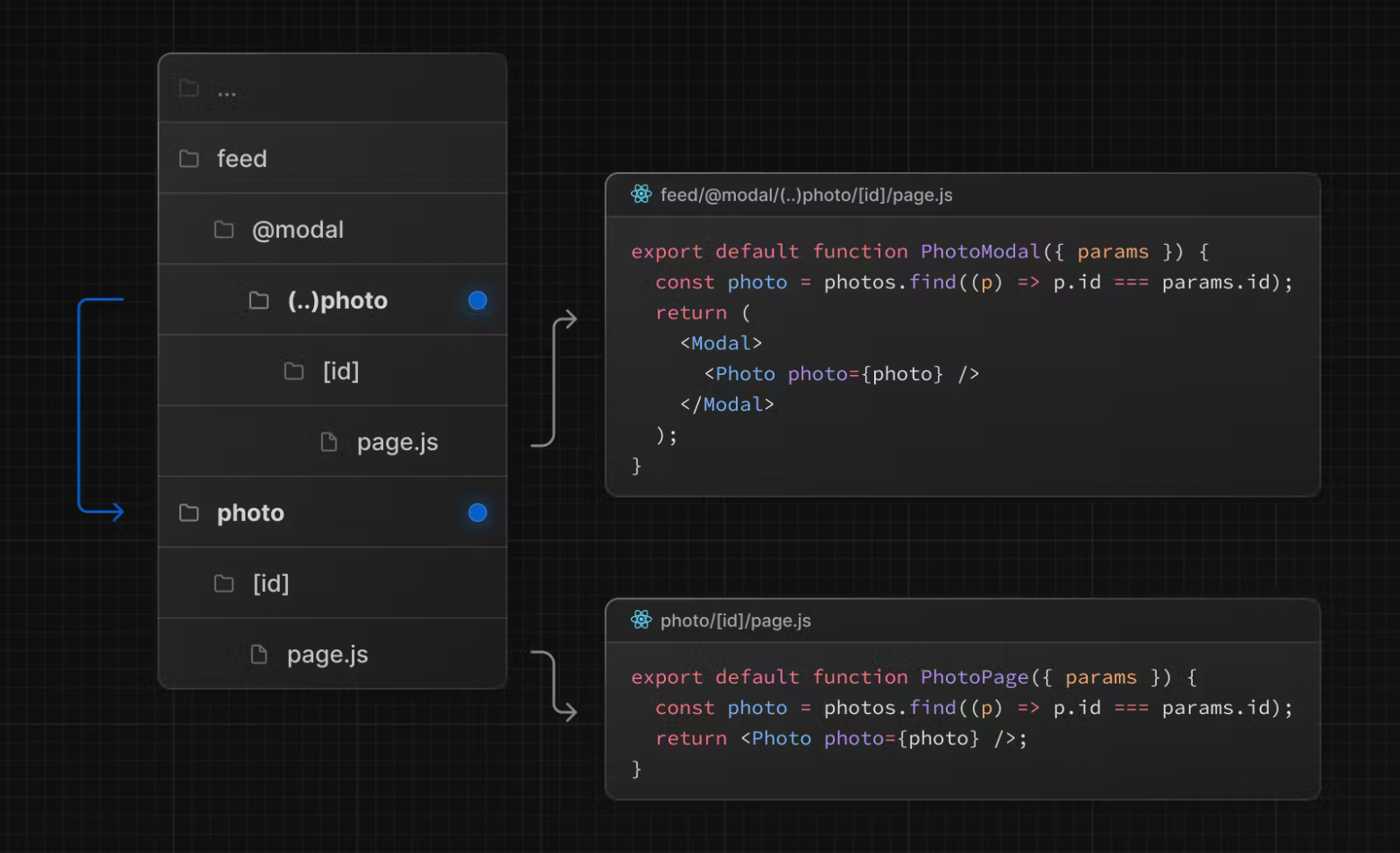
An illustration of the source code executed in the Next style.js and routing implementation is especially important directly in the file structure of the project and through components
Key differences: architecture and capabilities
The easiest way to understand the difference is to look at their architectural essence.
The vs framework. The meta framework
This is a fundamental difference. Vue.js is a client—side UI framework. Next.js is a full —century framework.
| Aspect | Vue.js | Next.js |
| Category | Frontend framework | A full-century meta-framework |
| The level of identification | Low | Tall |
| Routing | Optional (Vue Router) | Embedded based on files |
| Backend functions | Missing | Built-in API Routes and Server Actions |
Rendering: SPA vs Server-First
This is the key difference that SEO and performance depend on.
- Vue.js by default, it generates everything on the client side (Client-Side Rendering, CSR). This is good for SPA, but bad for SEO and first downloads.
- Next.js supports Server-Side Rendering (SSR), Static Site Generation (SSG), Incremental Static Regeneration (ISR) and React Server Components — out of the box
Routing: Explicit vs. Based on files
- Vue.js uses Vue Router, where you explicitly describe all routes in the code. This gives you full control, ideal for complex applications with access rights.
- Next.js uses a file system: each page is a separate file in the pages or app folder. This speeds up development, but can become difficult in large projects.
Syntax of components: .vue vs JSX
- Vue uses Single-File Components (.vue). The template, logic and styles are combined in one file, which is perceived very organically by developers who came from HTML/CSS.
- Next.js uses JSX or TSX, where JavaScript and markup are closely intertwined. This gives JavaScript full expressiveness, but it takes getting used to.
Vue.js is often recognized as the easiest to log in. Its syntax with single-file components (.vue) is intuitive for developers familiar with HTML and CSS, which reduces cognitive load. It does not impose an architecture, giving teams the freedom to choose tools and structure. This approach is ideal for projects where flexibility is critical, and for teams wishing to avoid the complexities of the React ecosystem.
Next.js, being a full-stack framework, brings "batteries" with it. It offers ready-made solutions for routing, rendering, and API, speeding up the start, but imposing clear design patterns. The developer needs to master the concepts of React Server Components, Server Actions, and various rendering strategies, which makes the learning curve steeper. This approach is in demand in an Enterprise environment where predictability and standardization are valued above flexibility.
Testing: Flexibility versus Ecosystem
The comparison of testing tools directly depends on the ecosystem of each framework.
Vue.js offers excellent testing support through official utilities. Due to the smaller runtime size, Vue applications usually have a smaller JavaScript base size (~25 KB versus ~40 KB for React), which can speed up test execution. Teams can choose the tools that best suit their project while maintaining control over the process.
Next.js inherits the huge React ecosystem, including mature testing tools such as Jest and the React Testing Library. This gives you access to extensive documentation and ready-made solutions. The difficulty arises with testing server components and Server Actions, as they require understanding the new rendering and may require additional settings.
class="heading-3"> Deployment: Simplicity vs. Flexibility
Deployment is another area where approaches vary dramatically.
Vue.js projects are built as static spas by default. Files from the dist folder can be simply copied to any web server (for example, Nginx), which makes deployment incredibly simple and cheap. If SSR is required, the ecosystem offers Nuxt, which, thanks to its Nitro engine, provides exceptional flexibility in hosting choices. The same code can be deployed on a Node.js, Cloudflare Workers, or AWS Lambda are unchanged, changing only the target platform in the configuration.
Next.js deployment requires Node.js server for SSR. The process is more complicated: you need to download the .next folder, install the dependencies, and run npm start, often using Process Manager (PM2). The closest integration is achieved with Vercel, where deployment is as automated as possible, but this creates a vendor lock. Deploying on other platforms requires additional efforts, although Docker images solve this problem.
The choice of a framework directly affects Core Web Vitals
Next.js provides outstanding SEO and download speeds (LCP < 2.5s, Lighthouse > 90) thanks to server rendering (SSR, SSG, ISR). This is a key advantage for public websites. However, this requires large server resources. Tests show that Next.js under high loads may experience increased delays (P99 latency 250-450ms), inferior to Nuxt (300-500ms), but this is offset by the ability to use ISR to update statics.
Vue.js has a lighter runtime (~25KB versus ~40KB for React), which gives an advantage in client performance. It requires additional configuration for SEO and productivity. Using Nuxt with its caching mechanisms (useFetch) makes it comparable to Next.js
Final comparison table
| Aspect | Vue.js (with Nuxt.js ) | Next.js |
| Programming | Low entry threshold, flexible architecture, freedom of choice. | Steep learning curve, competence, and a quick start for React teams. |
| Testing | Excellent official tools, the smaller bundle size speeds up the tests. | A huge ecosystem, difficulties with testing server components. |
| Deployment | Static is simple (SPA). Nuxt with Nitro gives you the flexibility to choose a platform without a vendor lock. | Requires a Node.the js server. Better integration with Vercel, but there is a risk of vendor lock. |
| Metrics | Lightweight frontend. Nuxt gives SSR/SSG. | Ideal Core Web Vitals and SEO (SSR/SSG/ISR). The server load is higher. |
| Ecosystem | An active, dedicated community. Fewer, but more integrated modules. | The huge React ecosystem. More libraries, tutorials, and ready-made solutions. |
| The labor market | It is widespread, especially in Europe and Asia. | Dominant, especially in Enterprise and startups. More vacancies |
The final conclusion depends on the team and the goals of the project.
Choose Vue.js, if:
- Your team appreciates the simple entry threshold and intuitive syntax.
- The project does not require complex SEO or benefits from client rendering (admin panels, dashboards).
- We need maximum flexibility in the choice of hosting and minimizing vendor lock.
Choose Next.js, if:
- Your team already knows React and wants to use its full-stack capabilities.
- SEO and productivity are paramount (marketing websites, online stores).
- We need a ready-made structure and a large selection of ready-made solutions and specialists on the market.
Both tools are mature solutions that can handle any task. Choosing between them is primarily a matter of matching the philosophy of the framework and the culture of your team.
Здесь обсуждается выбор между двумя совершенно разными подходами к веб-разработке: гибким и интуитивным клиентским фреймворком (Vue.js) против мощного решения, берущего на себя целиком роль full-stack инструмента (Next.js). Они решают разные задачи, и успех IT-проекта напрямую зависит от того, насколько правильно вы выберете инструмент под свои цели.
Vue.js — гибкий и дружелюбный
Vue.js — это прогрессивный фронтенд-фреймворк, сфокусированный на создании пользовательских интерфейсов . Его ключевая философия — гибкость. Он не навязывает архитектуру, позволяя вам интегрировать его на любом уровне: от улучшения одного компонента на существующей странице до построения полноценного одностраничного приложения (SPA) .
- Ключевая особенность: Простота и низкий порог входа. Синтаксис, использующий Single-File Components (.vue файлы), интуитивно понятен для разработчиков с опытом HTML и CSS .
- Экосистема: Находится в активной разработке и поддерживается сплоченным сообществом. Используется такими компаниями, как GitLab, Adobe и BMW
Пример исходного кода в стиле фреймворка Vue.js
Next.js — production-фреймворк "с батарейками"
Next.js — это React-фреймворк с полным стеком (или "мета-фреймворк"), созданный для решения проблем, с которыми React не справляется "из коробки". Он предоставляет готовую структуру для production-приложений: маршрутизацию, рендеринг на сервере, генерацию статики и API-роуты .
- Ключевая особенность: Next.js принимает за вас архитектурные решения, что ускоряет разработку, но снижает гибкость .
- Экосистема: Разрабатывается и поддерживается компанией Vercel, имеет огромное сообщество и активно используется в enterprise-секторе (TikTok, Hulu, Twitch)
Иллюстрация исходного кода, исполненного в стиле Next.js и особенна имплементация маршрутизации прямо в файловой структуре проекта и через компоненты
Ключевые различия: архитектура и возможности
Самый простой способ понять разницу — взглянуть на их архитектурную суть.
Фреймворк vs. Мета-фреймворк
Это фундаментальное различие. Vue.js — это клиентский UI-фреймворк. Next.js — это полностековый фреймворк .
| Аспект | Vue.js | Next.js |
| Категория | Фронтенд-фреймворк | Полностековый мета-фреймворк |
| Уровень опинионированности | Низкий | Высокий |
| Роутинг | Опциональный (Vue Router) | Встроенный на основе файлов |
| Бэкенд-функции | Отсутствуют | Встроенные API-роуты и Server Actions |
Рендеринг: SPA против Server-First
Это ключевое различие, от которого зависят SEO и производительность .
- Vue.js по умолчанию генерирует все на стороне клиента (Client-Side Rendering, CSR). Это хорошо для SPA, но плохо для SEO и первых загрузок.
- Next.js поддерживает Server-Side Rendering (SSR), Static Site Generation (SSG), Incremental Static Regeneration (ISR) и React Server Components — "из коробки"
Маршрутизация: Явная vs. На основе файлов
- Vue.js использует Vue Router, где вы явно описываете все маршруты в коде . Это дает полный контроль, идеально подходит для сложных приложений с правами доступа .
- Next.js использует файловую систему: каждая страница — отдельный файл в папке pages или app. Это ускоряет разработку, но может стать сложным в больших проектах .
Синтаксис компонентов: .vue vs JSX
- Vue использует Single-File Components (.vue). В одном файле объединены шаблон, логика и стили, что воспринимается очень органично разработчиками, пришедшими из HTML/CSS .
- Next.js использует JSX или TSX, где JavaScript и разметка тесно переплетены. Это дает полную выразительность JavaScript, но требует привыкания
Vue.js часто признают самым простым для входа. Его синтаксис с однофайловыми компонентами (.vue) интуитивно понятен разработчикам, знакомым с HTML и CSS, что снижает когнитивную нагрузку. Он не навязывает архитектуру, предоставляя командам свободу выбора инструментов и структуры. Такой подход идеален для проектов, где гибкость критична, и для команд, желающих избежать сложностей React-экосистемы.
Next.js, будучи full-stack фреймворком, приносит с собой "батарейки". Он предлагает готовые решения для маршрутизации, рендеринга и API, ускоряя старт, но навязывая чёткие паттерны проектирования. Разработчику нужно освоить концепции React Server Components, Server Actions и различные стратегии рендеринга, что делает кривую обучения более крутой. Такой подход востребован в Enterprise-среде, где предсказуемость и стандартизация ценятся выше гибкости
Тестирование: Гибкость против Экосистемы
Сравнение инструментов тестирования напрямую зависит от экосистемы каждого фреймворка.
Vue.js предлагает отличную поддержку тестирования через официальные утилиты. Благодаря меньшему размеру рантайма, Vue-приложения обычно имеют меньший базовый размер JavaScript (~25 КБ против ~40 КБ у React), что может ускорять выполнение тестов. Команды могут выбирать инструменты, которые лучше всего подходят их проекту, сохраняя контроль над процессом.
Next.js наследует огромную экосистему React, включая зрелые инструменты для тестирования, такие как Jest и React Testing Library. Это даёт доступ к обширной документации и готовым решениям. Сложность возникает с тестированием серверных компонентов и Server Actions, так как они требуют понимания нового рендеринга и могут потребовать дополнительных настроек.
Развертывание: Простота против Гибкости
Развертывание — еще одна область, где подходы кардинально различаются.
Vue.js проекты по умолчанию строятся как статические SPA. Файлы из папки dist можно просто скопировать на любой веб-сервер (например, Nginx), что делает развертывание невероятно простым и дешёвым. Если требуется SSR, экосистема предлагает Nuxt, который благодаря своему движку Nitro обеспечивает исключительную гибкость в выборе хостинга. Один и тот же код можно развернуть на Node.js, Cloudflare Workers или AWS Lambda без изменений, меняя лишь целевую платформу в конфигурации.
Next.js развертывание требует Node.js сервера для SSR. Процесс сложнее: нужно загрузить папку .next, установить зависимости и запустить npm start, часто с использованием Process Manager (PM2). Наиболее тесная интеграция достигается с Vercel, где деплой максимально автоматизирован, но это создаёт вендор-lock. Развертывание на других платформах требует дополнительных усилий, хотя Docker-образы решают эту проблему
Выбор фреймворка напрямую влияет на Core Web Vitals
Next.js обеспечивает выдающиеся показатели SEO и скорости загрузки (LCP < 2.5с, Lighthouse > 90) благодаря серверному рендерингу (SSR, SSG, ISR). Это ключевое преимущество для публичных сайтов. Однако, это требует больших серверных ресурсов. Тесты показывают, что Next.js при высоких нагрузках может испытывать рост задержек (P99 latency 250-450ms), уступая Nuxt (300-500ms), но это компенсируется возможностью использовать ISR для обновления статики.
Vue.js имеет более легкий рантайм (~25KB против ~40KB у React), что даёт преимущество в клиентской производительности. Для SEO и производительности требует дополнительной настройки. Использование Nuxt с его механизмами кэширования (useFetch) делает его сопоставимым с Next.js
Итоговая сравнительная таблица
| Аспект | Vue.js (с Nuxt.js) | Next.js |
| Программирование | Низкий порог входа, гибкая архитектура, свобода выбора. | Крутая кривая обучения, опинионированность, быстрый старт для React-команд. |
| Тестирование | Отличные официальные инструменты, меньший размер бандла ускоряет тесты. | Огромная экосистема, сложности с тестированием серверных компонентов. |
| Развертывание | Статика проста (SPA). Nuxt с Nitro дает гибкость выбора платформы без вендор-лока. | Требует Node.js сервера. Лучшая интеграция с Vercel, но есть риск вендор-лока. |
| Метрики | Легкий фронтенд. Nuxt дает SSR/SSG. | Идеальные Core Web Vitals и SEO (SSR/SSG/ISR). Серверная нагрузка выше. |
| Экосистема | Активное, преданное сообщество. Меньше, но более интегрированных модулей. | Огромная экосистема React. Больше библиотек, туториалов и готовых решений. |
| Рынок труда | Широкий, особенно в Европе и Азии. | Доминирующий, особенно в Enterprise и стартапах. Больше вакансий |
Итоговое заключение зависит от команды и целей проекта.
Выбирайте Vue.js, если:
- Ваша команда ценит простой порог входа и интуитивный синтаксис.
- Проект не требует сложного SEO или выигрывает от клиентского рендеринга (админки, дашборды).
- Нужна максимальная гибкость в выборе хостинга и минимизация вендор-лока.
Выбирайте Next.js, если:
- Ваша команда уже знает React и хочет использовать его full-stack возможности.
- SEO и производительность первостепенны (маркетинговые сайты, интернет-магазины).
- Нужна готовая структура и большой выбор готовых решений и специалистов на рынке.
Оба инструмента — зрелые решения, способные справиться с любой задачей. Выбор между ними — это, в первую очередь, вопрос соответствия философии фреймворка и культуры вашей команды.

 Share





