
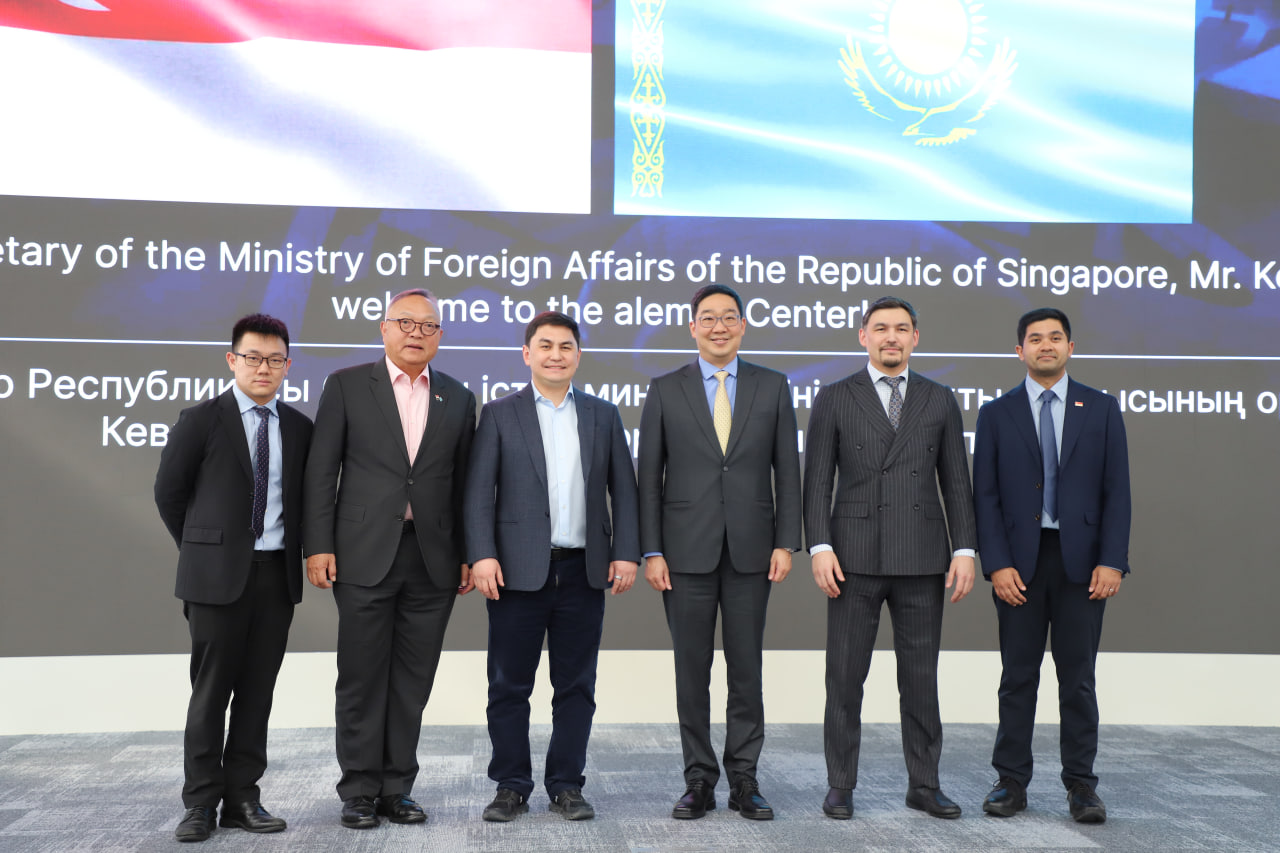





The introduction to the center began with a demonstration of the Museum, where the guests were introduced to the main stages of the development of artificial intelligence technologies and their application in various industries. Next, the delegation visited an AI cinema, where immersive solutions and visual scenarios created using advanced AI technologies were demonstrated.

During the visit, the delegation presented the key areas of activity of the Astana Hub international innovation cluster. Magzhan Madiyev, CEO of Astana Hub, spoke about the formation of an ecosystem to support technology entrepreneurs and create conditions for startups to grow and enter global markets. He also noted the important role of the center. alem.ai in the development of artificial intelligence in Kazakhstan, emphasizing its contribution to the training of specialists and the creation of innovative solutions in the field of AI.
A separate block was the demonstration of Kazakhstani IT companies and startups. In particular, the following were presented:
- binY.co – a platform for digital logistics and cargo transportation, making the market transparent and automated.
- WeGlobal AI is a personalized platform and mobile application for career guidance and psychological support, developed using artificial intelligence.
- Mirai Tech is a deeptech startup that has developed a portable AI biomechanics laboratory.
- Cerebra is a software for diagnosing brain stroke.

Additionally, representatives of Singapore visited the TUMO Astana Educational Center, a space where a free program for teenagers aged 12-18 is implemented without entrance requirements, based on an international methodology and aimed at developing technical and creative skills. The guests also visited the Tomorrow School of artificial Intelligence. It should be recalled that this is the first peer-to-peer artificial intelligence school in Kazakhstan from Astana Hub, operating on the 01 Edu platform developed by French programmer and educator Nicolas Sadirac. Students of the school master more than 50 projects and learn over 20 programming languages, including Golang, Rust, JavaScript and Python.
The visit of the Singaporean delegation was an important step in strengthening the partnership between Kazakhstan and Singapore, and also confirmed the country's high potential as a regional center for the development of artificial intelligence and digital solutions.

The introduction to the center began with a demonstration of the Museum, where the guests were introduced to the main stages of the development of artificial intelligence technologies and their application in various industries. Next, the delegation visited an AI cinema, where immersive solutions and visual scenarios created using advanced AI technologies were demonstrated.
During the visit, the delegation presented the key areas of activity of the Astana Hub international innovation cluster. Magzhan Madiyev, CEO of Astana Hub, spoke about the formation of an ecosystem to support technology entrepreneurs and create conditions for startups to grow and enter global markets. He also noted the important role of the center. alem.ai in the development of artificial intelligence in Kazakhstan, emphasizing its contribution to the training of specialists and the creation of innovative solutions in the field of AI.
A separate block was the demonstration of Kazakhstani IT companies and startups. In particular, the following were presented:
- binY.co – a platform for digital logistics and cargo transportation, making the market transparent and automated.
- WeGlobal AI is a personalized platform and mobile application for career guidance and psychological support, developed using artificial intelligence.
- Mirai Tech is a deeptech startup that has developed a portable AI biomechanics laboratory.
- Cerebra is a software for diagnosing brain stroke.
Additionally, representatives of Singapore visited the TUMO Astana Educational Center, a space where a free program for teenagers aged 12-18 is implemented without entrance requirements, based on an international methodology and aimed at developing technical and creative skills. The guests also visited the Tomorrow School of artificial Intelligence. It should be recalled that this is the first peer-to-peer artificial intelligence school in Kazakhstan from Astana Hub, operating on the 01 Edu platform developed by French programmer and educator Nicolas Sadirac. Students of the school master more than 50 projects and learn over 20 programming languages, including Golang, Rust, JavaScript and Python.
The visit of the Singaporean delegation was an important step in strengthening the partnership between Kazakhstan and Singapore, and also confirmed the country's high potential as a regional center for the development of artificial intelligence and digital solutions.

 Share
Share