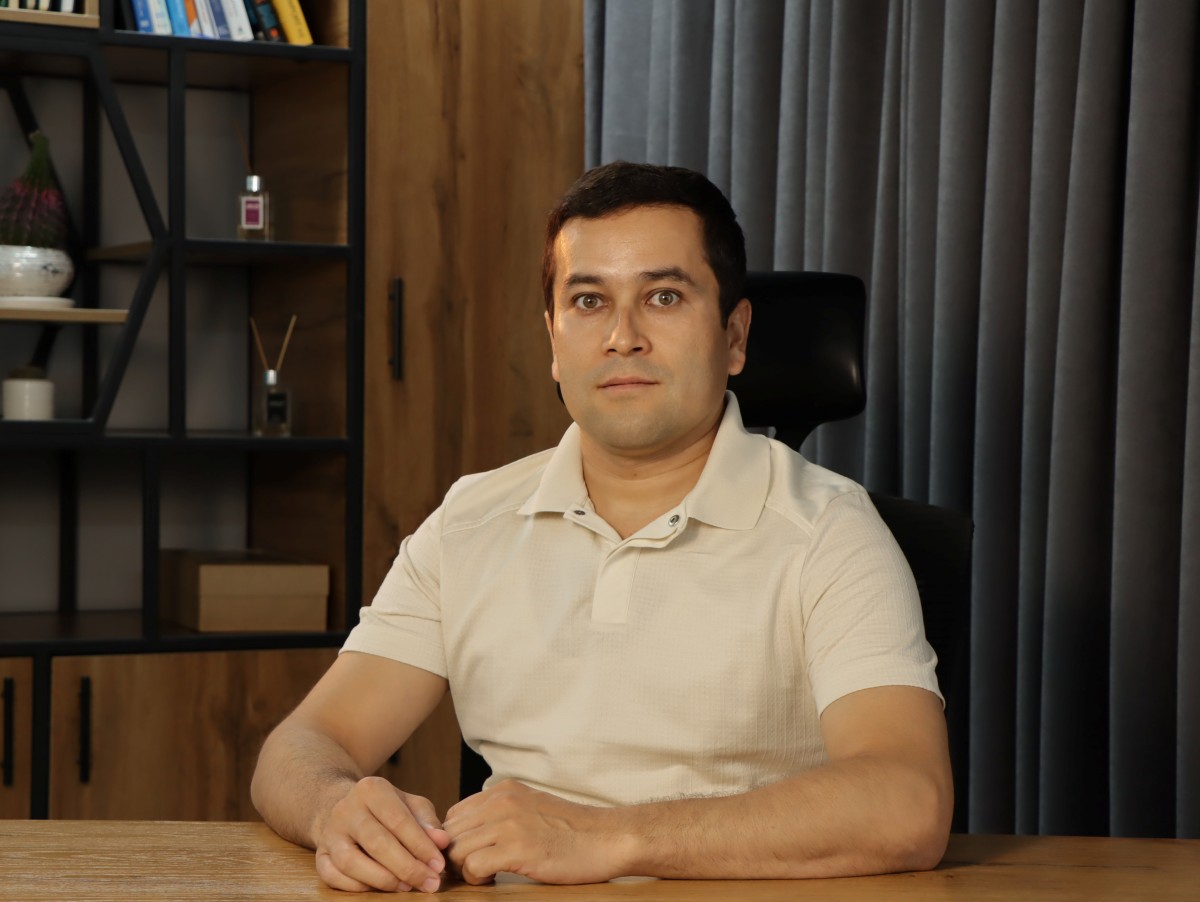





— Akmal, tell us when you became interested in the IT business.
— I got the entrepreneurial spark back in school: I earned my first money by tutoring younger students. Later, at the Tashkent University of Information Technologies named after Muhammad al-Khwarizmi, I wrote essays for students for pay. In 2011, I graduated and entered the workforce to gain experience. I worked at UzEraeAlternator (a manufacturer of generators for GM Uzbekistan) and at an investment company.
At the time, I lived in the small city of Navoi (population about 150,000), located 470 km from Tashkent. In 2014, a friend and I launched our first business: cleaning upholstery and carpets. We would personally drive to customers and provide the service. Despite our efforts, the business didn’t take off. After that came around 15 more attempts — from small startups to internet projects. All failed, but every time we learned from our mistakes.
By 2018, we had a small web studio. We rented a regular apartment where 3–4 people worked. I was everything at once: director, accountant, marketer, salesperson, even the cleaner. We built websites on outsourcing.
— How did you enter the PropTech space? What attracted you to this field?
— One day, a representative of a development company approached us to build a website. I visited his office and immediately noticed a long queue of people. I asked what they were waiting for. It turned out they were clients who came to pay off their apartment debts. I was surprised: “How come there’s a queue just to make a payment?”
Everything seemed inefficient because the company was using an inventory-management software originally designed for retail stores. And only one manager knew how to operate it. Clients would take documents from this employee, walk to the cashier to make the payment, then return with the receipt. The accountant, cashier, and director all prepared separate reports. The workflow was slow and cumbersome.
I proposed to the director the concept of a unified CRM system for managing sales and payments. He liked the idea, and at the next meeting we signed a contract. This became the beginning of the first version of UYSOT.
We developed the first version of the program in nine months, then spent three more months migrating the developer’s entire database into the system. After launch, customer debts were reduced by half, and the business became less dependent on individual managers. And the funniest part — during data import, we discovered that the developer actually had two unsold apartments left, even though he was sure everything had been sold out.
More details available on Digitalbusiness.kz.
— Akmal, tell us when you became interested in the IT business.
— I got the entrepreneurial spark back in school: I earned my first money by tutoring younger students. Later, at the Tashkent University of Information Technologies named after Muhammad al-Khwarizmi, I wrote essays for students for pay. In 2011, I graduated and entered the workforce to gain experience. I worked at UzEraeAlternator (a manufacturer of generators for GM Uzbekistan) and at an investment company.
At the time, I lived in the small city of Navoi (population about 150,000), located 470 km from Tashkent. In 2014, a friend and I launched our first business: cleaning upholstery and carpets. We would personally drive to customers and provide the service. Despite our efforts, the business didn’t take off. After that came around 15 more attempts — from small startups to internet projects. All failed, but every time we learned from our mistakes.
By 2018, we had a small web studio. We rented a regular apartment where 3–4 people worked. I was everything at once: director, accountant, marketer, salesperson, even the cleaner. We built websites on outsourcing.
— How did you enter the PropTech space? What attracted you to this field?
— One day, a representative of a development company approached us to build a website. I visited his office and immediately noticed a long queue of people. I asked what they were waiting for. It turned out they were clients who came to pay off their apartment debts. I was surprised: “How come there’s a queue just to make a payment?”
Everything seemed inefficient because the company was using an inventory-management software originally designed for retail stores. And only one manager knew how to operate it. Clients would take documents from this employee, walk to the cashier to make the payment, then return with the receipt. The accountant, cashier, and director all prepared separate reports. The workflow was slow and cumbersome.
I proposed to the director the concept of a unified CRM system for managing sales and payments. He liked the idea, and at the next meeting we signed a contract. This became the beginning of the first version of UYSOT.
We developed the first version of the program in nine months, then spent three more months migrating the developer’s entire database into the system. After launch, customer debts were reduced by half, and the business became less dependent on individual managers. And the funniest part — during data import, we discovered that the developer actually had two unsold apartments left, even though he was sure everything had been sold out.
More details available on Digitalbusiness.kz.

 Share
Share