




The jury included founders of successful startups and representatives of the venture industry: Asylzat Isataeva (CEO of Aidentis), Karakoz Tasbolat (Head of Investor Relations at Almak Capital), Laura Vaigorova (CEO of STP), Nazgul Baitemirova (Advisor to the CEO of Astana Hub on venture capital), and Rysty Isagulova (Associate at Activat VC).
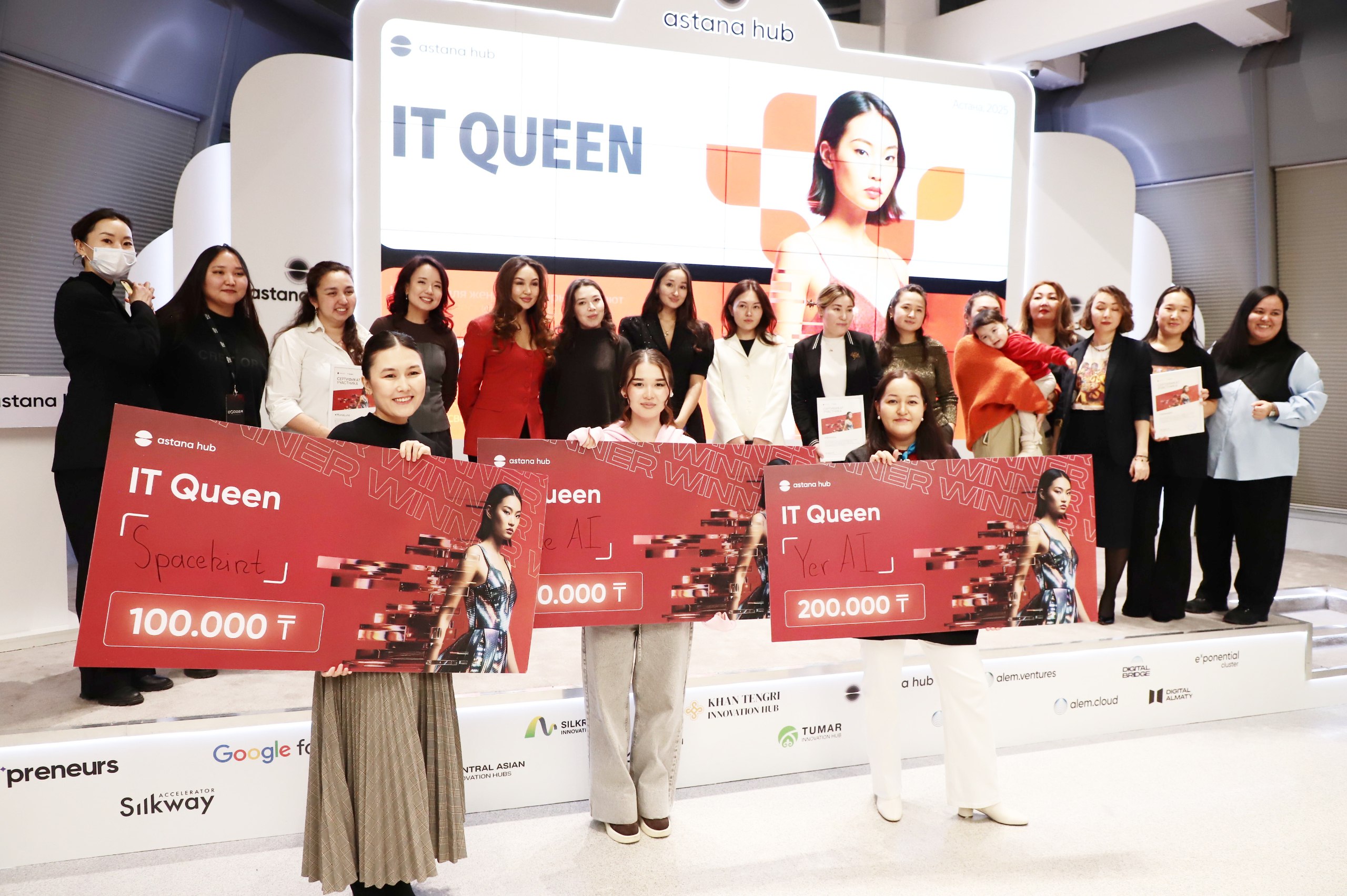
The winner was Soile AI, an intelligent model that recognizes impaired speech, helping people with communication disorders be understood. Behind the complex algorithms lies the personal story of the project’s founder, Ukili Omarova:

“When I was a child, my grandfather suffered a stroke, and our whole family stopped understanding him. He faced social isolation, loss of communication, and a loss of dignity. At that time, there was no accessible solution that could help him keep his voice. That’s when I realized how important such a technology is — and today we are creating it. We are not just a service, but a chance to be heard. This is the first artificial intelligence that understands impaired speech.”
The project is not limited to a social mission — Soile AI already has an international patent and collaborates with 19 clinics and speech therapists to collect datasets. The team has gathered 24,820 unique recordings and trained the model on 88.5 hours of the Kazakh language. Near-term plans include scaling: expanding the dataset, integrating call functionality, and entering the mass market with user applications.
Second place went to Yerai, a comprehensive AI solution for applying to foreign universities. The project makes global education more accessible by replacing expensive consultations with tools for testing, essay writing, scholarship search, and interview preparation.

The top three was rounded out by Spacehint, a project focused on the service industry. The idea emerged from professional experience: the founder, who transitioned into IT from aviation, created a platform that helps candidates quickly master service professions, while enabling companies to address staff shortages and improve team qualifications.

The competition final demonstrated an impressive diversity of projects aimed at solving pressing social and business challenges. Finalists included solutions for digitalizing legal services and cybersecurity, improving women’s health and supporting women’s communities, developing children’s speech, and inclusive education using 3D and VR technologies. The jury also evaluated a virtual employee platform for SMEs and a project promoting local digital art.
IT Queen 2025 confirmed the growth of women-led IT entrepreneurship. The competition became a key networking platform, helping participants receive expert support for the further development of their startups.

The jury included founders of successful startups and representatives of the venture industry: Asylzat Isataeva (CEO of Aidentis), Karakoz Tasbolat (Head of Investor Relations at Almak Capital), Laura Vaigorova (CEO of STP), Nazgul Baitemirova (Advisor to the CEO of Astana Hub on venture capital), and Rysty Isagulova (Associate at Activat VC).
The winner was Soile AI, an intelligent model that recognizes impaired speech, helping people with communication disorders be understood. Behind the complex algorithms lies the personal story of the project’s founder, Ukili Omarova:
“When I was a child, my grandfather suffered a stroke, and our whole family stopped understanding him. He faced social isolation, loss of communication, and a loss of dignity. At that time, there was no accessible solution that could help him keep his voice. That’s when I realized how important such a technology is — and today we are creating it. We are not just a service, but a chance to be heard. This is the first artificial intelligence that understands impaired speech.”
The project is not limited to a social mission — Soile AI already has an international patent and collaborates with 19 clinics and speech therapists to collect datasets. The team has gathered 24,820 unique recordings and trained the model on 88.5 hours of the Kazakh language. Near-term plans include scaling: expanding the dataset, integrating call functionality, and entering the mass market with user applications.
Second place went to Yerai, a comprehensive AI solution for applying to foreign universities. The project makes global education more accessible by replacing expensive consultations with tools for testing, essay writing, scholarship search, and interview preparation.
The top three was rounded out by Spacehint, a project focused on the service industry. The idea emerged from professional experience: the founder, who transitioned into IT from aviation, created a platform that helps candidates quickly master service professions, while enabling companies to address staff shortages and improve team qualifications.
The competition final demonstrated an impressive diversity of projects aimed at solving pressing social and business challenges. Finalists included solutions for digitalizing legal services and cybersecurity, improving women’s health and supporting women’s communities, developing children’s speech, and inclusive education using 3D and VR technologies. The jury also evaluated a virtual employee platform for SMEs and a project promoting local digital art.
IT Queen 2025 confirmed the growth of women-led IT entrepreneurship. The competition became a key networking platform, helping participants receive expert support for the further development of their startups.

 Share
Share