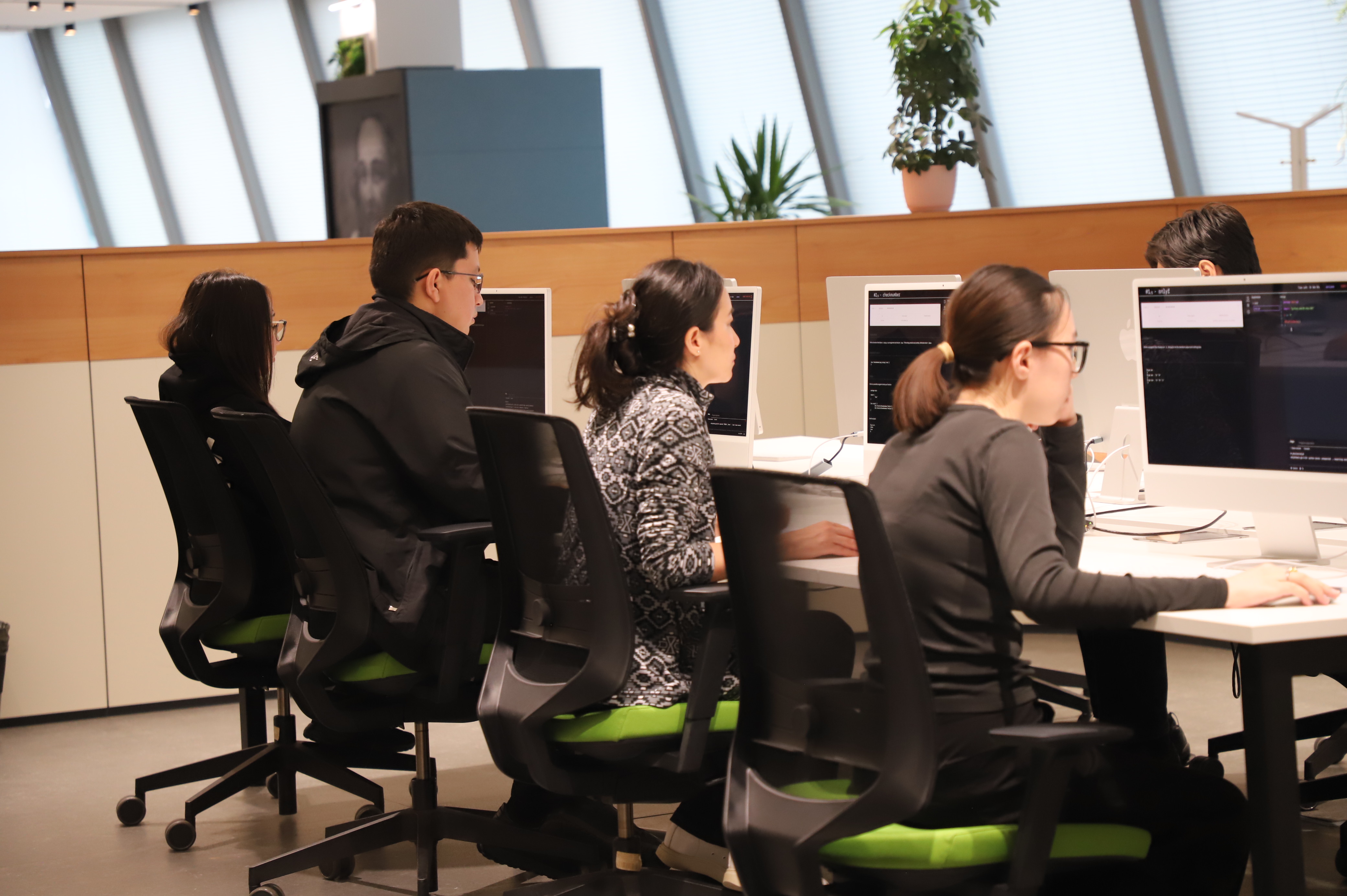




Tomorrow School offers a new learning model: there are no teachers. Instead, students learn from each other, exchanging knowledge and experience. This approach develops teamwork skills and the ability to think independently.

“As an economist, I always felt drawn toward IT and artificial intelligence. Studying at Tomorrow School changed my understanding of self-learning. Here we don’t just listen to theory — we solve real-world problems and learn from one another. Thanks to the peer-to-peer format, I not only deepened my understanding of AI but also improved my teamwork skills. The program offers unique opportunities and helps build professional connections in the industry. This is especially valuable in the rapidly evolving IT market,” shared Tomorrow School student Amir Zhakyshev.

The program lasts 18 months and includes more than 50 projects and the study of over 20 programming languages, from Golang and JavaScript to Python and Rust. During the final six months, students specialize in key areas such as AI engineering, software development, full-stack development, mobile development, DevOps, IT system architecture, cybersecurity and game development.
The learning format is flexible and available 24/7, enabling students to study at their own pace. Education is completely free, and the best students from the regions receive free housing for the entire duration of the program, significantly expanding opportunities for talented individuals from remote areas.

“We are proud that our project is becoming a platform for developing talent not only from Kazakhstan but also from other countries, strengthening the school’s international standing. Tomorrow School is not just an educational initiative but an important shift in the approach to training IT specialists. We create an environment where students become active participants in their education, developing essential skills through collaboration. This format helps them quickly adapt to market needs,” noted Alyona Slavkina, Director of the Educational Programs Office at Astana Hub.

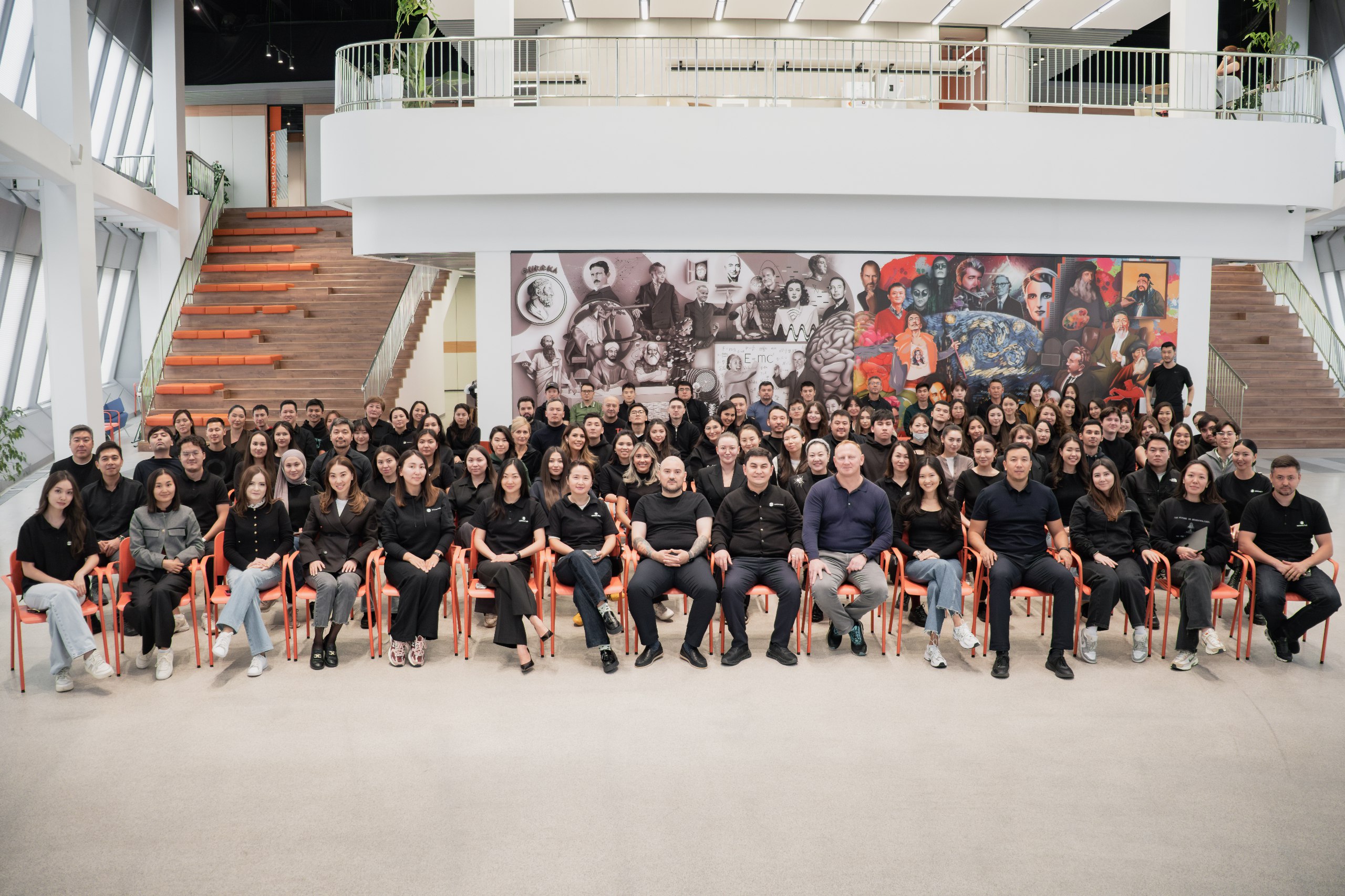
The student community at Tomorrow School is diverse: the average age is 27, and 35 percent of students are women — a sign of growing female interest in IT fields. Among the students, 35 percent are studying, 29 percent are employed full-time, 20 percent work part-time, 12 percent are not employed and 4 percent freelance. During its operation, Tomorrow School has held nine selection phases (pools), with 1,272 participants and a total of 16,041 submitted applications.

Students also actively contribute to the Astana Hub ecosystem through programs such as Startup Garage, AI’preneurs and Silkway Accelerator. One of the teams secured a soft commitment of $50,000 from Astana Hub Ventures, demonstrating the strong potential of student-led innovation. At the international Solana Day hackathon, the AIxARTxSOL team took third place out of 512 teams by combining AI, art and blockchain technologies. Other students also won the activ 5G competition at Decentrathon with a creativity-focused project.
Tomorrow School additionally hosted a series of 30 guest lectures covering a wide range of relevant topics: from artificial intelligence and blockchain technologies to career development, design and personal skills. Among the invited experts were Nicolas Sadirac, Aidanа Kaskyrbek, Ivan Kononov, Dmitry Mun and other representatives of IT startups who shared their unique expertise.
If you want to become part of an innovative community, master the most in-demand technologies and build a career in artificial intelligence and digital technologies, now is the perfect time to join Tomorrow School.
Tomorrow School offers a new learning model: there are no teachers. Instead, students learn from each other, exchanging knowledge and experience. This approach develops teamwork skills and the ability to think independently.
“As an economist, I always felt drawn toward IT and artificial intelligence. Studying at Tomorrow School changed my understanding of self-learning. Here we don’t just listen to theory — we solve real-world problems and learn from one another. Thanks to the peer-to-peer format, I not only deepened my understanding of AI but also improved my teamwork skills. The program offers unique opportunities and helps build professional connections in the industry. This is especially valuable in the rapidly evolving IT market,” shared Tomorrow School student Amir Zhakyshev.
The program lasts 18 months and includes more than 50 projects and the study of over 20 programming languages, from Golang and JavaScript to Python and Rust. During the final six months, students specialize in key areas such as AI engineering, software development, full-stack development, mobile development, DevOps, IT system architecture, cybersecurity and game development.
The learning format is flexible and available 24/7, enabling students to study at their own pace. Education is completely free, and the best students from the regions receive free housing for the entire duration of the program, significantly expanding opportunities for talented individuals from remote areas.
“We are proud that our project is becoming a platform for developing talent not only from Kazakhstan but also from other countries, strengthening the school’s international standing. Tomorrow School is not just an educational initiative but an important shift in the approach to training IT specialists. We create an environment where students become active participants in their education, developing essential skills through collaboration. This format helps them quickly adapt to market needs,” noted Alyona Slavkina, Director of the Educational Programs Office at Astana Hub.
The student community at Tomorrow School is diverse: the average age is 27, and 35 percent of students are women — a sign of growing female interest in IT fields. Among the students, 35 percent are studying, 29 percent are employed full-time, 20 percent work part-time, 12 percent are not employed and 4 percent freelance. During its operation, Tomorrow School has held nine selection phases (pools), with 1,272 participants and a total of 16,041 submitted applications.
Students also actively contribute to the Astana Hub ecosystem through programs such as Startup Garage, AI’preneurs and Silkway Accelerator. One of the teams secured a soft commitment of $50,000 from Astana Hub Ventures, demonstrating the strong potential of student-led innovation. At the international Solana Day hackathon, the AIxARTxSOL team took third place out of 512 teams by combining AI, art and blockchain technologies. Other students also won the activ 5G competition at Decentrathon with a creativity-focused project.
Tomorrow School additionally hosted a series of 30 guest lectures covering a wide range of relevant topics: from artificial intelligence and blockchain technologies to career development, design and personal skills. Among the invited experts were Nicolas Sadirac, Aidanа Kaskyrbek, Ivan Kononov, Dmitry Mun and other representatives of IT startups who shared their unique expertise.
If you want to become part of an innovative community, master the most in-demand technologies and build a career in artificial intelligence and digital technologies, now is the perfect time to join Tomorrow School.

 Share
Share