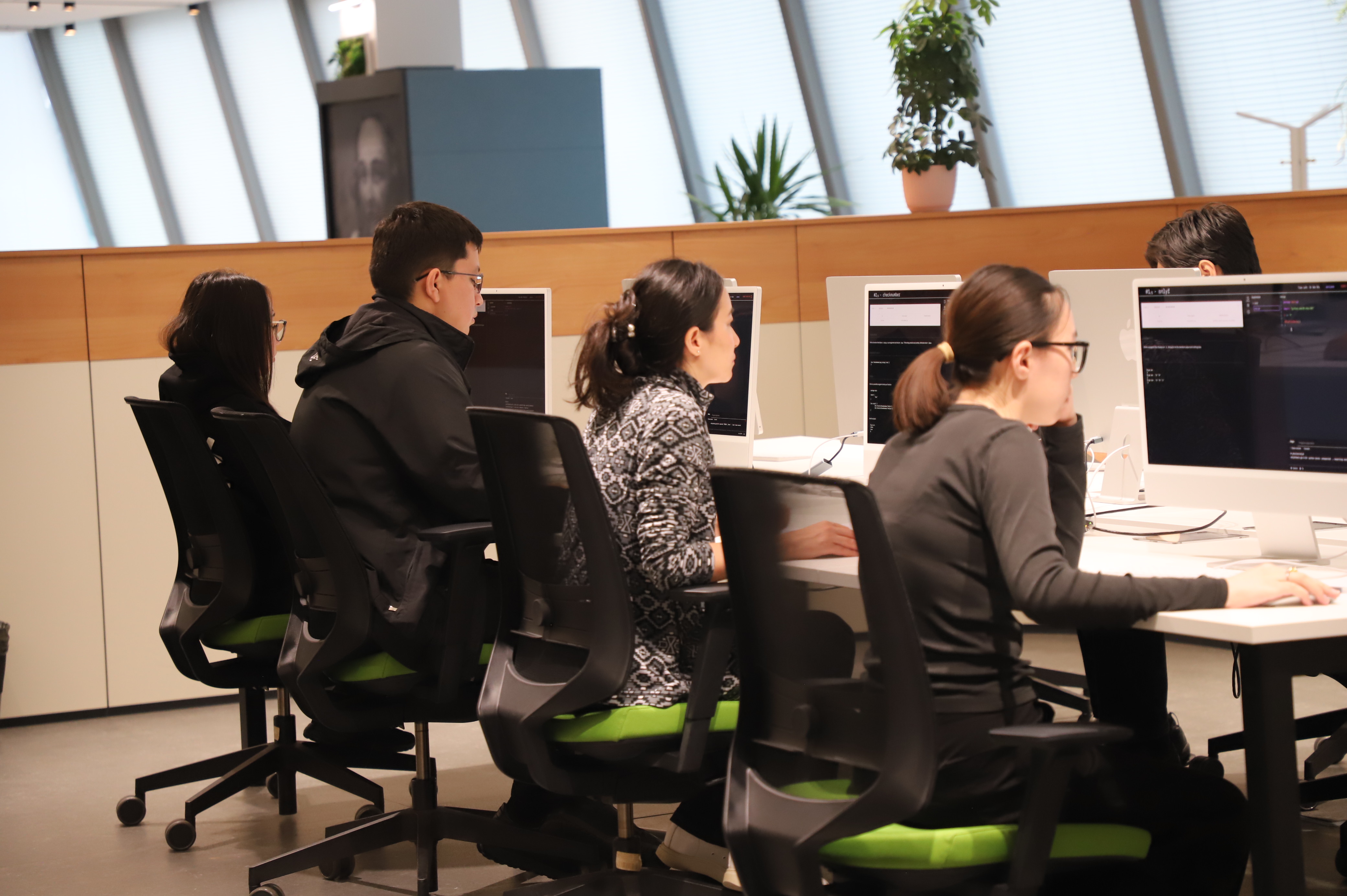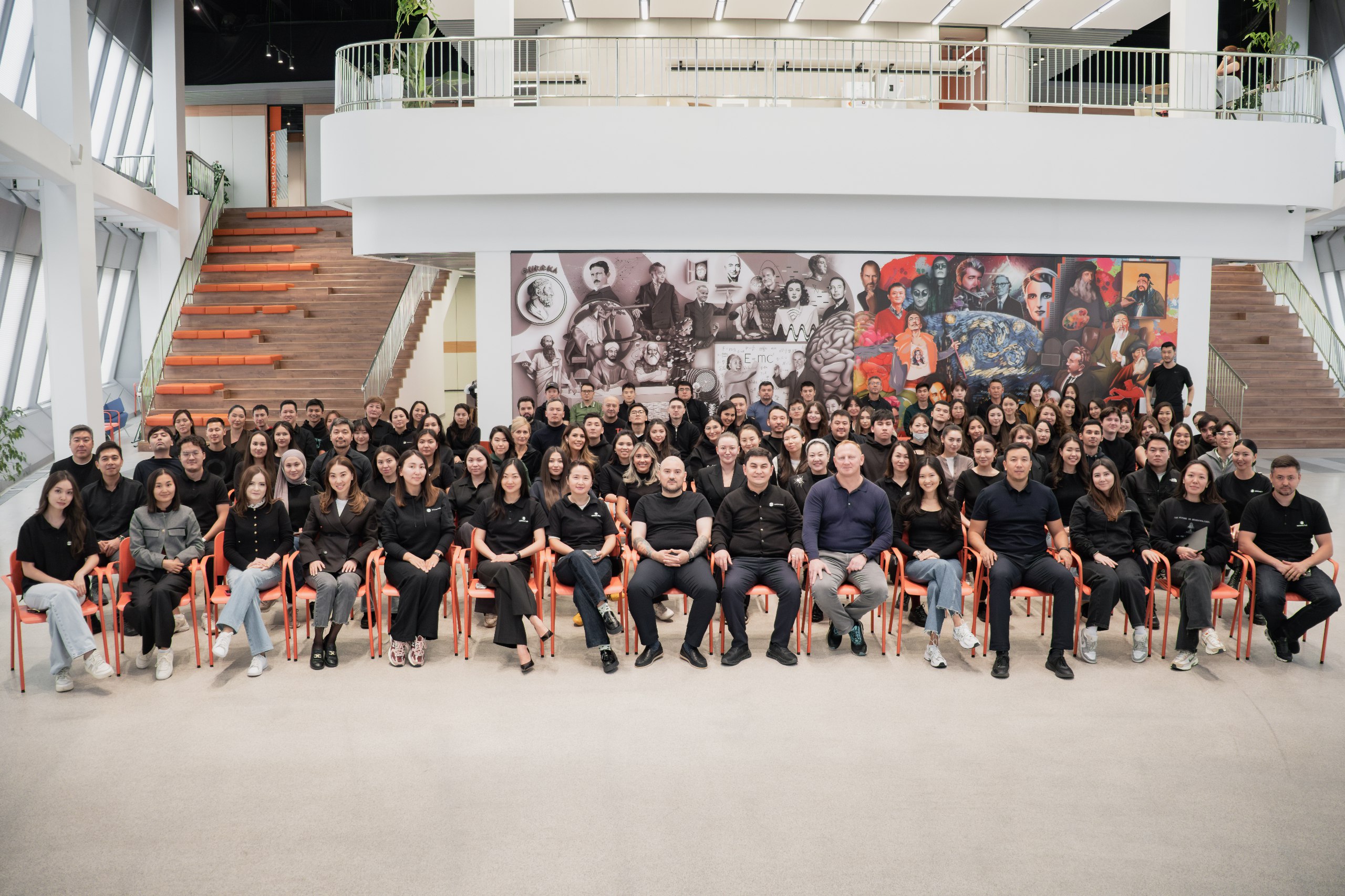





For the joint project by Digital Business and Astana Hub, “100 Startup Stories of Central Asia,” Sanzhar and Temirlan talked about how the idea for Armeta AI was born and how their product simplifies the work of engineers who carry out construction project expertise. We also learned what makes the project unique, what they plan to spend $40 million on in the coming years, discussed the company’s expansion to the Middle East and the US, and why a family IT business is a good idea.
“I Got Tired of Watching Our Engineers Spend 90% of Their Time on Repetitive Tasks”
— What were you doing before launching Armeta AI?
Sanzhar: — I worked in industrial technologies for many years. Until 2012, I was a hired manager: responsible for investments, plant development, and digitalization. Then I opened my own business. I was a co-owner of the KPSP Design Institute and the Ust-Kamenogorsk Industrial Valves Plant. At the same time, I launched technology services — for construction support, calculations, technical supervision, and contractor management. We developed projects, sold them, started new ones, and sold them again. We had clients both in Kazakhstan and abroad: in Russia and the Middle East.
Temirlan: — I studied engineering at Constructor University in Germany. That’s where I got my first work experience. In my first year, my father told me: “I’ll only pay for your education. If you want food and entertainment — go earn money.” As a result, a German entrepreneur hired me as an assistant. He had several businesses related to real estate management. I worked for him faithfully for four years and grew into a top manager.
Germany was very comfortable, but at the same time I had a dream — to work with my father. I wanted to become closer to him.
— How did the idea of launching a joint startup come about?
Temirlan: — During my first three years back in Kazakhstan, I studied my father’s businesses and immersed myself in the processes. At some point, I came to my dad and said: “I’m tired of watching our engineers spend 90% of their time on repetitive tasks. Let’s do something about it.” I added that either I would create my own AI project or we would launch it together.
— What did you decide to work on?
Sanzhar: — The idea started to take shape long before the startup was created — when ChatGPT appeared. At that time, I was studying at MIT and Stanford, learning about AI and the venture capital market. Naturally, we first looked at our core field — design, construction, industrial asset management — and considered what transformations were possible there.
At first, we thought about an analogue of GitHub. It’s a code repository where people exchange opinions and teams can work together. We wanted to create a similar platform, but for design engineers. Soon we realized we had taken on an impossible task, and the technologies at that time didn’t allow it. Developers work only with code. Engineers deal with a huge set of formats: documents, drawings, 3D models, specifications, technical and regulatory requirements. We launched the project only as a pilot inside our own design institute.
Temirlan: — We temporarily stepped away from the original idea and focused on creating an AI assistant. It could generate technical documents for specialists, perform engineering calculations, and answer polytechnic questions related to construction. But we soon put the assistant aside as well.
“To Be Recognized, You Need to Deliver an Instant Financial Effect”
— Why did you abandon the AI assistant idea?
Sanzhar: — We flew to the US and started meeting with venture funds and experts in Silicon Valley. It turned out that the assistant concept was already a bit outdated. We were told directly: “If you had come a year ago, you would have been a perfect fit for the market. Now you need to do something more fundamental.”
Temirlan: — The Construction Tech market is one of the most traditional. To be recognized, a product must deliver very tangible value and an instant financial effect. That’s why we decided to move toward a deep technological platform. Now we are working on our own foundational models for the construction sector. The main idea is to take routine, repetitive tasks away from specialists.
— Which tasks exactly?
Temirlan: — I’ll give an example from a real case. We are currently launching a pilot project with a government partner in Kazakhstan. This is a regulator that issues construction permits. Usually, experts review documents manually. Our model can remove monotonous work and leave specialists with what they truly enjoy and are good at — actual expertise, the creative and analytical part.
— How does your solution work for regulators?
Temirlan: — Governments have portals where developers upload design and estimate documentation for review. Through API infrastructure, the files are automatically sent to our system, and we begin the inspection.
Sanzhar: — As a result, the expert receives a ready-made set of outputs — identified inconsistencies and compiled comments. Simply put, the system automatically “breaks down” the entire uploaded package of documents — drawings, models, estimates, specifications — and runs them through a chain of our models and rules. It compares the documents with current regulations, finds discrepancies, highlights suspicious elements, forms the structure of a report, and shows exactly where a potential problem may be.
Read more on Digitalbusiness.kz.
For the joint project by Digital Business and Astana Hub, “100 Startup Stories of Central Asia,” Sanzhar and Temirlan talked about how the idea for Armeta AI was born and how their product simplifies the work of engineers who carry out construction project expertise. We also learned what makes the project unique, what they plan to spend $40 million on in the coming years, discussed the company’s expansion to the Middle East and the US, and why a family IT business is a good idea.
“I Got Tired of Watching Our Engineers Spend 90% of Their Time on Repetitive Tasks”
— What were you doing before launching Armeta AI?
Sanzhar: — I worked in industrial technologies for many years. Until 2012, I was a hired manager: responsible for investments, plant development, and digitalization. Then I opened my own business. I was a co-owner of the KPSP Design Institute and the Ust-Kamenogorsk Industrial Valves Plant. At the same time, I launched technology services — for construction support, calculations, technical supervision, and contractor management. We developed projects, sold them, started new ones, and sold them again. We had clients both in Kazakhstan and abroad: in Russia and the Middle East.
Temirlan: — I studied engineering at Constructor University in Germany. That’s where I got my first work experience. In my first year, my father told me: “I’ll only pay for your education. If you want food and entertainment — go earn money.” As a result, a German entrepreneur hired me as an assistant. He had several businesses related to real estate management. I worked for him faithfully for four years and grew into a top manager.
Germany was very comfortable, but at the same time I had a dream — to work with my father. I wanted to become closer to him.
— How did the idea of launching a joint startup come about?
Temirlan: — During my first three years back in Kazakhstan, I studied my father’s businesses and immersed myself in the processes. At some point, I came to my dad and said: “I’m tired of watching our engineers spend 90% of their time on repetitive tasks. Let’s do something about it.” I added that either I would create my own AI project or we would launch it together.
— What did you decide to work on?
Sanzhar: — The idea started to take shape long before the startup was created — when ChatGPT appeared. At that time, I was studying at MIT and Stanford, learning about AI and the venture capital market. Naturally, we first looked at our core field — design, construction, industrial asset management — and considered what transformations were possible there.
At first, we thought about an analogue of GitHub. It’s a code repository where people exchange opinions and teams can work together. We wanted to create a similar platform, but for design engineers. Soon we realized we had taken on an impossible task, and the technologies at that time didn’t allow it. Developers work only with code. Engineers deal with a huge set of formats: documents, drawings, 3D models, specifications, technical and regulatory requirements. We launched the project only as a pilot inside our own design institute.
Temirlan: — We temporarily stepped away from the original idea and focused on creating an AI assistant. It could generate technical documents for specialists, perform engineering calculations, and answer polytechnic questions related to construction. But we soon put the assistant aside as well.
“To Be Recognized, You Need to Deliver an Instant Financial Effect”
— Why did you abandon the AI assistant idea?
Sanzhar: — We flew to the US and started meeting with venture funds and experts in Silicon Valley. It turned out that the assistant concept was already a bit outdated. We were told directly: “If you had come a year ago, you would have been a perfect fit for the market. Now you need to do something more fundamental.”
Temirlan: — The Construction Tech market is one of the most traditional. To be recognized, a product must deliver very tangible value and an instant financial effect. That’s why we decided to move toward a deep technological platform. Now we are working on our own foundational models for the construction sector. The main idea is to take routine, repetitive tasks away from specialists.
— Which tasks exactly?
Temirlan: — I’ll give an example from a real case. We are currently launching a pilot project with a government partner in Kazakhstan. This is a regulator that issues construction permits. Usually, experts review documents manually. Our model can remove monotonous work and leave specialists with what they truly enjoy and are good at — actual expertise, the creative and analytical part.
— How does your solution work for regulators?
Temirlan: — Governments have portals where developers upload design and estimate documentation for review. Through API infrastructure, the files are automatically sent to our system, and we begin the inspection.
Sanzhar: — As a result, the expert receives a ready-made set of outputs — identified inconsistencies and compiled comments. Simply put, the system automatically “breaks down” the entire uploaded package of documents — drawings, models, estimates, specifications — and runs them through a chain of our models and rules. It compares the documents with current regulations, finds discrepancies, highlights suspicious elements, forms the structure of a report, and shows exactly where a potential problem may be.
Read more on Digitalbusiness.kz.

 Share
Share