





We are launching a new Kazakhstan Global USA interview series with the founder of Silkroad Innovation Hub, Aset Abdualiev. He spoke about cultural specifics of the American business environment, what founders from our region often lack when closing deals, and why one should not be afraid of going to Silicon Valley. We also discussed which projects with Kazakhstani roots have already managed to raise significant investments in the U.S. and secure partnerships with major players.
— A full-fledged IT hub in Silicon Valley for founders from our region appeared only in September 2023. Can you tell us what the situation was like for startups from Kazakhstan and other Central Asian countries in the U.S. before that?
— I personally moved to the U.S. in 2017 and got to Silicon Valley a year later. At that time, there were very few people from our region here in general. Mostly, they were professionals working at large tech companies, as well as students from Stanford and the University of California. But I hardly ever met founders of IT startups.
The situation began to change after the pandemic, when there was a rapid growth of technology. Around late 2021–early 2022, entrepreneurs from our region started coming here. Around that time, for example, Nurlibek Mursali launched his startup Biodock (a cloud-based AI platform for accelerating the analysis of microscopic images — Digital Business note). He came to the U.S., went through the prestigious Y Combinator accelerator, and then raised investment from Andreessen Horowitz.
Today, there are quite a lot of founders from Central Asia in Silicon Valley — we are seeing a real regional boom. And we are very fortunate to be part of the AI supercycle — it significantly helps with launching new startups here.
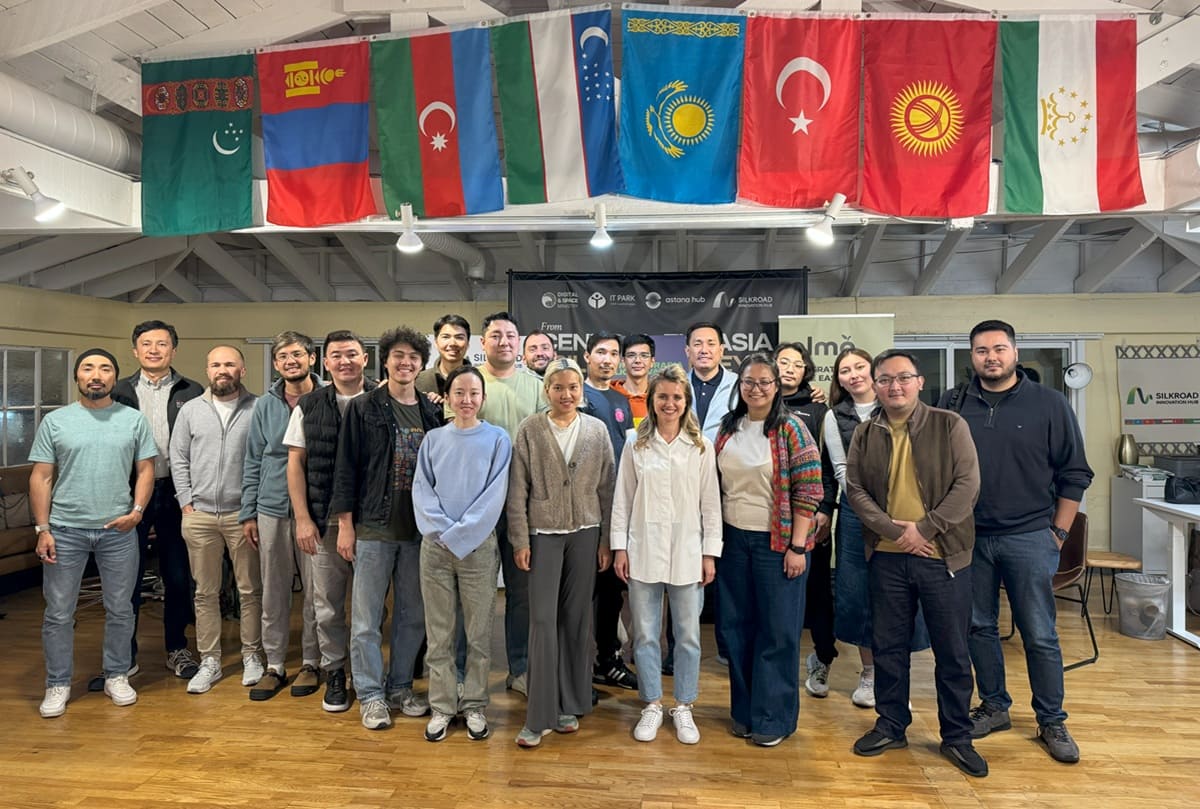
There is active political and economic convergence across Central Eurasia. Silkroad Innovation Hub is a good example of this. Our partners include almost all ministries of AI, digitalization, and IT across the region, as well as leading startup ecosystems — Astana Hub, IT Park Uzbekistan, Nazarbayev University, IDDA Azerbaijan, and IT Park Mongolia. Overall, during this time we have established more than 40 partnerships with leading companies, development institutions, venture funds, and universities in the region.
— By your estimates, how many projects with roots in Central Asia are currently operating in the U.S. market?
— Silkroad Innovation Hub currently has 350 residents. More than half of them were founded by entrepreneurs from Kazakhstan. At the same time, we also host startups from Kyrgyzstan, Uzbekistan, Azerbaijan, Turkey, Georgia, and Mongolia. The total valuation of all these projects exceeds $3 billion, and together they have already raised more than $100 million in venture investments in the U.S. alone. Moreover, some of them secured funding at valuations exceeding $100 million. That is, we are talking about serious companies that have literally grown before our eyes.
When we launched Silkroad Innovation Hub, founders from Kazakhstan and other Central Asian countries were essentially just beginning their journey here. The creation of our IT hub coincided with the launch of the Hero Training program by Astana Hub and Draper University. The first 15 startups from that program became our initial residents. And, in fact, quite strong projects emerged from that cohort — many of them are now well known. For example, the company Citix, which raised $1 million from Tim Draper at the end of 2023. Another great case is the startup Surfaice, which closed a $1.5 million round with participation from U.S. investors as well.
Read more on Digitalbusiness.kz.
We are launching a new Kazakhstan Global USA interview series with the founder of Silkroad Innovation Hub, Aset Abdualiev. He spoke about cultural specifics of the American business environment, what founders from our region often lack when closing deals, and why one should not be afraid of going to Silicon Valley. We also discussed which projects with Kazakhstani roots have already managed to raise significant investments in the U.S. and secure partnerships with major players.
— A full-fledged IT hub in Silicon Valley for founders from our region appeared only in September 2023. Can you tell us what the situation was like for startups from Kazakhstan and other Central Asian countries in the U.S. before that?
— I personally moved to the U.S. in 2017 and got to Silicon Valley a year later. At that time, there were very few people from our region here in general. Mostly, they were professionals working at large tech companies, as well as students from Stanford and the University of California. But I hardly ever met founders of IT startups.
The situation began to change after the pandemic, when there was a rapid growth of technology. Around late 2021–early 2022, entrepreneurs from our region started coming here. Around that time, for example, Nurlibek Mursali launched his startup Biodock (a cloud-based AI platform for accelerating the analysis of microscopic images — Digital Business note). He came to the U.S., went through the prestigious Y Combinator accelerator, and then raised investment from Andreessen Horowitz.
Today, there are quite a lot of founders from Central Asia in Silicon Valley — we are seeing a real regional boom. And we are very fortunate to be part of the AI supercycle — it significantly helps with launching new startups here.
There is active political and economic convergence across Central Eurasia. Silkroad Innovation Hub is a good example of this. Our partners include almost all ministries of AI, digitalization, and IT across the region, as well as leading startup ecosystems — Astana Hub, IT Park Uzbekistan, Nazarbayev University, IDDA Azerbaijan, and IT Park Mongolia. Overall, during this time we have established more than 40 partnerships with leading companies, development institutions, venture funds, and universities in the region.
— By your estimates, how many projects with roots in Central Asia are currently operating in the U.S. market?
— Silkroad Innovation Hub currently has 350 residents. More than half of them were founded by entrepreneurs from Kazakhstan. At the same time, we also host startups from Kyrgyzstan, Uzbekistan, Azerbaijan, Turkey, Georgia, and Mongolia. The total valuation of all these projects exceeds $3 billion, and together they have already raised more than $100 million in venture investments in the U.S. alone. Moreover, some of them secured funding at valuations exceeding $100 million. That is, we are talking about serious companies that have literally grown before our eyes.
When we launched Silkroad Innovation Hub, founders from Kazakhstan and other Central Asian countries were essentially just beginning their journey here. The creation of our IT hub coincided with the launch of the Hero Training program by Astana Hub and Draper University. The first 15 startups from that program became our initial residents. And, in fact, quite strong projects emerged from that cohort — many of them are now well known. For example, the company Citix, which raised $1 million from Tim Draper at the end of 2023. Another great case is the startup Surfaice, which closed a $1.5 million round with participation from U.S. investors as well.
Read more on Digitalbusiness.kz.

 Share
Share