
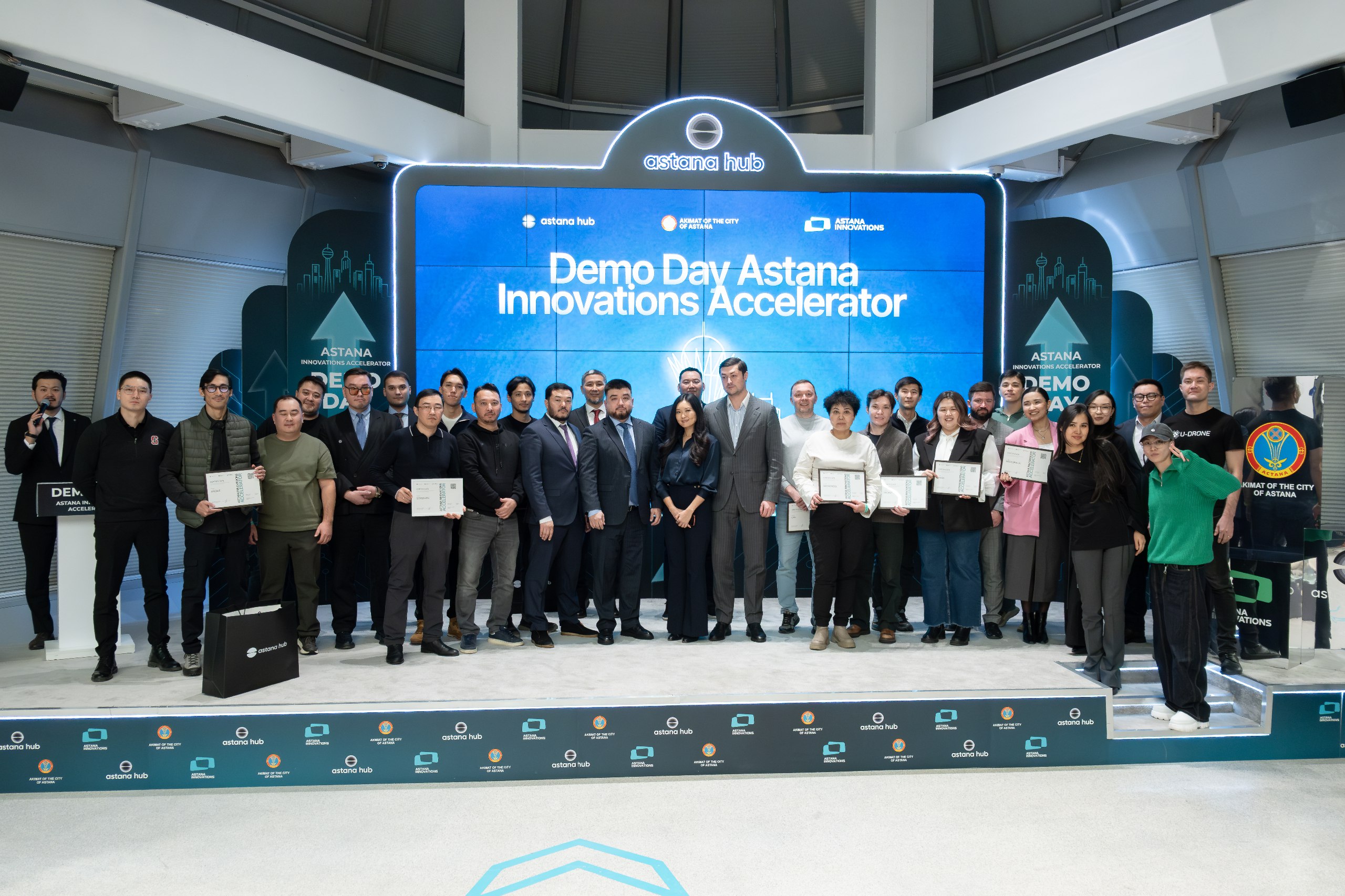





The program attracted strong interest from the technology community: a total of 160 applications were submitted. Following the selection process, 21 projects were accepted into the program, and 13 startups presented the results of their pilot projects and city-specific solutions at Demo Day. Eight of the most promising startups received funding of 5,000,000 tenge each under SAFE agreements. The funded startups included OTA, OQ.AI, Artisan Education, Soyleseiyk, Dronly, AMAN, Ascle, and U-Drone.
“For us, the program is a practical tool for implementing technologies in the urban environment. We launch such initiatives to address specific challenges facing the capital and to improve the quality of life for residents. The first cohort of the accelerator showed that startups are capable of delivering direct and measurable impact—several solutions have already been integrated into city services. This year, we took the next step by strengthening our focus on the use of artificial intelligence to increase the efficiency of key urban sectors. We are open to cooperation and ready to provide startups with data, infrastructure, and ongoing support so their solutions truly work and benefit the city on a daily basis,” said Gizat Amirgali, Chairman of the Management Board of Astana Innovations.
The startups’ solutions covered key areas of the city agenda, including public safety, healthcare, education, tourism, and the development of urban services. Pilot testing made it possible to evaluate the effectiveness of these technologies in real-world conditions and demonstrate their practical value for the city and its residents.
In the area of urban safety, the startup U-Drone, together with the Astana City Police Department, tested a 3D traffic accident documentation technology using drones. The pilot confirmed that the use of unmanned technologies can reduce initial incident documentation time by 5–20 minutes and improve data accuracy through the creation of detailed 3D models.
The AMAN project implemented a pilot jointly with the Ministry of Internal Affairs of Kazakhstan, testing five key response scenarios, signed a contract with ERG, and deployed the AMAN Safe Schools project at a school in the city of Rudny, reaching more than 1,000 students.
In healthcare, the Ascle AI-powered physician assistant was tested at City Polyclinic No. 4. The solution automated part of routine processes and allowed doctors to save an average of up to 30 minutes of working time per day. During the pilot period, more than 1,000 sessions were conducted, confirming the solution’s practical effectiveness in a real clinical setting.
In the education sector, technologies were applied to personalize learning and develop inclusive practices. The OQ.AI platform was piloted in city schools, where the system automatically generated adaptive assignments to assess practical thinking and reading comprehension. As a result of the pilot, improved reading comprehension was recorded among 60% of students.
The startup Soyleseiyk implemented two pilots—in education and social protection. Relevant government agencies confirmed the solution’s effectiveness as a tool for augmentative and alternative communication and speech correction. Within just 10 days of use, positive progress and conscious communication were observed among children with speech and intellectual disabilities.
Special attention within the program was given to engineering and applied skills. The startup Dronly conducted pilots in city schools, where drone flight simulators were installed and training sessions were held with the participation of internationally recognized experts. The pilot involved 35 students and 5 teachers. As part of the program, the startup implemented a comprehensive solution for NIS IB Astana schools, which was subsequently purchased by two schools in Uralsk.
The Artisan Education platform was piloted in four public schools in Astana, using both its educational platform and PiBody hardware kits. The project involved 11 teachers and 234 students in grades 7–10. The results showed a high level of student engagement, while teachers reported reduced lesson preparation time.
The startup OTA conducted a pilot together with Astana Tourism Development Center. As part of the project, a web widget featuring a city map, routes, and key tourist attractions was developed for self-guided exploration of the city. During the pilot, more than 60 tourists used the service and noted its convenience and practical value.
The WeGlobal.ai platform expanded the reach of its educational solutions to more than 930 schools across Kazakhstan and launched pilot projects in Astana’s public schools. A Smart Lighting system in the Saryarka district delivered 23% energy savings, while Esep AI demonstrated the potential to reduce resource consumption in the housing and utilities sector by 15–30%.
The Astana Innovations Accelerator program was implemented by Astana Hub in partnership with the Akimat of the City of Astana and Astana Innovations.
“The accelerator proves its value in practice every year—we see real results. Funding helps the strongest startups continue growing rather than stopping at early achievements. Innovation in the urban environment is critically important today, and Astana’s experience can serve as a benchmark for other cities, enabling the most successful solutions to be implemented nationwide,” said Tanat Uskembayev, Managing Director of Astana Hub.
The results of the accelerator confirmed that effective collaboration between the city and the startup community enables the deployment of technological solutions and the development of a sustainable smart city ecosystem focused on the real needs of Astana’s residents.
The program attracted strong interest from the technology community: a total of 160 applications were submitted. Following the selection process, 21 projects were accepted into the program, and 13 startups presented the results of their pilot projects and city-specific solutions at Demo Day. Eight of the most promising startups received funding of 5,000,000 tenge each under SAFE agreements. The funded startups included OTA, OQ.AI, Artisan Education, Soyleseiyk, Dronly, AMAN, Ascle, and U-Drone.
“For us, the program is a practical tool for implementing technologies in the urban environment. We launch such initiatives to address specific challenges facing the capital and to improve the quality of life for residents. The first cohort of the accelerator showed that startups are capable of delivering direct and measurable impact—several solutions have already been integrated into city services. This year, we took the next step by strengthening our focus on the use of artificial intelligence to increase the efficiency of key urban sectors. We are open to cooperation and ready to provide startups with data, infrastructure, and ongoing support so their solutions truly work and benefit the city on a daily basis,” said Gizat Amirgali, Chairman of the Management Board of Astana Innovations.
The startups’ solutions covered key areas of the city agenda, including public safety, healthcare, education, tourism, and the development of urban services. Pilot testing made it possible to evaluate the effectiveness of these technologies in real-world conditions and demonstrate their practical value for the city and its residents.
In the area of urban safety, the startup U-Drone, together with the Astana City Police Department, tested a 3D traffic accident documentation technology using drones. The pilot confirmed that the use of unmanned technologies can reduce initial incident documentation time by 5–20 minutes and improve data accuracy through the creation of detailed 3D models.
The AMAN project implemented a pilot jointly with the Ministry of Internal Affairs of Kazakhstan, testing five key response scenarios, signed a contract with ERG, and deployed the AMAN Safe Schools project at a school in the city of Rudny, reaching more than 1,000 students.
In healthcare, the Ascle AI-powered physician assistant was tested at City Polyclinic No. 4. The solution automated part of routine processes and allowed doctors to save an average of up to 30 minutes of working time per day. During the pilot period, more than 1,000 sessions were conducted, confirming the solution’s practical effectiveness in a real clinical setting.
In the education sector, technologies were applied to personalize learning and develop inclusive practices. The OQ.AI platform was piloted in city schools, where the system automatically generated adaptive assignments to assess practical thinking and reading comprehension. As a result of the pilot, improved reading comprehension was recorded among 60% of students.
The startup Soyleseiyk implemented two pilots—in education and social protection. Relevant government agencies confirmed the solution’s effectiveness as a tool for augmentative and alternative communication and speech correction. Within just 10 days of use, positive progress and conscious communication were observed among children with speech and intellectual disabilities.
Special attention within the program was given to engineering and applied skills. The startup Dronly conducted pilots in city schools, where drone flight simulators were installed and training sessions were held with the participation of internationally recognized experts. The pilot involved 35 students and 5 teachers. As part of the program, the startup implemented a comprehensive solution for NIS IB Astana schools, which was subsequently purchased by two schools in Uralsk.
The Artisan Education platform was piloted in four public schools in Astana, using both its educational platform and PiBody hardware kits. The project involved 11 teachers and 234 students in grades 7–10. The results showed a high level of student engagement, while teachers reported reduced lesson preparation time.
The startup OTA conducted a pilot together with Astana Tourism Development Center. As part of the project, a web widget featuring a city map, routes, and key tourist attractions was developed for self-guided exploration of the city. During the pilot, more than 60 tourists used the service and noted its convenience and practical value.
The WeGlobal.ai platform expanded the reach of its educational solutions to more than 930 schools across Kazakhstan and launched pilot projects in Astana’s public schools. A Smart Lighting system in the Saryarka district delivered 23% energy savings, while Esep AI demonstrated the potential to reduce resource consumption in the housing and utilities sector by 15–30%.
The Astana Innovations Accelerator program was implemented by Astana Hub in partnership with the Akimat of the City of Astana and Astana Innovations.
“The accelerator proves its value in practice every year—we see real results. Funding helps the strongest startups continue growing rather than stopping at early achievements. Innovation in the urban environment is critically important today, and Astana’s experience can serve as a benchmark for other cities, enabling the most successful solutions to be implemented nationwide,” said Tanat Uskembayev, Managing Director of Astana Hub.
The results of the accelerator confirmed that effective collaboration between the city and the startup community enables the deployment of technological solutions and the development of a sustainable smart city ecosystem focused on the real needs of Astana’s residents.

 Share
Share