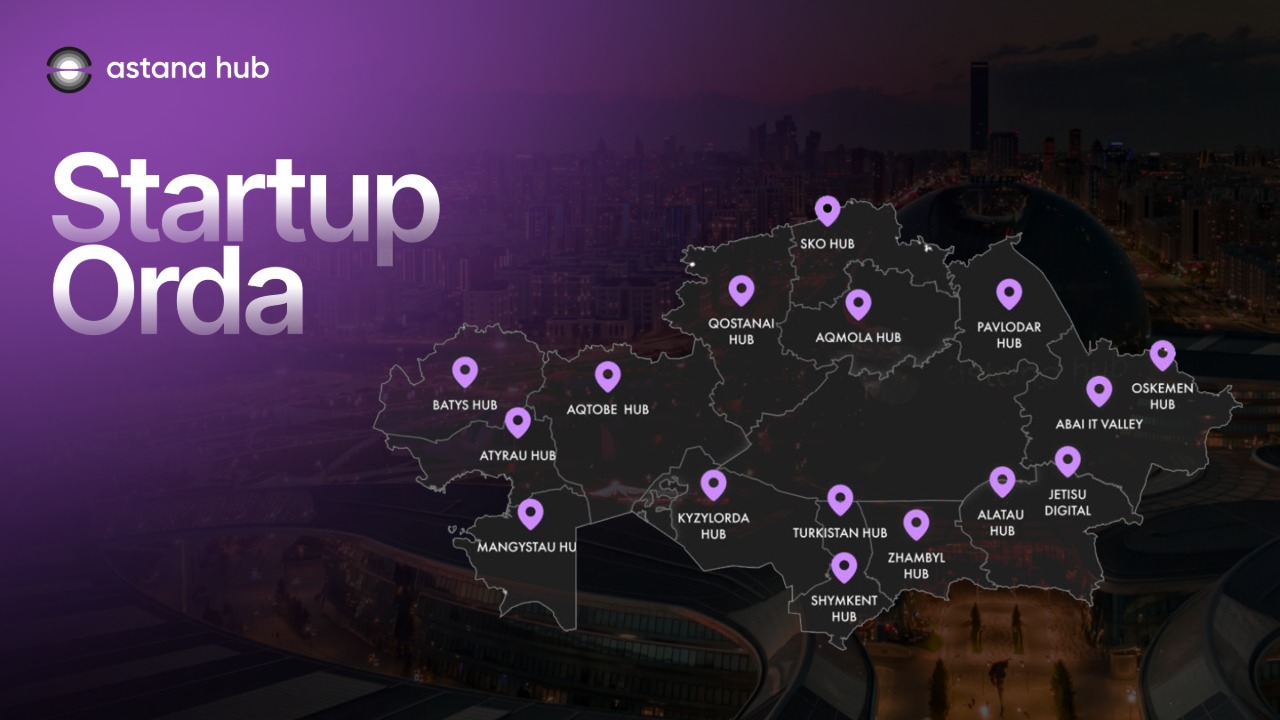





The program launched on October 13, 2025, and was implemented simultaneously across 16 regional IT hubs—from Shymkent and Turkistan to Petropavl and Ust-Kamenogorsk—making it one of the largest startup incubation initiatives ever launched in the country.
Startup Orda was designed from the outset as a response to the systemic lack of early-stage startup support in the regions. Participants at the idea or MVP stage completed 12 educational modules covering all critical topics—from market research and business model development to sales, fundraising, and legal registration. In addition to training, teams gained access to tracking support and one-on-one consultations with practicing industry experts.
The results were telling: nearly one-third of the teams reached the final stage. From November 24 to December 4, 2025, Demo Days were held across all 16 regions, where startups presented their solutions to experts, investors, and ecosystem representatives. For many teams, this marked their first public pitch and a key transition point from idea to real market entry.
Not only the scale but also the quality of projects stood out. Among the graduates were solutions in edtech, agtech, AI, and social impact. In Shymkent, the SmartWalk project—an interactive walker for rehabilitating children with cerebral palsy—was showcased. In Kostanay, the Qazaq Chronicles team developed a mobile game with an AI companion to help users study Kazakhstan’s history and prepare for exams. Aktobe produced several strong projects, ranging from the SmartEndo dental device to UM.AI, a corporate AI that unifies company data into a single chat-based interface.
In Ust-Kamenogorsk, a system for the early detection of autism in children using eye-tracking and AI was developed, while in Taraz, teams worked on solutions for dermatology and children’s digital safety. Projects from Konaev, Aktau, and Turkistan also deserve special mention—ranging from anti-fraud systems and Kazakhstan-made STEAM kits to agritech platforms and VR tourism solutions.
“It was important for us to show that strong technology startups can—and should—emerge not only in major metropolitan areas. Startup Orda demonstrated that the regions have ideas, teams, and a clear demand for growth; they simply need the right tools,” said Dian Aibashpanov, Director of Regional Development at Astana Hub. According to him, the program’s key impact lies not only in its graduates, but also in the formation of a critical mass of entrepreneurs who are already strengthening local ecosystems.
Against the backdrop of a global trend toward the decentralization of innovation, Startup Orda has become a rare example of a truly large-scale regional initiative. Following Demo Day, several teams have already received recommendations for further acceleration, pilot projects, and investor negotiations. The next step will be scaling the program’s best practices and supporting graduates as they enter the market and raise capital.
The program launched on October 13, 2025, and was implemented simultaneously across 16 regional IT hubs—from Shymkent and Turkistan to Petropavl and Ust-Kamenogorsk—making it one of the largest startup incubation initiatives ever launched in the country.
Startup Orda was designed from the outset as a response to the systemic lack of early-stage startup support in the regions. Participants at the idea or MVP stage completed 12 educational modules covering all critical topics—from market research and business model development to sales, fundraising, and legal registration. In addition to training, teams gained access to tracking support and one-on-one consultations with practicing industry experts.
The results were telling: nearly one-third of the teams reached the final stage. From November 24 to December 4, 2025, Demo Days were held across all 16 regions, where startups presented their solutions to experts, investors, and ecosystem representatives. For many teams, this marked their first public pitch and a key transition point from idea to real market entry.
Not only the scale but also the quality of projects stood out. Among the graduates were solutions in edtech, agtech, AI, and social impact. In Shymkent, the SmartWalk project—an interactive walker for rehabilitating children with cerebral palsy—was showcased. In Kostanay, the Qazaq Chronicles team developed a mobile game with an AI companion to help users study Kazakhstan’s history and prepare for exams. Aktobe produced several strong projects, ranging from the SmartEndo dental device to UM.AI, a corporate AI that unifies company data into a single chat-based interface.
In Ust-Kamenogorsk, a system for the early detection of autism in children using eye-tracking and AI was developed, while in Taraz, teams worked on solutions for dermatology and children’s digital safety. Projects from Konaev, Aktau, and Turkistan also deserve special mention—ranging from anti-fraud systems and Kazakhstan-made STEAM kits to agritech platforms and VR tourism solutions.
“It was important for us to show that strong technology startups can—and should—emerge not only in major metropolitan areas. Startup Orda demonstrated that the regions have ideas, teams, and a clear demand for growth; they simply need the right tools,” said Dian Aibashpanov, Director of Regional Development at Astana Hub. According to him, the program’s key impact lies not only in its graduates, but also in the formation of a critical mass of entrepreneurs who are already strengthening local ecosystems.
Against the backdrop of a global trend toward the decentralization of innovation, Startup Orda has become a rare example of a truly large-scale regional initiative. Following Demo Day, several teams have already received recommendations for further acceleration, pilot projects, and investor negotiations. The next step will be scaling the program’s best practices and supporting graduates as they enter the market and raise capital.

 Share
Share